
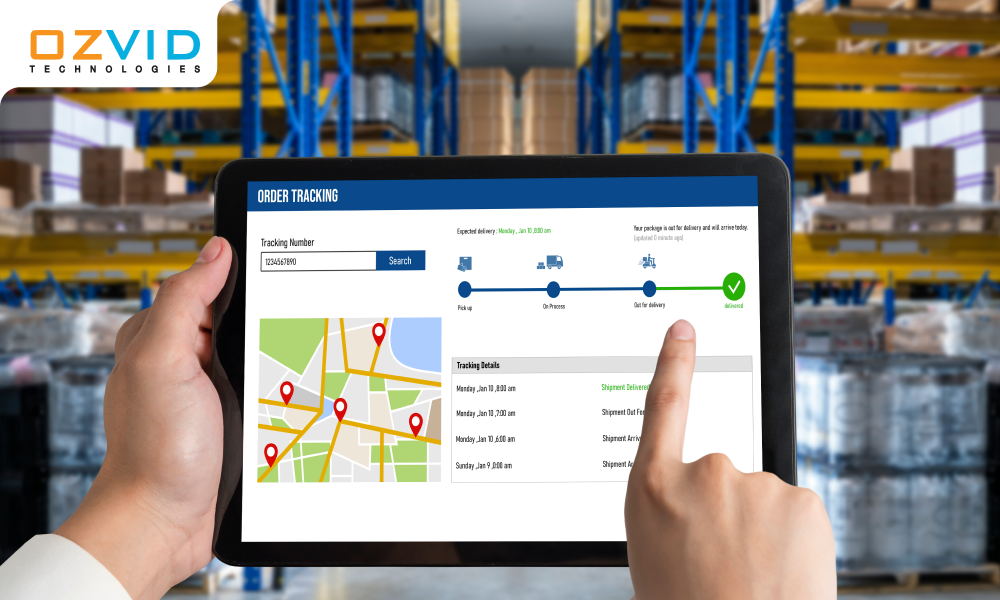
The global delivery management software market is set for significant growth, with projections indicating an increase of USD 666.7 billion by 2028, as businesses increasingly adopt real-time tracking, route optimization, and last-mile delivery technologies.
Delivery management software helps companies streamline every stage of the delivery process, from order allocation and route optimization to driver tracking, proof of delivery, and customer notifications. Instead of relying on spreadsheets, manual dispatching, or disconnected tools, businesses can centralize their delivery operations on one smart digital platform.
Key Takeaways
- Delivery management software streamlines logistics operations by automating dispatch, tracking, route planning, and delivery coordination efficiently.
- Real-time tracking and route optimization improve delivery performance while reducing delays, fuel costs, and operational inefficiencies.
- A feature-rich delivery platform enhances customer satisfaction through live updates, accurate ETAs, and transparent communication.
- Custom delivery management software supports scalability and helps businesses manage growing order volumes without losing control.
- The development cost depends on complexity and features such as GPS tracking, mobile apps, analytics, and third-party integrations.
- Investing in delivery management software gives businesses a competitive edge by enabling faster, smarter, and more reliable last-mile deliveries.
What is Delivery Management Software?
Delivery management software is a digital solution designed to automate, organize, and optimize the process of managing deliveries. It acts as a central system that coordinates orders, drivers, routes, customers, and delivery status in real time. This software is commonly used by:
- eCommerce businesses
- Food and grocery delivery companies
- Courier and logistics providers
- Pharmaceutical delivery services
- Retail chains with home delivery options
- Distributors and wholesalers
- Hyperlocal delivery startups
The main purpose of delivery management software is to ensure that the right product reaches the right customer at the right time, while minimizing delays, costs, and human errors.
Core Functions of Delivery Management Software
A robust delivery management solution typically handles:
- Order intake and scheduling
- Delivery assignment to drivers or fleets
- Route planning and optimization
- GPS-based live tracking
- Estimated delivery time (ETA) calculation
- Customer notifications and communication
- Proof of delivery (POD)
- Payment collection (if required)
- Returns and failed delivery management
- Analytics and performance reporting
By integrating these functions into one platform, businesses can run faster, smarter, and more reliable delivery operations.
Features of Delivery Management Software
A powerful delivery management software comes with a wide range of features that help businesses streamline operations, improve delivery speed, and enhance customer satisfaction. Below are the key features explained in detail:
1. Smart Order Management
Order management is the foundation of any delivery system. It allows businesses to capture, organize, and process orders from multiple channels in one place. The software ensures that every order is accurately recorded, prioritized, and assigned without confusion or delays, reducing manual errors and improving workflow efficiency.
2. Automated Dispatching
Automated dispatching assigns deliveries to drivers based on factors like location, availability, and delivery priority. This eliminates manual intervention and ensures faster order allocation. It also helps reduce idle time for drivers and improves overall delivery productivity.
3. Route Optimization
Route optimization uses advanced algorithms to determine the fastest and most efficient delivery routes. It considers factors such as traffic conditions, distance, delivery time windows, and road restrictions. This feature helps reduce fuel costs, delivery time, and unnecessary travel, making operations more cost-effective.
4. Real-Time GPS Tracking
Real-time tracking allows businesses and customers to monitor the exact location of delivery agents. This improves transparency and helps businesses quickly respond to delays or issues. Customers also feel more confident when they can track their orders live.
5. Estimated Time of Arrival (ETA) Updates
ETA calculation provides accurate delivery time predictions based on real-time conditions. Customers receive updates about when their order will arrive, which improves communication and reduces uncertainty. Accurate ETAs also help businesses manage customer expectations effectively.
6. Proof of Delivery (POD)
Proof of delivery confirms that the order has been successfully delivered. It can include digital signatures, photos, OTP verification, or QR code scanning. This feature reduces disputes, enhances accountability, and ensures a secure delivery process.
7. Customer Notifications and Communication
Delivery software keeps customers informed through automated notifications such as order confirmation, dispatch updates, and delivery status alerts. It may also include SMS, email, or in-app communication, ensuring a seamless and transparent customer experience.
8. Analytics and Reporting
Analytics and reporting provide insights into delivery performance, driver efficiency, order success rates, and operational costs. Businesses can use this data to identify bottlenecks, improve decision-making, and optimize overall delivery strategies.
Why Delivery Management Software Matters for Modern Businesses
The delivery ecosystem has changed dramatically in recent years. Customers no longer judge businesses only by product quality, they also judge them by delivery experience. Late deliveries, missed communication, incorrect addresses, and lack of visibility can quickly damage brand reputation.Choose the right Delivery management software with the help of Techimply. Key Reasons Businesses Need Delivery Management Software
1. Rising Customer Expectations
Today’s customers want:
- Same-day or next-day delivery
- Live tracking visibility
- Instant delivery alerts
- Accurate ETAs
- Seamless communication with delivery agents
Without delivery management software, meeting these expectations becomes difficult and expensive.
2. Operational Efficiency
Manual dispatching often causes:
- Driver confusion
- Route duplication
- Delays in order assignment
- Poor delivery planning
- Higher fuel usage
A smart system automates these workflows and significantly improves operational efficiency.
3. Cost Optimization
Delivery operations can quickly become expensive due to:
- Inefficient routes
- Idle drivers
- Failed delivery attempts
- Poor fleet utilization
- Excessive manual labor
Delivery software helps reduce these costs through automation and intelligent planning.
4. Real-Time Visibility
Businesses need real-time control over:
- Where drivers are
- Which orders are delayed
- Which deliveries are completed
- Which customers need support
- Which routes are underperforming
Real-time dashboards provide complete transparency and better decision-making.
5. Scalability
As order volume grows, manual systems break down. Delivery management software enables businesses to scale operations without losing control, speed, or customer satisfaction.
Types of Delivery Management Software Solutions
Delivery management software is not a one-size-fits-all solution. Different businesses have unique delivery models, customer expectations, and operational requirements. That is why delivery management software can be developed in multiple forms based on the type of services a business offers. Choosing the right type of solution helps companies improve delivery speed, reduce operational costs, and ensure better control over logistics workflows. Below are the major types of delivery management software solutions and how each one supports different business needs.
1. Last-Mile Delivery Management Software
Last-mile delivery management software is designed to manage the final stage of the delivery journey, where products are transported from a warehouse, store, or distribution center to the customer’s doorstep. This stage is often the most critical because it directly impacts customer satisfaction and delivery costs.
This software helps businesses assign orders quickly, optimize routes, track delivery agents in real time, and send customers live delivery updates. It is especially useful for businesses that promise same-day, next-day, or scheduled deliveries.
2. Fleet Management Delivery Software
Fleet management delivery software focuses on managing a company’s vehicles and drivers involved in the delivery process. It is ideal for businesses that operate their own fleet and need complete control over transportation performance, fuel consumption, maintenance schedules, and driver productivity.
This type of solution goes beyond order delivery by offering features like vehicle tracking, driver behavior monitoring, maintenance reminders, fuel usage reports, and route efficiency analysis. It helps logistics companies improve fleet utilization while minimizing operational costs.
3. Hyperlocal Delivery Platforms
Hyperlocal delivery platforms are built for businesses that deliver products within a limited geographic radius, often within minutes or a few hours. These solutions are commonly used by businesses that prioritize ultra-fast deliveries and local order fulfillment.
Hyperlocal delivery management software is highly dependent on live location tracking, intelligent order allocation, local inventory visibility, and quick route planning. It is ideal for businesses operating in urban areas where speed is a major competitive advantage.
4. Multi-Vendor Delivery Management Systems
Multi-vendor delivery management systems are designed for platforms where multiple sellers or vendors use a shared delivery network. In this model, the software must manage not only customers and drivers but also different vendors, their product inventories, order flows, and delivery preferences.
This type of software is more complex because it coordinates multiple business entities within one ecosystem. It ensures that orders from different sellers are properly assigned, tracked, and delivered while maintaining transparency for vendors, customers, and platform administrators.
5. Enterprise Logistics Management Solutions
Enterprise logistics management solutions are advanced delivery systems built for large organizations handling complex, high-volume delivery operations across multiple regions, cities, or countries. These platforms are designed to support sophisticated logistics workflows, including multi-warehouse coordination, route planning at scale, fleet management, inventory integration, and advanced analytics.
This type of solution is typically customized to fit the unique operational structure of large enterprises. It often integrates with ERP, CRM, warehouse management systems, and supply chain tools to provide end-to-end logistics visibility and automation.
How to Develop a Delivery Management Software?
Developing delivery management software requires a strategic approach that combines technology, user experience, and operational efficiency. Each stage plays a crucial role in building a reliable and scalable solution.
1. Define Business Requirements
Before starting development, it is important to clearly understand your business goals, delivery model, and operational challenges. This step ensures the software is built according to real needs rather than assumptions.
- Identify your target audience and delivery type (B2B, B2C, hyperlocal, etc.)
- Define key workflows like order processing and delivery handling
- Analyze competitors and market expectations
- Set clear objectives for performance, scalability, and user experience
2. Choose the Right Features
Selecting the right features helps in building a practical and efficient delivery solution. The focus should be on functionalities that improve operations and customer satisfaction.
- Prioritize core features like order management and dispatching
- Include advanced tools such as route optimization and real-time tracking
- Avoid overloading the system with unnecessary features initially
- Plan for future feature expansion based on business growth
3. Select the Technology Stack
The technology stack determines the performance, scalability, and security of the software. Choosing the right tools ensures smooth development and long-term stability.
- Select a reliable frontend and backend framework
- Choose a scalable database for handling large data volumes
- Integrate APIs for maps, tracking, and notifications
- Ensure the tech stack supports future upgrades and integrations
4. Design User-Friendly Interfaces
A well-designed interface improves usability for admins, drivers, and customers. Simple and intuitive design reduces training time and enhances productivity.
- Create a clean and easy-to-navigate admin dashboard
- Design a user-friendly mobile app for delivery drivers
- Ensure a smooth tracking interface for customers
- Focus on responsive design for all devices
5. Develop Core Modules
Core modules form the backbone of delivery management software. Each module should be built to work seamlessly with others for efficient operations.
- Develop an admin panel for overall control and monitoring
- Build a driver app for task management and navigation
- Create a customer interface for tracking and updates
- Implement a dispatch and routing engine for automation
6. Integrate Third-Party Services
Third-party integrations enhance the functionality and usability of the software. They help in adding advanced features without building everything from scratch.
- Integrate GPS and map services for navigation
- Add payment gateways for seamless transactions
- Enable SMS and email notifications for updates
- Connect with CRM or ERP systems if required
7. Test the Software Thoroughly
Testing ensures that the software performs well under different conditions and is free from critical issues. It is essential for delivering a reliable product.
- Conduct functional testing to verify all features
- Perform performance testing for high-load scenarios
- Check security vulnerabilities and data protection
- Fix bugs and improve system stability before launch
8. Deploy and Maintain the System
Deployment is the final step, but continuous maintenance is equally important for long-term success. Regular updates keep the system efficient and secure.
- Deploy the software on a secure and scalable cloud platform
- Monitor system performance and user activity
- Provide regular updates and feature enhancements
- Offer technical support and maintenance services
Conclusion
Each type of delivery management software serves a different business purpose, and selecting the right one depends on your delivery model, operational size, customer expectations, and long-term growth plans. A startup running a hyperlocal grocery app may need fast dispatch and local routing, while a large logistics company may require enterprise-grade fleet and warehouse coordination.
At OZVID Technologies, we help businesses identify the right delivery management software model and build custom solutions tailored to their exact needs. Whether you need a last-mile delivery platform, a multi-vendor logistics system, or an enterprise delivery ecosystem, our team can develop a secure, scalable, and high-performance solution that drives business efficiency and customer satisfaction.
Frequently Asked Questions
1. What is delivery management software?
Delivery management software is a digital solution that helps businesses manage, track, and optimize the complete delivery process. It covers everything from order assignment and route planning to driver tracking, customer notifications, and proof of delivery, helping businesses improve operational efficiency and customer satisfaction.
2. Which businesses need delivery management software?
Delivery management software is useful for any business that handles regular deliveries or logistics operations. It is especially beneficial for:
- eCommerce businesses
- Food and grocery delivery platforms
- Courier and logistics companies
- Pharmacy delivery services
- Retail businesses with home delivery
- Quick commerce startups
- Multi-vendor marketplaces
3. What are the key features of delivery management software?
A robust delivery management software solution usually includes features that improve speed, visibility, and operational control. Some of the most important features are:
- Order management
- Smart dispatch and driver assignment
- Route optimization
- Real-time GPS tracking
- Driver mobile app
- Customer tracking interface
- Proof of delivery (POD)
4. What role does AI play in delivery management software?
Artificial Intelligence plays a crucial role in making delivery systems smarter and more efficient.
- Predicts the best delivery routes based on traffic patterns
- Improves ETA accuracy using real-time data
- Automates decision-making in dispatch and scheduling
- Analyzes performance data for continuous improvement
5. What is the typical timeline to develop delivery management software?
The development timeline depends on the complexity, features, and level of customization required.
- Basic software can take 2–4 months to develop
- Medium complexity solutions may take 4–6 months
- Advanced enterprise systems can take 6–12 months
- Continuous updates and scaling extend the development lifecycle
6. Why should businesses invest in custom delivery management software instead of ready-made solutions?
Custom solutions offer greater flexibility and long-term value compared to off-the-shelf software.
- Tailored features based on specific business needs
- Better scalability as the business grows
- Seamless integration with existing systems
- Full control over data, security, and future upgrades