
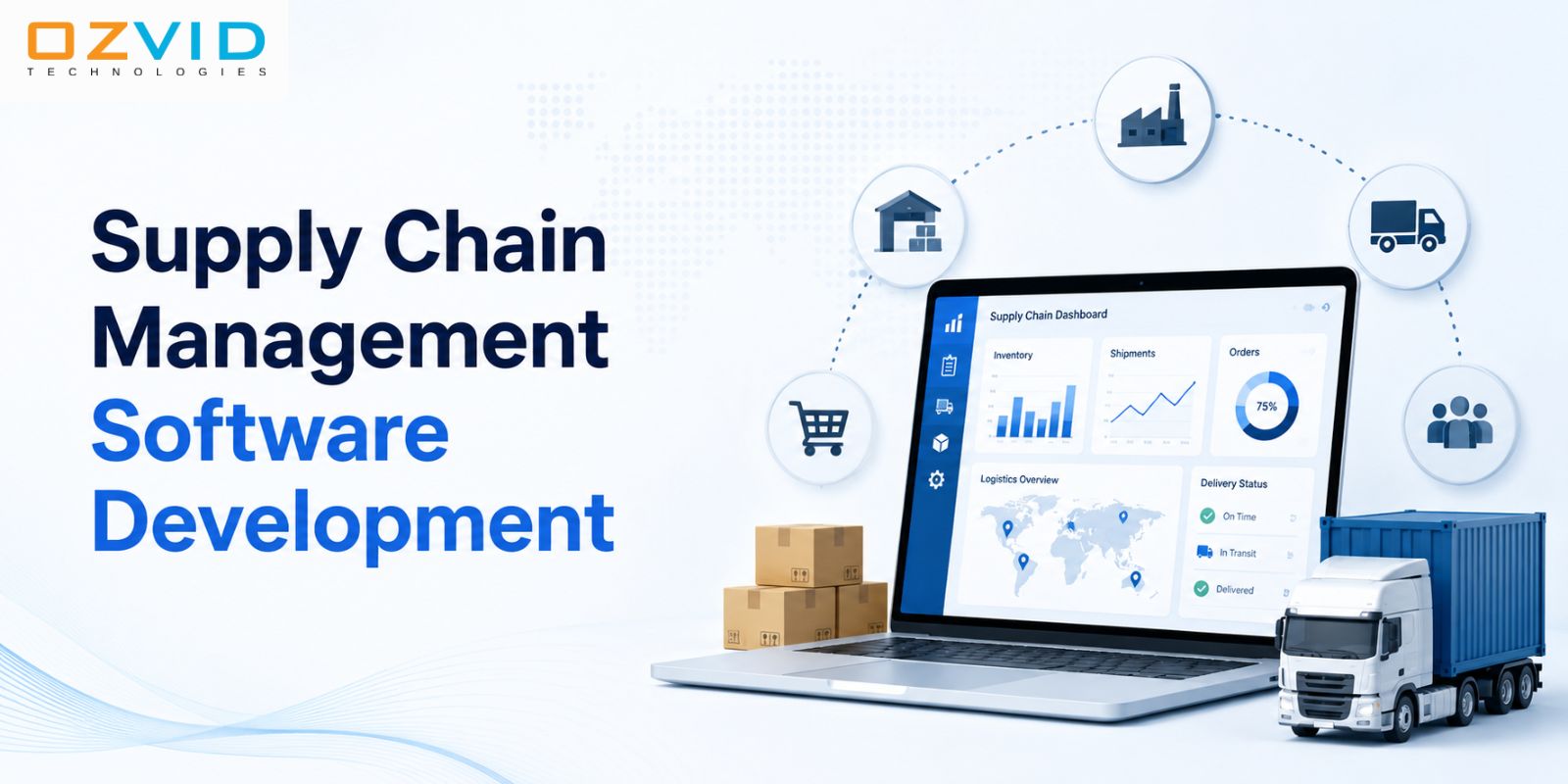
The supply chain management software market is experiencing significant growth as businesses worldwide accelerate their digital transformation efforts. According to industry reports, the market size is estimated at USD 36.39 billion in 2026 and is projected to reach USD 56.01 billion by 2031, growing at a CAGR of 9.01% during the forecast period. This rapid expansion highlights the increasing demand for advanced supply chain solutions that enhance efficiency, visibility, and resilience across global operations.
In today’s highly competitive and unpredictable business environment, organizations are under constant pressure to optimize their supply chain processes. From procurement and inventory management to logistics and distribution, companies are adopting intelligent software solutions to streamline operations and reduce costs. Supply chain management software enables businesses to gain real-time insights, automate workflows, and improve collaboration across all stakeholders.
As technologies such as artificial intelligence, IoT, blockchain, and predictive analytics continue to evolve, supply chain systems are becoming more intelligent and adaptive. This guide explores the complete process of supply chain management software development, including key features, benefits, cost factors, emerging trends, and why partnering with the right development company is essential for long-term success.
Key Takeaways
- Supply chain management software improves operational efficiency and business productivity.
- Real-time visibility helps businesses make faster and more informed decisions.
- Custom SCM solutions can be tailored to specific industry requirements.
- Technologies like AI, IoT, and blockchain are transforming supply chain operations.
- Development costs vary based on complexity, features, integrations, and deployment models.
- Choosing an experienced development partner ensures scalability, security, and long-term success.
Why Investing in Supply Chain Management Software is Essential for Modern Businesses
Supply chain management software has become a necessity for organizations seeking greater efficiency, transparency, and profitability. By automating critical business processes and providing real-time insights, SCM solutions help businesses stay competitive in dynamic markets.
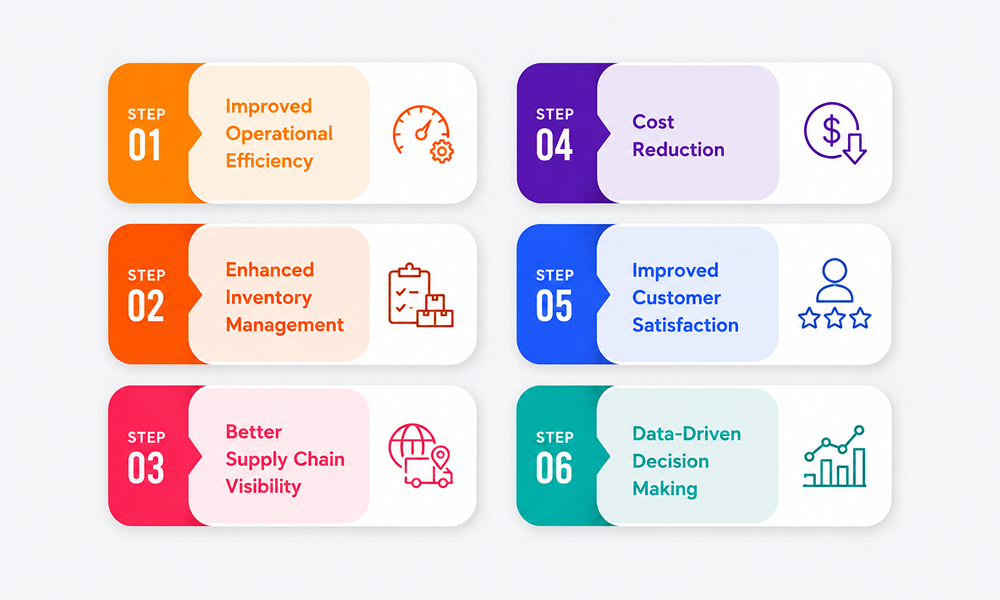
1. Improved Operational Efficiency
Supply chain software automates repetitive tasks and streamlines workflows, reducing manual effort and minimizing operational delays. Businesses can manage procurement, inventory, warehousing, and logistics more effectively.
Benefits:
- Reduces manual errors
- Automates routine processes
- Enhances workflow efficiency
- Improves productivity
2. Enhanced Inventory Management
Effective inventory management software ensures businesses maintain optimal stock levels while avoiding overstocking or stock shortages. SCM software provides real-time inventory tracking and forecasting capabilities.
Benefits:
- Real-time stock visibility
- Reduced inventory costs
- Better demand forecasting
- Minimized stockouts
3. Better Supply Chain Visibility
Organizations gain complete visibility across suppliers, warehouses, transportation networks, and customer deliveries. This transparency helps identify bottlenecks and improve decision-making.
Benefits:
- End-to-end tracking
- Real-time reporting
- Improved accountability
- Faster issue resolution
4. Cost Reduction
SCM software helps businesses optimize resource utilization and eliminate inefficiencies. Better planning and automation contribute significantly to reducing operational costs.
Benefits:
- Lower transportation costs
- Reduced waste
- Improved resource allocation
- Increased profitability
5. Improved Customer Satisfaction
Timely deliveries and accurate order fulfillment directly impact customer experience. Supply chain software ensures smoother operations and improved service quality.
Benefits:
- Faster order processing
- Accurate deliveries
- Improved customer trust
- Better retention rates
6. Data-Driven Decision Making
Advanced analytics and reporting tools enable organizations to make informed business decisions based on real-time operational data.
Benefits:
- Actionable insights
- Performance monitoring
- Strategic planning
- Risk mitigation
Types of Supply Chain Software
Supply chain management software comes in various forms, each designed to address specific business functions. Organizations can choose standalone solutions or integrated SCM platforms based on their operational requirements.
Software Type | Purpose | Key Functions |
Inventory Management Software | Tracks stock levels and inventory movement | Inventory control, stock tracking, forecasting |
Warehouse Management Software (WMS) | Manages warehouse operations | Storage management, picking, packing |
Transportation Management Software (TMS) | Optimizes transportation processes | Route planning, shipment tracking |
Procurement Management Software | Streamlines purchasing activities | Supplier management, purchase orders |
Demand Planning Software | Forecasts future demand | Sales forecasting, inventory planning |
Supplier Relationship Management Software | Improves supplier collaboration | Vendor evaluation, communication |
Logistics Management Software | Manages logistics operations | Freight management, delivery tracking |
Enterprise SCM Platforms | Provides end-to-end supply chain visibility | Integrated supply chain operations |
Essential Features of Modern Supply Chain Management Software
Modern supply chain management software is designed to streamline operations, improve visibility, and enhance collaboration across the entire supply chain network. By integrating advanced technologies and automation capabilities, businesses can efficiently manage procurement, inventory, logistics, warehousing, and customer fulfillment processes. The following features are essential for building a robust and scalable SCM solution.
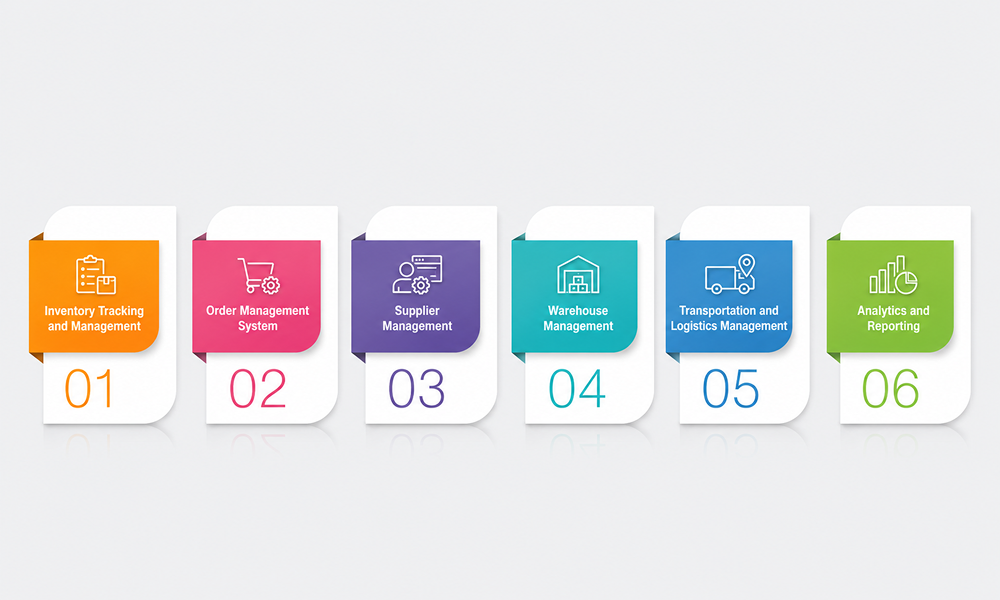
1. Inventory Tracking and Management
Inventory tracking and management is one of the most important features of supply chain software. It allows businesses to monitor stock levels in real time across multiple warehouses and distribution centers. The system helps prevent overstocking and stock shortages while ensuring products are available when needed. Advanced inventory management tools also support demand forecasting, stock optimization, and automated replenishment.
2. Order Management System
An effective order management system streamlines the entire order lifecycle, from order placement to delivery. It enables businesses to process customer orders quickly and accurately while reducing manual intervention. Real-time order tracking helps improve transparency and ensures timely fulfillment, resulting in better customer satisfaction and operational efficiency.
3. Supplier Management
Supplier management functionality helps businesses maintain strong relationships with vendors and suppliers. It centralizes supplier information, contract details, performance metrics, and communication records in a single platform. This feature improves collaboration, enhances procurement efficiency, and helps organizations identify reliable suppliers for long-term business success.
4. Warehouse Management
Warehouse management features optimize storage utilization, inventory movement, and warehouse operations. Businesses can efficiently manage receiving, picking, packing, and shipping activities while maintaining accurate inventory records. This functionality improves warehouse productivity and reduces operational costs by automating routine tasks and workflows.
5. Transportation and Logistics Management
Transportation and logistics management enables businesses to plan, execute, and monitor the movement of goods across the supply chain. The software helps optimize delivery routes, track shipments in real time, and manage transportation costs. Enhanced visibility into logistics operations ensures faster deliveries and improved customer service.
6. Analytics and Reporting
Advanced analytics and reporting tools provide actionable insights into supply chain performance. Businesses can monitor key performance indicators, analyze operational trends, and identify areas for improvement. Real-time dashboards and custom reports support data-driven decision-making and help organizations optimize supply chain efficiency.
How Much Does Supply Chain Management Software Development Cost?
The supply chain management software cost depends on multiple factors such as feature complexity, technology stack, integrations, deployment model, and development location. Custom solutions typically require a larger investment but provide greater flexibility and scalability.
Software Complexity | Estimated Development Cost | Development Time |
Basic SCM Software | $15,000 - $35,000 | 2-4 Months |
Medium Complexity SCM Software | $35,000 - $80,000 | 4-8 Months |
Advanced SCM Software | $80,000 - $150,000+ | 8-12 Months |
Enterprise SCM Platform | $150,000 - $500,000+ | 12+ Months |
Key Factors Influencing Supply Chain Management Software Development Costs
The cost of developing supply chain management software can vary significantly depending on the project's scope, complexity, and business requirements. Organizations must carefully evaluate several factors before estimating the overall development budget. Understanding these cost drivers helps businesses plan effectively and invest in a solution that delivers long-term value and scalability.
1. Software Complexity
The complexity of the software is one of the biggest factors affecting development costs. A basic SCM solution with limited functionality requires fewer development hours, while an enterprise-grade platform with advanced automation, analytics, and workflow management demands extensive planning, development, and testing. More complex systems typically require larger development teams and longer project timelines.
2. Feature Requirements
The number and sophistication of features directly impact the overall cost of development. Features such as inventory management, procurement automation, logistics tracking, supplier management, predictive analytics, and AI-powered forecasting require additional resources and development efforts. The more customized the feature set, the higher the development investment.
3. Third-Party Integrations
Many businesses require supply chain software to integrate with existing systems such as ERP platforms, CRM solutions, accounting software, payment gateways, and logistics providers. These integrations increase development complexity because developers must ensure seamless data synchronization, compatibility, and secure communication between multiple systems.
4. Technology Stack Selection
The choice of frontend frameworks, backend technologies, databases, cloud platforms, and development tools significantly influences project costs. Modern technologies offer better scalability and performance but may require specialized expertise. Selecting the right technology stack ensures long-term reliability while affecting development time and budget.
5. Deployment Model
Whether the software is deployed on-premise, in the cloud, or through a hybrid model can impact overall development and infrastructure costs. Cloud-based solutions often require investment in cloud services and hosting, while on-premise deployments may involve additional hardware, maintenance, and security expenses.
Emerging Trends Shaping the Future of Supply Chain Management Software
The supply chain industry is undergoing a rapid digital transformation driven by advanced technologies, evolving customer expectations, and the need for greater operational efficiency. Modern supply chain management software is no longer limited to tracking goods and managing inventory; it is becoming an intelligent ecosystem that enables predictive decision-making, automation, and real-time global visibility. The following emerging trends are shaping the future of SCM software development.
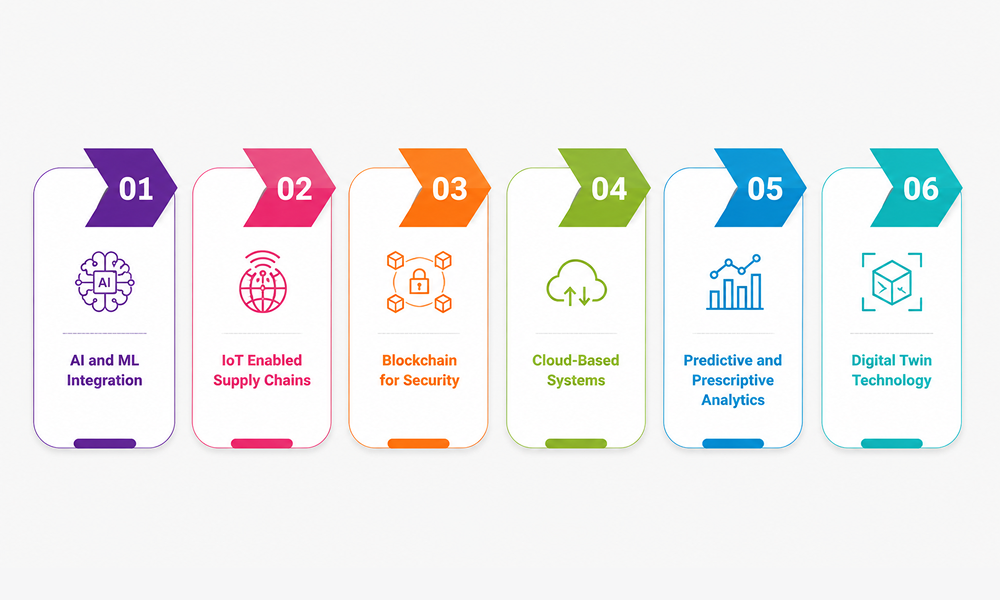
1. AI and ML Integration
Artificial intelligence and machine learning are transforming supply chain operations by enabling smarter forecasting, automation, and decision-making. These technologies analyze large volumes of data to predict demand patterns, optimize inventory levels, and identify potential disruptions before they occur. AI-driven systems help businesses improve accuracy, reduce waste, and enhance overall operational efficiency.
2. IoT Enabled Supply Chains
IoT technology is revolutionizing supply chain visibility by connecting physical assets, vehicles, and warehouses through smart sensors. This enables real-time tracking of goods, temperature monitoring for sensitive products, and instant updates across the supply chain network. IoT integration ensures better transparency, improved asset management, and enhanced operational control across logistics processes.
3. Blockchain for Security
Blockchain technology is being widely adopted to improve trust, transparency, and security in supply chain operations. It creates an immutable record of transactions, allowing businesses to trace products from origin to delivery. This helps reduce fraud, improve accountability, and ensure compliance with regulatory standards, especially in industries like pharmaceuticals, food, and manufacturing.
4. Cloud-Based Systems
Cloud computing is becoming the backbone of modern SCM software due to its scalability, flexibility, and cost efficiency. Cloud-based systems allow businesses to access supply chain data from anywhere, collaborate in real time, and scale operations based on demand. This eliminates the need for heavy on-premise infrastructure and reduces long-term operational costs.
5. Predictive and Prescriptive Analytics
Advanced analytics is playing a crucial role in improving supply chain efficiency by transforming raw data into actionable insights. Predictive analytics helps businesses forecast future demand and potential disruptions, while prescriptive analytics recommends the best possible actions. This enables companies to make proactive decisions and reduce operational risks.
6. Digital Twin Technology
Digital twin technology is gaining popularity in supply chain management as it allows businesses to create virtual replicas of physical supply chain processes. These digital models help simulate real-world scenarios, test operational changes, and identify inefficiencies before implementation. This leads to better planning, reduced risks, and improved operational performance.
Why Partner with OZVID Technologies for Supply Chain Management Software Development?
Choosing the right technology partner plays a crucial role in building a reliable, scalable, and future-ready supply chain management system. At OZVID Technologies, we focus on delivering tailored SCM solutions that align with business goals, streamline operations, and improve end-to-end supply chain visibility.
1. Deep Industry Expertise
OZVID Technologies brings strong domain knowledge in supply chain, logistics, and enterprise software development. Our team understands real-world supply chain challenges and builds solutions that address procurement inefficiencies, inventory gaps, and logistics bottlenecks. This ensures businesses receive practical and high-impact software tailored to their operational needs.
2. Scalable Software Solutions
We specialize in developing fully customized SCM platforms that adapt to your business processes rather than forcing you into a fixed system. Our solutions are designed with scalability in mind, allowing businesses to expand operations, add new features, and handle increasing data loads without performance issues.
3. Integration with Enterprise Systems
Modern supply chains depend on seamless connectivity between multiple systems. We ensure smooth integration of SCM software with ERP, CRM, accounting tools, and third-party logistics platforms. This unified ecosystem helps businesses maintain data consistency and improve cross-functional collaboration.
4. Advanced Technology Implementation
Our development approach leverages cutting-edge technologies such as AI, IoT, cloud computing, and data analytics. These technologies enhance forecasting accuracy, improve real-time tracking, and enable intelligent decision-making across the supply chain. We build future-ready solutions that keep businesses ahead of market demands.
5. Agile Development Process
We follow an agile development methodology that ensures continuous improvement, faster delivery, and complete transparency throughout the project lifecycle. Regular updates, iterative development cycles, and client feedback integration help us deliver high-quality solutions aligned with expectation
Conclusion
At OZVID Technologies, we understand that efficient supply chain operations are essential for achieving sustainable business growth. Supply chain management software empowers organizations to streamline operations, improve visibility, optimize resources, and enhance customer satisfaction. Whether you need inventory management, logistics optimization, warehouse automation, or an end-to-end SCM platform, investing in the right software solution can significantly improve operational efficiency and profitability.
Partnering with an experienced software development company ensures that your software remains scalable, secure, and future-ready while meeting your unique business requirements.
Frequently Asked Questions
1. Why Should Businesses Invest in Custom Supply Chain Management Software?
Custom supply chain management software is designed around your specific business processes, making it more effective than generic solutions. It helps organizations improve operational efficiency, gain real-time visibility, reduce costs, and enhance decision-making capabilities. Benefits for Businesses:
- Tailored to unique operational requirements
- Improves productivity and efficiency
- Provides better control over supply chain processes
2. How Can Supply Chain Management Software Help Reduce Operational Costs?
SCM software automates repetitive tasks, optimizes inventory levels, improves logistics planning, and reduces manual errors. These improvements help businesses eliminate inefficiencies and lower overall operational expenses. Cost-Saving Advantages:
- Reduced inventory holding costs
- Lower transportation expenses
- Improved resource utilization
3. Can Supply Chain Management Software Integrate with Existing Enterprise Systems?
Yes, modern SCM solutions can seamlessly integrate with ERP, CRM, accounting software, warehouse management systems, and third-party logistics platforms. Integration ensures smooth data flow across departments and enhances overall business efficiency. Integration Benefits:
- Centralized business data
- Improved cross-department collaboration
- Streamlined workflows and reporting
4. What Industries Can Benefit from Supply Chain Management Software?
Supply chain software is valuable for a wide range of industries, including manufacturing, retail, healthcare, logistics, eCommerce, automotive, food and beverage, and wholesale distribution. Any business managing inventory, suppliers, or logistics can benefit from SCM solutions. Industries Served:
- Manufacturing and production
- Retail and eCommerce
- Healthcare and pharmaceuticals
5. How Long Does It Take to Develop a Custom Supply Chain Management Solution?
The development timeline depends on the project's complexity, required features, integrations, and customization needs. Basic solutions can take a few months, while enterprise-level platforms may require a year or more for complete development and deployment. Timeline Factors:
- Number of features required
- Integration complexity
- Customization requirements