The global AI agents market is experiencing unprecedented growth as businesses rapidly adopt intelligent automation to enhance efficiency, reduce operational costs, and improve digital experiences. According to industry projections, the global AI agents market size is expected to reach USD 182.97 billion by 2033, growing at a remarkable CAGR of 49.6% from 2026 to 2033. This explosive growth reflects the increasing reliance on AI-driven systems across industries such as marketing, healthcare, education, finance, and media.
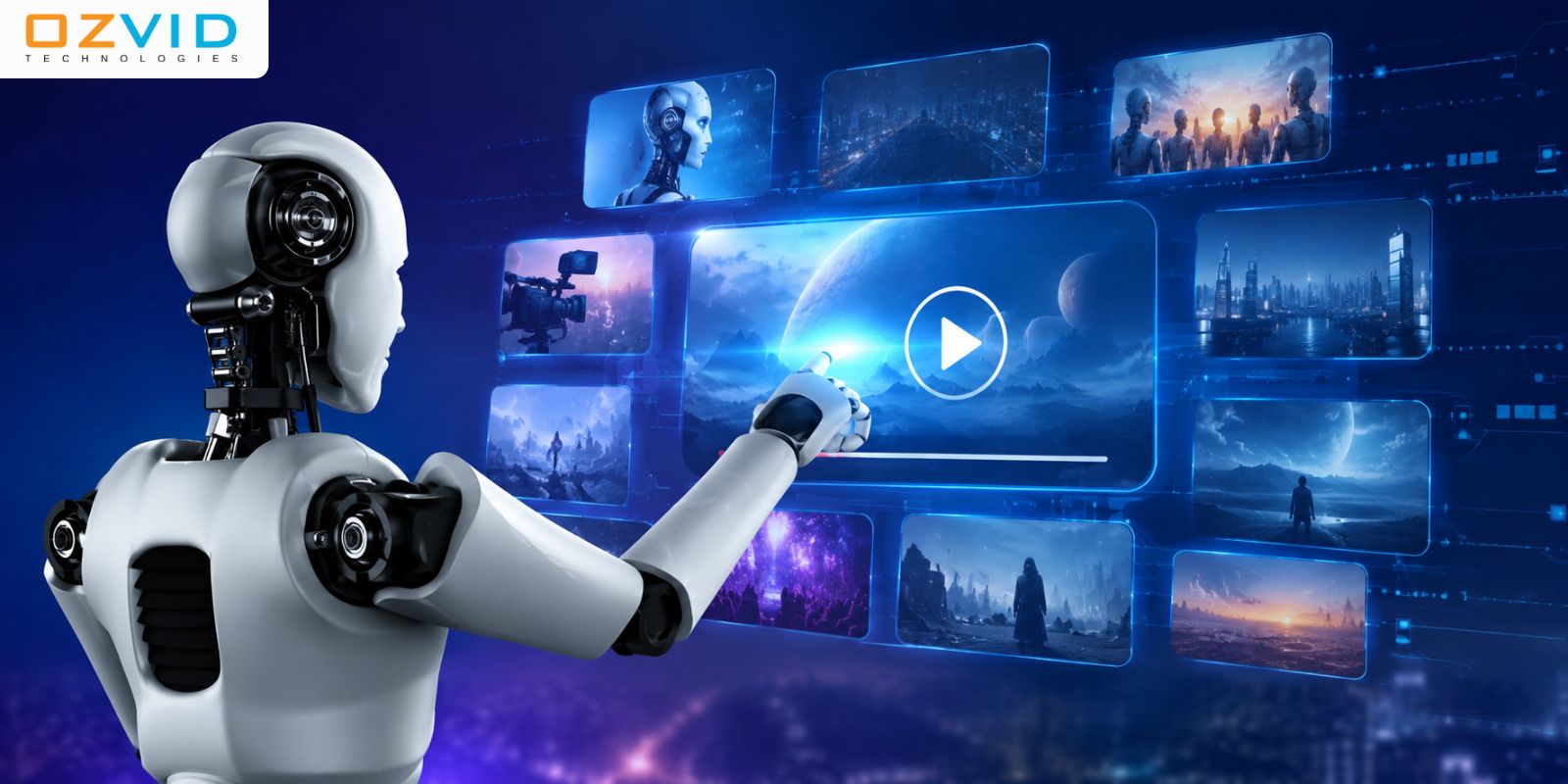
Within this expanding ecosystem, AI video agents are emerging as a powerful innovation, transforming how video content is created, edited, and distributed. These intelligent systems enable businesses to automate complex video production workflows, generate personalized content at scale, and significantly accelerate time-to-market for digital media. As organizations continue to prioritize video as a core communication tool, AI video agents are becoming essential for achieving smarter, faster, and more scalable video automation.
Key Takeaways
- Businesses can streamline scripting, editing, voiceovers, subtitles, rendering, and publishing processes using AI-powered automation tools.
- Organizations can minimize manual effort, reduce dependency on large production teams, and accelerate video creation for marketing and training.
- AI systems can analyze user behavior and create customized video experiences, improving audience engagement and customer satisfaction.
- Scalable cloud hosting, GPU processing, and storage systems are essential for handling large-scale video rendering and automation efficiently.
- Industries such as healthcare, education, marketing, retail, and corporate training are increasingly adopting AI-powered video automation solutions.
Building Intelligent AI Video Automation Systems
AI video agents require a strategic development process to ensure smooth automation, scalability, and performance. From planning workflows to integrating advanced AI capabilities, every stage plays an important role in creating reliable video automation systems.
1. Workflow Planning
The first step in AI video agent development involves understanding business requirements, user expectations, target audiences, and video automation objectives. Developers analyze the types of videos required, automation levels, integration needs, and content management processes to create a structured development roadmap.
Key considerations include:
- Business goals and automation requirements
- Target audience and content formats
- Video processing and storage needs
- Platform compatibility and integrations
- Scalability and future expansion plans
2. Data Collection and AI Model Training
AI video agents rely heavily on data for learning and automation. Developers gather large datasets, including video samples, speech patterns, subtitles, scripts, and visual elements to train machine learning and deep learning models for accurate video generation and editing capabilities.
Important tasks during this phase:
- Collecting structured and unstructured datasets
- Training speech recognition models
- Improving facial and object recognition
- Optimizing video recommendation systems
- Enhancing AI learning accuracy
3. Natural Language Processing Integration
Natural language processing enables AI video agents to understand scripts, commands, captions, and voice instructions. NLP integration allows automated script creation, subtitle generation, content summarization, and conversational video interactions for enhanced automation and user experiences across multiple video platforms.
Benefits of NLP integration:
- Automated script generation
- Real-time subtitle creation
- Voice command processing
- Multilingual content support
- Improved audience engagement
4. Automation Engine Development
The automation engine acts as the core component of AI video agents. Developers integrate AI-powered editing tools for trimming, transitions, effects, audio synchronization, scene detection, and content enhancement to automate complex editing tasks with minimal manual involvement.
Core automation functionalities include:
- Smart scene transitions
- Automatic video cropping and resizing
- AI-based audio enhancement
- Background noise reduction
- Visual effect automation
5. Cloud Integration and Infrastructure Setup
AI video agents require scalable infrastructure to handle video rendering, storage, analytics, and real-time processing. Cloud integration ensures smooth performance, remote accessibility, and faster video generation while supporting high workloads and large-scale automation processes efficiently.
Infrastructure requirements include:
- Cloud-based storage systems
- GPU-powered video rendering
- API integrations
- Real-time processing capabilities
- Scalable server architecture
6. Testing, Deployment, and Performance Optimization
Before deployment, AI video agents undergo extensive testing to ensure performance, automation accuracy, security, and compatibility across devices and platforms. Developers continuously optimize AI models, improve processing speed, and monitor system performance for better efficiency and user satisfaction.
Testing and optimization activities include:
- Functional and automation testing
- Security and compliance validation
- Video rendering performance checks
- AI accuracy improvements
- Continuous monitoring and updates
Essential Capabilities of AI Video Automation Platforms
AI video agents provide advanced functionalities that help businesses automate and optimize video production workflows. These intelligent capabilities improve efficiency, reduce manual effort, and deliver high-quality video experiences across industries.
1. Automated Video Generation
AI video agents can generate videos automatically using scripts, prompts, images, and audio inputs. This feature enables businesses to create marketing videos, tutorials, social media content, and training materials without extensive manual editing or production efforts.
2. AI-Powered Voiceovers
Advanced speech synthesis technologies allow AI video agent to create realistic voiceovers in multiple languages and tones. Businesses can generate professional narration for explainer videos, advertisements, customer support, and educational content with minimal human intervention.
3. Smart Video Editing and Enhancement
AI video agents can automatically edit videos by detecting scenes, adjusting brightness, synchronizing audio, removing noise, and applying transitions. These intelligent editing features simplify post-production processes while improving video quality and visual appeal.
4. Real-Time Subtitle and Caption Generation
AI-powered captioning systems automatically generate subtitles and closed captions in real time. This improves accessibility, audience engagement, and multilingual support while helping businesses meet content accessibility requirements across global markets.
5. Personalized Video Experiences
AI video agents can analyze user behavior, preferences, and engagement patterns to create personalized video recommendations and dynamic content experiences. This capability improves customer engagement and supports targeted marketing strategies.
6. Video Analytics and Performance Tracking
AI video agents provide detailed analytics on viewer engagement, watch time, audience demographics, and content performance. These insights help businesses optimize video strategies, improve campaigns, and maximize return on investment.
Investment Behind AI Video Automation Solutions: Cost Analysis
AI video automation solutions involve multiple cost components, including AI model development, cloud infrastructure, integrations, customization, and long-term maintenance. The final investment depends on the complexity of the platform, automation level, scalability requirements, and advanced functionalities such as real-time editing, multilingual support, analytics, and AI-generated avatars.
Cost Component | Description | Estimated Cost Range (USD) |
|---|---|---|
AI Model Development | Developing machine learning and deep learning models for video generation, editing, speech recognition, and automation. | $15,000 – $60,000 |
Data Collection & Training | Collecting datasets, labeling data, and training AI systems for better automation accuracy and performance. | $5,000 – $25,000 |
Cloud Infrastructure | Cloud hosting, GPU servers, storage systems, and video rendering infrastructure. | $8,000 – $40,000 annually |
API & Third-Party Integrations | Integration of speech synthesis, analytics, CRM, CMS, and video editing APIs. | $3,000 – $15,000 |
UI/UX Design | Designing dashboards, responsive interfaces, and user-friendly workflows for video management. | $4,000 – $18,000 |
Video Processing Engine | Developing automation workflows for editing, effects, subtitles, transitions, and rendering. | $10,000 – $45,000 |
Security & Compliance | Implementing encryption, authentication, data protection, and compliance frameworks. | $5,000 – $20,000 |
Multilingual Support | Adding translation systems, multilingual subtitles, and AI voiceover functionalities. | $4,000 – $15,000 |
Testing & Quality Assurance | Functional testing, AI accuracy validation, compatibility checks, and bug fixing. | $3,000 – $12,000 |
Deployment & DevOps | CI/CD setup, deployment pipelines, server configuration, and monitoring systems. | $4,000 – $16,000 |
Maintenance & Updates | Ongoing AI optimization, software updates, technical support, and bug resolution. | $6,000 – $25,000 annually |
Customization Features | Industry-specific functionalities, enterprise workflows, and advanced reporting tools. | $8,000 – $35,000 |
Analytics & Reporting Tools | Viewer analytics, engagement tracking, and performance reporting systems. | $3,000 – $14,000 |
Scalability Enhancements | Infrastructure expansion and performance optimization for growing workloads. | $7,000 – $30,000 |
Content Storage & Management | Video storage systems, backup solutions, and CDN implementation. | $2,000 – $12,000 annually |
Factors Associated with AI Video Agents Solutions Cost
Several factors influence the overall cost of AI video agent development and implementation. Understanding these elements helps businesses estimate budgets accurately and select suitable development strategies.
Project Complexity
The complexity of video automation workflows, AI functionalities, and integration requirements significantly impacts development costs. Advanced features such as real-time editing, facial recognition, and multilingual support require more development resources.
AI and Machine Learning Capabilities
Sophisticated AI models with higher accuracy levels demand larger datasets, advanced algorithms, and continuous optimization, increasing overall project expenses and infrastructure requirements.
Development Team Expertise
Experienced AI developers, data scientists, cloud engineers, and UI/UX designers contribute to better-quality solutions but may increase development costs due to specialized expertise.
Cloud Infrastructure Requirements
Scalable cloud hosting, GPU processing, and high-performance rendering systems are essential for efficient AI video automation and can significantly affect operational expenses.
Integration Requirements
The number of third-party tools, APIs, enterprise software, and content management systems integrated into the AI video platform impacts overall development and maintenance costs.
Practical Applications of AI Video Agents Across Industries
AI video agents are transforming how businesses create, manage, and distribute video content. These intelligent systems support automation across multiple industries and use cases.
1. Marketing and Advertising Automation
AI video agents help businesses create personalized advertisements, promotional videos, and social media campaigns quickly and efficiently. Automated editing and content personalization improve engagement while reducing production timelines for marketing teams.
2. E-Learning and Online Education
Educational institutions and e-learning platforms use AI video agents to create training modules, lecture videos, subtitles, and multilingual educational content. These solutions improve accessibility and streamline content delivery for global learners.
3. Customer Support and Virtual Assistance
Businesses integrate AI video agents into customer support systems to provide video-based tutorials, troubleshooting guides, and virtual assistance. This improves customer experiences while reducing support workload and response times.
4. Media and Entertainment Production
AI-powered video automation simplifies editing, special effects, subtitle generation, and content management in the media and entertainment industry. Production teams can create high-quality videos faster and more efficiently.
5. Corporate Training and Communication
Organizations use AI video agents to automate employee onboarding, compliance training, and internal communication videos. This ensures consistent messaging and reduces manual training efforts across distributed teams.
6. Healthcare and Telemedicine Solutions
Healthcare providers use AI video agents for patient education, virtual consultations, medical tutorials, and healthcare awareness campaigns. AI automation helps improve communication and accessibility in healthcare services.
Emerging Trends Shaping the Future of AI Video Agents
The future of AI video agents is driven by continuous advancements in artificial intelligence, automation, and immersive technologies. These innovations will further transform video creation and user experiences.
1. Hyper-Personalized Video Content
Future AI video agents will deliver highly personalized content experiences based on user behavior, preferences, demographics, and engagement patterns, improving customer interaction and marketing effectiveness.
2. Real-Time AI Video Editing
Advanced AI systems will support instant video editing, live content optimization, and automated post-production processes, enabling faster content delivery and real-time broadcasting capabilities.
3. Integration with Generative AI
Generative AI models will enhance script writing, animation creation, virtual presenters, and automated storytelling, allowing businesses to produce more creative and engaging video content.
4. AI-Powered Virtual Humans
Future AI video agents will increasingly use realistic virtual humans and digital avatars for customer support, education, training, and interactive marketing experiences across industries.
5. Enhanced Multilingual Features
AI video automation will continue improving translation, voice synthesis, and subtitle generation capabilities, enabling businesses to reach global audiences more effectively.
6. Greater Adoption Across Industries
As AI technologies become more accessible and affordable, industries such as healthcare, retail, finance, education, and entertainment will continue adopting AI video agents for automation and customer engagement.
Conclusion
AI video agents are revolutionizing the way businesses create, manage, and optimize video content. By combining artificial intelligence, automation, machine learning, and advanced analytics, these intelligent systems help organizations improve efficiency, reduce production costs, and deliver personalized video experiences at scale.
From automated editing and voice synthesis to real-time analytics and content personalization, AI video agents offer significant advantages for businesses across industries. As video consumption continues to grow globally, organizations adopting AI-powered automation solutions will gain a competitive edge through faster production cycles, improved engagement, and scalable content strategies.
At OZVID Technologies, we specialize in developing advanced AI-powered video automation solutions tailored to modern business requirements. Our expert team helps organizations build scalable, intelligent, and future-ready AI video agent platforms that enhance operational efficiency and transform digital content strategies. Contact us to learn more.
Frequently Asked Questions
1. What are AI video agents?
AI video agents are intelligent software systems that automate video-related tasks such as script creation, editing, subtitle generation, voiceovers, analytics, and publishing. These solutions use technologies like artificial intelligence, machine learning, and natural language processing to simplify video production workflows.
Key functionalities include:
- Automated video creation
- AI-powered editing and enhancement
- Subtitle and caption generation
- Voice synthesis and narration
- Video performance tracking
2. How do AI video agents improve video production efficiency?
AI video agents reduce manual work by automating repetitive production tasks. Businesses can generate, edit, and optimize videos much faster compared to traditional workflows, helping teams save time and improve productivity.
Efficiency benefits include:
- Faster video generation and editing
- Reduced dependency on large production teams
- Automated scene transitions and effects
- Real-time subtitle generation
- Streamlined publishing workflows
3. Which industries can benefit from AI video agents?
AI video agents are widely used across industries that rely heavily on video communication, marketing, training, and customer engagement. Their flexibility makes them suitable for businesses of all sizes.
Industries using AI video agents include:
- Marketing and advertising
- Education and e-learning
- Healthcare and telemedicine
- Media and entertainment
- Retail and eCommerce
- Corporate training and HR
4. What features should businesses look for in AI video agent solutions?
Businesses should choose AI video agent platforms that offer automation, scalability, analytics, and customization capabilities. The right features help organizations improve efficiency and support long-term growth.
Important features include:
- Automated video editing
- AI-generated voiceovers
- Multilingual subtitle support
- Cloud-based scalability
- Real-time analytics and reporting
- Personalized video recommendations
5. How much does AI video agent development cost?
The cost of developing AI video agents depends on project complexity, AI capabilities, integrations, infrastructure, and customization requirements. Simple solutions may require smaller investments, while enterprise-grade platforms involve higher development and maintenance costs.
Major cost factors include:
- AI model development
- Cloud hosting infrastructure
- API and third-party integrations
- UI/UX design requirements
- Security and compliance features
- Ongoing maintenance and upgrades
6. Are AI video agents suitable for small businesses?
Yes, AI video agents are highly beneficial for small businesses because they reduce production costs and simplify video creation processes. Small companies can create professional-quality content without hiring large video production teams.
Advantages for small businesses include:
- Affordable content production
- Faster marketing campaign creation
- Improved social media engagement
- Reduced operational workload
- Scalable video automation capabilities