
The healthcare industry is rapidly embracing artificial intelligence to enhance efficiency, accessibility, and patient care, and AI chatbots are emerging as a key driver of this transformation. These intelligent virtual assistants are revolutionizing how healthcare providers interact with patients by delivering instant support, automating routine processes, and enabling more personalized care experiences.
The growing demand for digital healthcare solutions is clearly reflected in market trends. According to Precedence Research, the global healthcare chatbots market is projected to grow significantly, increasing from USD 1.85 billion in 2026 to nearly USD 10.26 billion by 2034. This remarkable expansion, driven by a strong CAGR of 23.92% from 2025 to 2034, highlights the rising adoption of AI-powered technologies across the healthcare sector.
As healthcare systems continue to evolve, healthcare AI chatbots are playing a crucial role in bridging communication gaps, reducing operational burdens, and improving patient outcomes. From virtual consultations to real-time assistance, these solutions are not only enhancing efficiency but also reshaping the future of healthcare delivery for both medical professionals and businesses.
Key Highlights
- AI chatbots are transforming healthcare delivery by enabling faster, smarter, and more efficient communication between patients and providers, improving overall service quality.
- They significantly reduce operational burden by automating routine tasks such as appointment scheduling, patient queries, and follow-ups.
- 24/7 availability enhances patient experience, ensuring users receive instant support and guidance anytime.
- Advanced features make AI chatbots powerful tools for delivering personalized, data-driven healthcare services.
- From patient triage to mental health support, AI chatbots have diverse apps that improve outcomes and streamline healthcare processes.
- Investment in AI chatbot development varies based on complexity, but it offers long-term value through cost savings, scalability, and improved operational efficiency.
The Rise of Chatbots in Healthcare
The adoption of AI chatbots in healthcare has accelerated significantly in recent years, driven by the increasing demand for accessible, efficient, and patient-centric care. With the global healthcare system facing challenges such as staff shortages, rising costs, and growing patient expectations, chatbots offer a scalable solution to bridge these gaps.
Advancements in natural language processing (NLP), machine learning, and generative AI have enabled chatbots to understand and respond to complex medical queries with remarkable accuracy. These intelligent systems can interact with patients 24/7, providing instant responses and reducing dependency on human staff for routine tasks.
The COVID-19 pandemic further accelerated chatbot adoption, as healthcare providers needed digital tools to manage high volumes of patient inquiries, symptom checking, and vaccination scheduling. Today, chatbots are not just support tools - they are becoming integral components of modern healthcare ecosystems.
Benefits of AI Chatbots in Healthcare
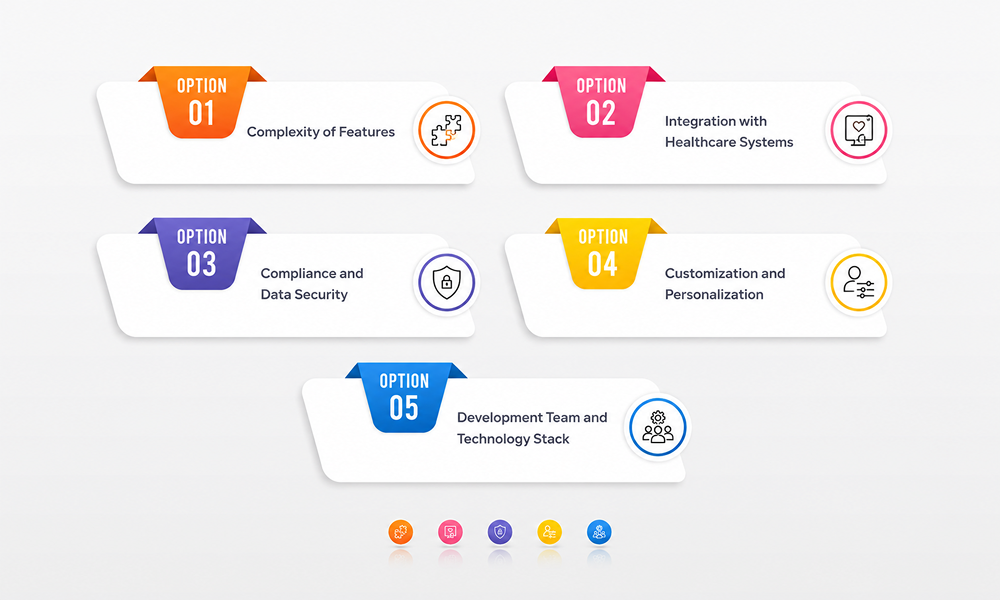
1. Complexity of Features
The complexity of chatbot features plays a major role in determining development cost, as more advanced capabilities require greater expertise and resources.
- Basic chatbots with predefined responses are cost-effective and easier to build
- AI-powered features like NLP and predictive analytics increase development effort
- Advanced capabilities such as voice recognition and real-time decision-making add complexity
- Generative AI requires model training and context-aware response handling, raising costs
2. Integration with Healthcare Systems
Integrating chatbots with existing healthcare systems enhances functionality but significantly impacts development costs.
- Connects with systems like EHR, telemedicine platforms, and CRM tools
- Ensures seamless data exchange for better performance
- Requires additional development, testing, and maintenance efforts
- More integrations lead to higher overall development costs
3. Compliance and Data Security
Compliance and data security are critical in healthcare chatbot development, as they ensure patient data protection and legal adherence.
- Requires implementation of encryption and secure APIs
- Involves user authentication and data protection mechanisms
- Must comply with regulations like HIPAA and GDPR
- Increases costs but ensures trust and reduces legal risks
4. Customization and Personalization
Customization and personalization allow chatbots to deliver tailored experiences but also increase development complexity and cost.
- Custom-built solutions are more expensive than ready-made options
- Personalization uses patient data, preferences, and behavior
- Requires advanced algorithms and data processing capabilities
- Enhances user experience and long-term engagement
5. Development Team and Technology Stack
The choice of development team and technology stack directly influences the quality and cost of chatbot development.
- Skilled developers and healthcare experts increase initial investment
- UX designers ensure better usability and user experience
- Advanced tools and frameworks impact overall budget
- Cloud services and modern technologies add to scalability and cost
Features of AI Chatbots in Healthcare
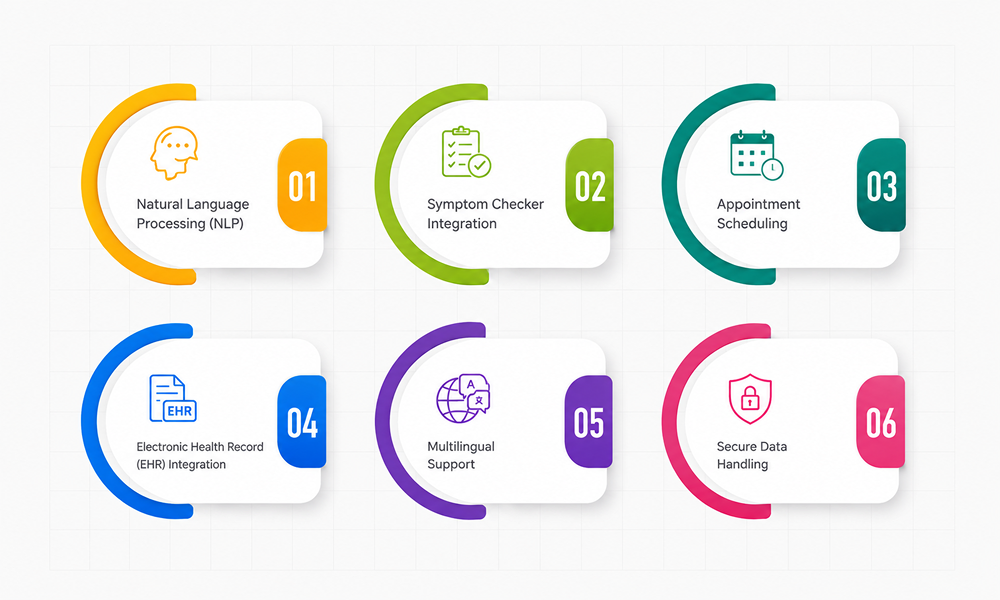
1. Natural Language Processing (NLP)
Natural Language Processing (NLP) enables AI chatbots to understand and respond to human language in a meaningful and context-aware way, making healthcare interactions more natural.
- Helps chatbots understand patient queries, even with different phrasing or medical terms
- Enables context-aware and human-like conversations
- Detects intent, sentiment, and urgency in user inputs
- Improves response accuracy and overall patient communication
2. Symptom Checker Integration
Symptom checker integration allows patients to enter symptoms and receive preliminary health guidance using AI-powered analysis.
- Analyzes symptoms using AI algorithms and medical databases
- Suggests possible conditions or next steps for patients
- Helps users decide when to seek medical attention
- Reduces unnecessary hospital visits and improves resource use
3. Appointment Scheduling
Appointment scheduling simplifies the process of booking and managing healthcare visits through an easy conversational interface.
- Allows patients to book, reschedule, or cancel appointments easily
- Syncs with hospital systems to show real-time availability
- Sends instant confirmations and reminders
- Reduces administrative workload and scheduling errors
4. Electronic Health Record (EHR) Integration
EHR integration allows chatbots to securely access and manage patient data for more personalized healthcare interactions.
- Provides access to patient history, treatments, and past consultations
- Enables personalized and informed chatbot responses
- Keeps healthcare providers updated with accurate data
- Improves care coordination and clinical decision-making
5. Multilingual Support
Multilingual support ensures that healthcare chatbots can communicate effectively with users from different linguistic backgrounds.
- Allows interaction in multiple languages for better accessibility
- Eliminates communication barriers in healthcare services
- Enhances understanding of medical information
- Supports global users and diverse populations
6. Secure Data Handling
Secure data handling ensures that sensitive patient information is protected through advanced security measures and compliance standards.
- Uses encryption and secure APIs for safe data transmission
- Follows regulations like HIPAA and GDPR
- Protects confidential patient information at all times
- Builds trust by ensuring data privacy and security
Steps to Develop an AI Chatbot in Healthcare
Developing an AI chatbot in healthcare involves a structured approach that combines technology, compliance, and user-centric design. From defining objectives to deployment and continuous improvement, each step plays a crucial role in building a reliable, secure, and efficient chatbot. A well-developed healthcare chatbot not only enhances patient engagement but also streamlines operations and ensures compliance with industry standards.
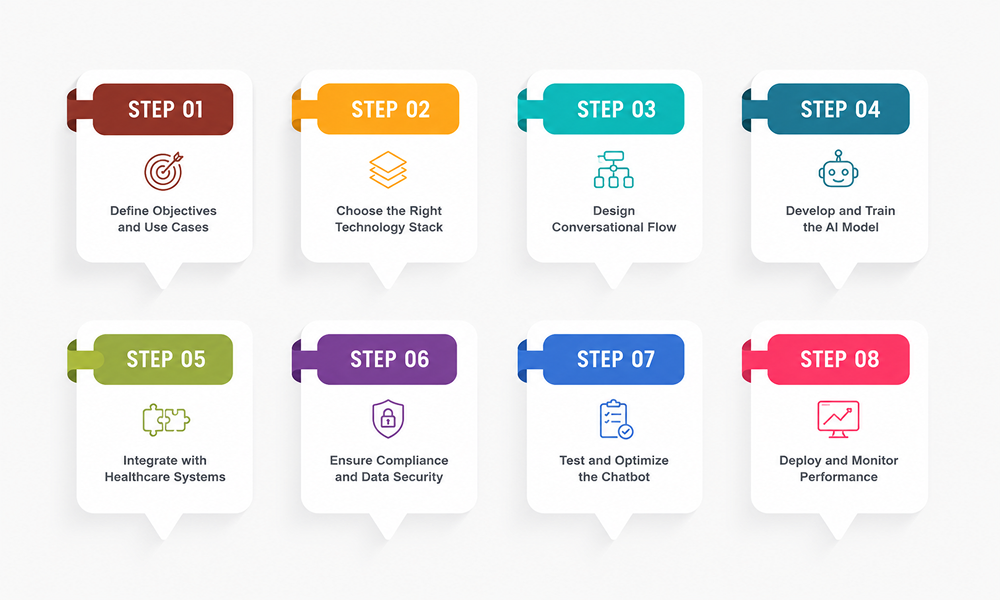
1. Define Objectives and Use Cases
Before starting development, it is essential to clearly define the purpose and scope of the chatbot to ensure it aligns with business and healthcare goals.
- Identify the primary goal such as patient support, triage, or appointment booking
- Determine the target audience, including patients, doctors, or staff
- Define specific use cases like symptom checking or medication reminders
- Set measurable success metrics such as response time and user engagement
- Align chatbot objectives with overall healthcare business strategy
2. Choose the Right Technology Stack
Selecting the appropriate technology stack is critical for building a scalable and high-performing healthcare chatbot.
- Choose AI frameworks like TensorFlow, PyTorch, or Dialogflow
- Select programming languages such as Python or JavaScript
- Decide between cloud platforms like AWS, Azure, or Google Cloud
- Use NLP libraries for better language understanding
- Ensure the tech stack supports scalability and future enhancements
3. Design Conversational Flow
A well-structured conversational flow ensures smooth and meaningful interactions between users and the chatbot.
- Map out user journeys and conversation paths
- Create intuitive and user-friendly dialogue structures
- Include fallback responses for unclear queries
- Ensure context retention for multi-step conversations
- Focus on simplicity and clarity in communication
4. Develop and Train the AI Model
Training the AI model is essential for enabling the chatbot to understand and respond accurately to user inputs.
- Use datasets relevant to healthcare scenarios
- Train NLP models to understand medical terminology
- Implement machine learning for continuous improvement
- Test model accuracy with real-world scenarios
- Optimize responses for context and intent recognition
5. Integrate with Healthcare Systems
Integration with existing systems enhances the chatbot’s functionality and ensures seamless data flow.
- Connect with Electronic Health Records (EHR) systems
- Integrate with appointment scheduling platforms
- Link with telemedicine and CRM systems
- Ensure secure APIs for data exchange
- Enable real-time synchronization of patient data
6. Ensure Compliance and Data Security
Healthcare chatbots must follow strict regulations to protect sensitive patient information and maintain trust.
- Implement data encryption and secure communication protocols
- Comply with regulations like HIPAA and GDPR
- Use authentication and access control mechanisms
- Conduct regular security audits and testing
- Ensure secure storage and handling of patient data
7. Test and Optimize the Chatbot
Thorough testing ensures the chatbot performs efficiently and delivers accurate and reliable responses.
- Conduct functional and usability testing
- Test chatbot performance under different scenarios
- Identify and fix bugs or inconsistencies
- Gather user feedback for improvements
- Continuously optimize based on performance data
8. Deploy and Monitor Performance
Deployment is the final step, followed by continuous monitoring to ensure long-term success and improvement.
- Deploy the chatbot on websites, apps, or messaging platforms
- Monitor performance metrics like response time and accuracy
- Track user engagement and satisfaction levels
- Update the chatbot regularly with new features
- Use analytics to improve performance and user experience
Applications of Generative AI Chatbots in Healthcare
Here are the applications of Generative AI chatbots in healthcare:
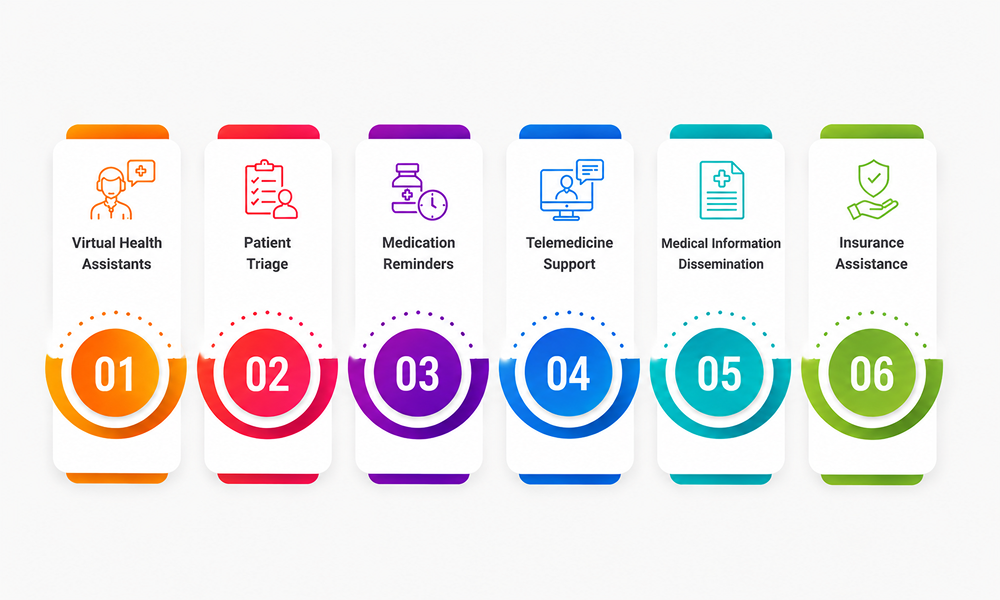
1. Virtual Health Assistants
Generative AI chatbots function as intelligent virtual health assistants that provide continuous support to patients throughout their healthcare journey. They can answer health-related questions, offer personalized wellness tips, and guide users on preventive care measures. These assistants can also help patients understand medical instructions, treatment plans, and lifestyle changes. By delivering timely and relevant information, virtual assistants empower patients to take a proactive role in managing their health while reducing dependency on in-person consultations for routine concerns.
2. Patient Triage
Generative AI chatbots play a critical role in patient triage by analyzing symptoms and assessing the urgency of medical conditions. Through structured conversations, they can evaluate patient inputs and categorize cases based on severity, directing individuals to the appropriate level of care. This helps reduce overcrowding in emergency departments and ensures that critical cases receive immediate attention. By streamlining the triage process, chatbots improve operational efficiency and enhance patient outcomes by minimizing delays in treatment.
3. Medication Reminders
AI chatbots are highly effective in improving medication adherence by sending timely reminders to patients. They can notify users about dosage schedules, refill alerts, and potential side effects, ensuring that patients follow their prescribed treatment plans accurately. Additionally, chatbots can provide instructions on how to take medications properly and answer common questions related to prescriptions. This consistent support reduces the risk of missed doses and enhances treatment effectiveness, particularly for patients with chronic conditions.
4. Telemedicine Support
Generative AI chatbots enhance telemedicine services by acting as a bridge between patients and healthcare providers. They can collect patient information before virtual consultations, summarize symptoms, and share relevant details with doctors to save time during appointments. After consultations, chatbots can provide follow-up instructions, medication guidance, and appointment reminders. This seamless integration improves the efficiency of telehealth platforms, ensuring a smoother and more organized virtual care experience for both patients and providers.
5. Medical Information Dissemination
AI chatbots serve as reliable sources of medical information by delivering accurate, up-to-date, and easy-to-understand content to users. They can explain complex medical terms, provide details about diseases, treatments, and preventive measures, and answer frequently asked questions. This helps patients make informed decisions about their health and reduces misinformation. By offering consistent and trustworthy information, chatbots contribute to improved health literacy and better patient awareness.
6. Insurance Assistance
Navigating healthcare insurance can be complex, but generative AI chatbots simplify the process by guiding users through policies, coverage details, and claims procedures. They can answer queries related to eligibility, benefits, and documentation requirements, making it easier for patients to understand their insurance plans. Chatbots can also assist in claim submission and status tracking, reducing administrative burden and improving transparency. This enhances the overall patient experience by minimizing confusion and delays in insurance-related processes.
AI Chatbots in Healthcare: Cost and Factors
The cost of developing AI chatbots in healthcare can vary widely depending on the level of sophistication, features, and compliance requirements involved. While simple rule-based chatbots are relatively affordable, advanced AI-powered chatbots that leverage generative AI, natural language processing, and deep integrations require a higher investment. For healthcare organizations, this cost should be viewed as a long-term investment that enhances operational efficiency, improves patient engagement, and reduces manual workload.
In general, the pricing structure depends on whether the chatbot is built from scratch, customized, or integrated into existing systems. Businesses must also consider ongoing expenses such as maintenance, updates, and scalability to ensure optimal performance over time.
Type of AI Chatbot | Description | Estimated Cost (USD) |
|---|---|---|
Basic Chatbot | Rule-based chatbot with limited responses and minimal integrations | $5,000 – $15,000 |
Mid-Level AI Chatbot | AI-powered chatbot with NLP, basic integrations, and moderate customization | $15,000 – $50,000 |
Advanced AI Chatbot | Fully customized chatbot with generative AI, EHR integration, analytics, and voice capabilities | $50,000 – $150,000+ |
Here are the key factors affecting the cost:
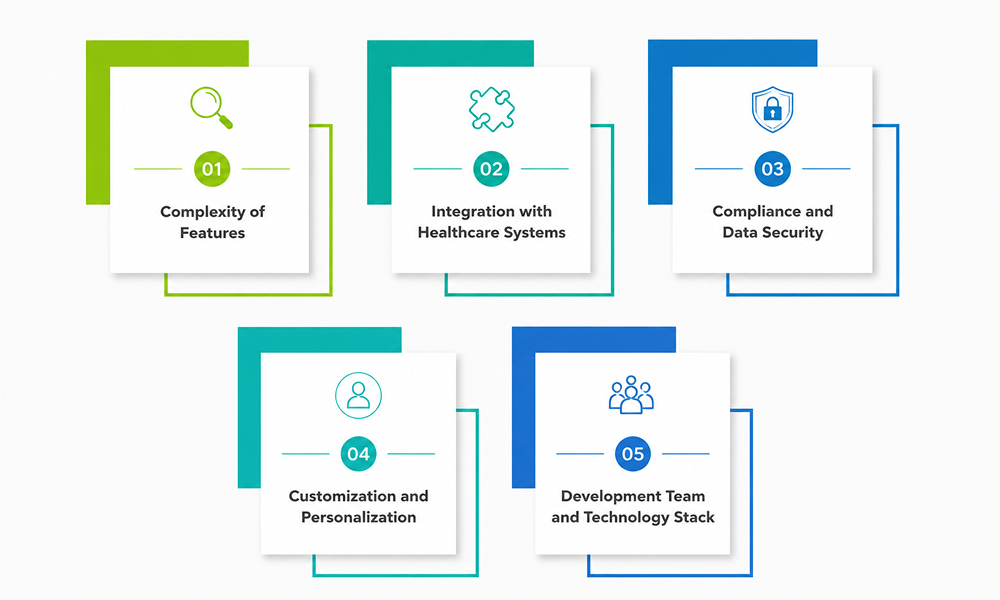
1. Complexity of Features
The complexity of chatbot features plays a major role in determining development cost, as more advanced capabilities require greater expertise and resources.
- Basic chatbots with predefined responses are cost-effective and easier to build
- AI-powered features like NLP and predictive analytics increase development effort
- Advanced capabilities such as voice recognition and real-time decision-making add complexity
- Generative AI requires model training and context-aware response handling, raising costs
2. Integration with Healthcare Systems
Integrating chatbots with existing healthcare systems enhances functionality but significantly impacts development costs.
- Connects with systems like EHR, telemedicine platforms, and CRM tools
- Ensures seamless data exchange for better performance
- Requires additional development, testing, and maintenance efforts
- More integrations lead to higher overall development costs
3. Compliance and Data Security
Compliance and data security are critical in healthcare chatbot development, as they ensure patient data protection and legal adherence.
- Requires implementation of encryption and secure APIs
- Involves user authentication and data protection mechanisms
- Must comply with regulations like HIPAA and GDPR
- Increases costs but ensures trust and reduces legal risks
4. Customization and Personalization
Customization and personalization allow chatbots to deliver tailored experiences but also increase development complexity and cost.
- Custom-built solutions are more expensive than ready-made options
- Personalization uses patient data, preferences, and behavior
- Requires advanced algorithms and data processing capabilities
- Enhances user experience and long-term engagement
5. Development Team and Technology Stack
The choice of development team and technology stack directly influences the quality and cost of chatbot development.
- Skilled developers and healthcare experts increase initial investment
- UX designers ensure better usability and user experience
- Advanced tools and frameworks impact overall budget
- Cloud services and modern technologies add to scalability and cost
Conclusion
OZVID Technologies is a leading AI development company. We believe that AI chatbots are revolutionizing the healthcare landscape by bridging the gap between patients and providers through intelligent, scalable, and efficient solutions. As the demand for digital healthcare continues to grow, organizations must embrace AI-driven innovations to stay competitive and deliver exceptional patient experiences.
Our expertise lies in developing advanced, secure, and customized AI chatbot solutions tailored to the unique needs of healthcare businesses. From enhancing patient engagement to streamlining operations, we help organizations unlock the full potential of AI technology.
Partner with OZVID Technologies to transform your healthcare services with cutting-edge AI chatbot solutions that drive efficiency and improve outcomes. Contact us today.
Frequently Asked Questions
1. What are AI chatbots in healthcare?
AI chatbots in healthcare are virtual assistants powered by artificial intelligence that interact with patients and healthcare providers through text or voice.
- Provide instant responses to patient queries
- Assist in scheduling and reminders
- Offer basic medical guidance
- Enhance patient engagement
2. Are AI chatbots safe for healthcare use?
Yes, AI chatbots are designed with advanced security protocols to ensure patient data is protected and compliant with healthcare regulations.
- Use encryption and secure data storage
- Comply with healthcare standards
- Protect sensitive patient information
- Regular security updates and monitoring
3. Can AI chatbots replace doctors?
No, AI chatbots are designed to assist healthcare professionals, not replace them. They handle routine tasks and provide preliminary guidance.
- Support doctors with data and insights
- Handle administrative tasks
- Provide initial symptom analysis
- Require human oversight for diagnosis
4. How long does it take to develop a healthcare chatbot?
Development time depends on the complexity and features required, ranging from a few weeks to several months.
- Basic chatbot: 2–4 weeks
- Mid-level chatbot: 1–3 months
- Advanced chatbot: 3–6+ months
- Depends on integrations and customization
5. What industries benefit from healthcare chatbots?
Healthcare chatbots are useful across various sectors within the medical ecosystem.
- Hospitals and clinics
- Telemedicine platforms
- Health insurance companies
- Pharmaceutical businesses
- Wellness and fitness providers
6. What role does generative AI play in healthcare chatbots?
Generative AI enhances chatbot capabilities by enabling more human-like, context-aware, and dynamic responses.
- Generates personalized responses based on user input
- Improves conversational accuracy and engagement
- Handles complex and unstructured medical queries
- Continuously learns and adapts from interactions
7. How do AI chatbots ensure data privacy and security?
AI chatbots use advanced security protocols to protect sensitive healthcare data and maintain compliance.
- Implement end-to-end encryption
- Use secure APIs for data exchange
- Follow regulations like HIPAA and GDPR
- Apply authentication and access control measures
8. What technologies are essential for building healthcare chatbots?
Developing healthcare chatbots requires a combination of AI, NLP, and secure technology frameworks.
- Natural Language Processing (NLP) for communication
- Machine Learning for continuous improvement
- Cloud platforms for scalability
- Secure APIs for system integration