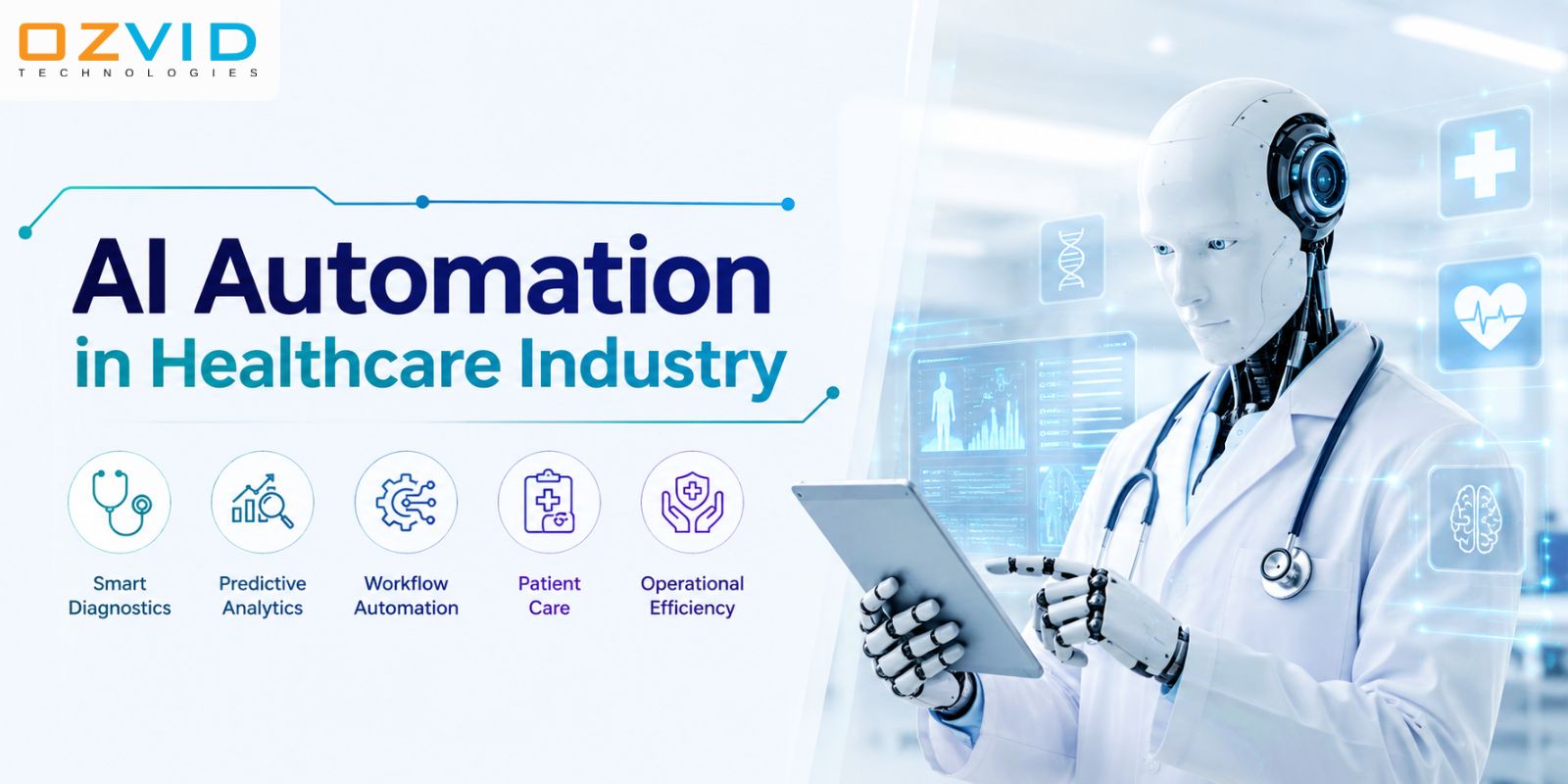
Artificial Intelligence (AI) automation is rapidly transforming the healthcare industry, enabling providers to deliver faster diagnoses, personalized treatments, and more efficient patient care. By combining machine learning, predictive analytics, natural language processing, and intelligent automation, AI is helping healthcare organizations streamline clinical workflows, reduce operational costs, and improve medical outcomes. From virtual health assistants and robotic surgeries to automated medical imaging and remote patient monitoring, AI is revolutionizing every aspect of modern healthcare.
The growing adoption of AI reflects its tremendous market potential. According to industry reports, the global AI healthcare market is projected to reach US$ 868 billion by 2030, generating approximately US$ 646 billion in cost savings and US$ 222 billion in additional revenue gains. These figures highlight how AI is not only enhancing patient care but also creating significant financial value for healthcare providers and organizations.
As healthcare systems face increasing challenges such as rising patient volumes, chronic diseases, workforce shortages, and escalating operational expenses, AI automation offers innovative solutions to improve efficiency and support data-driven decision-making. By automating repetitive tasks, enabling early disease detection, and delivering real-time clinical insights, AI empowers healthcare professionals to focus more on delivering quality care.
Key Takeaways
- AI automation improves diagnostic accuracy by analyzing medical data faster and more accurately than traditional methods.
- Healthcare providers can automate repetitive administrative tasks, allowing medical professionals to focus more on patient care.
- AI-powered predictive analytics helps detect diseases early and supports preventive healthcare strategies.
- Intelligent healthcare systems improve operational efficiency while reducing treatment costs and human errors.
- Successful AI implementation requires quality data, regulatory compliance, skilled professionals, and continuous monitoring.
How AI Is Transforming Modern Healthcare
Artificial Intelligence has become one of the most influential technologies in modern healthcare, reshaping how medical professionals diagnose diseases, treat patients, manage hospital operations, and conduct medical research. Instead of replacing healthcare professionals, AI acts as a powerful assistant that enhances clinical decision-making and improves overall efficiency.
AI in healthcare process massive amounts of patient information, including medical histories, diagnostic images, laboratory reports, and wearable device data, to identify patterns that may be difficult for humans to detect. These insights help physicians make quicker, more informed decisions while minimizing the risk of diagnostic errors.
Beyond clinical applications, AI supports healthcare organizations by automating scheduling, billing, patient communication, inventory management, and documentation. It also accelerates drug discovery, enables precision medicine, and powers virtual healthcare services that improve accessibility for patients worldwide.
As healthcare continues to embrace digital transformation, AI is becoming a vital component in delivering faster, smarter, and more personalized medical care.
Top Ways AI Automation Is Reshaping Healthcare
AI is influencing nearly every aspect of the healthcare ecosystem. Below are some of the most impactful applications.
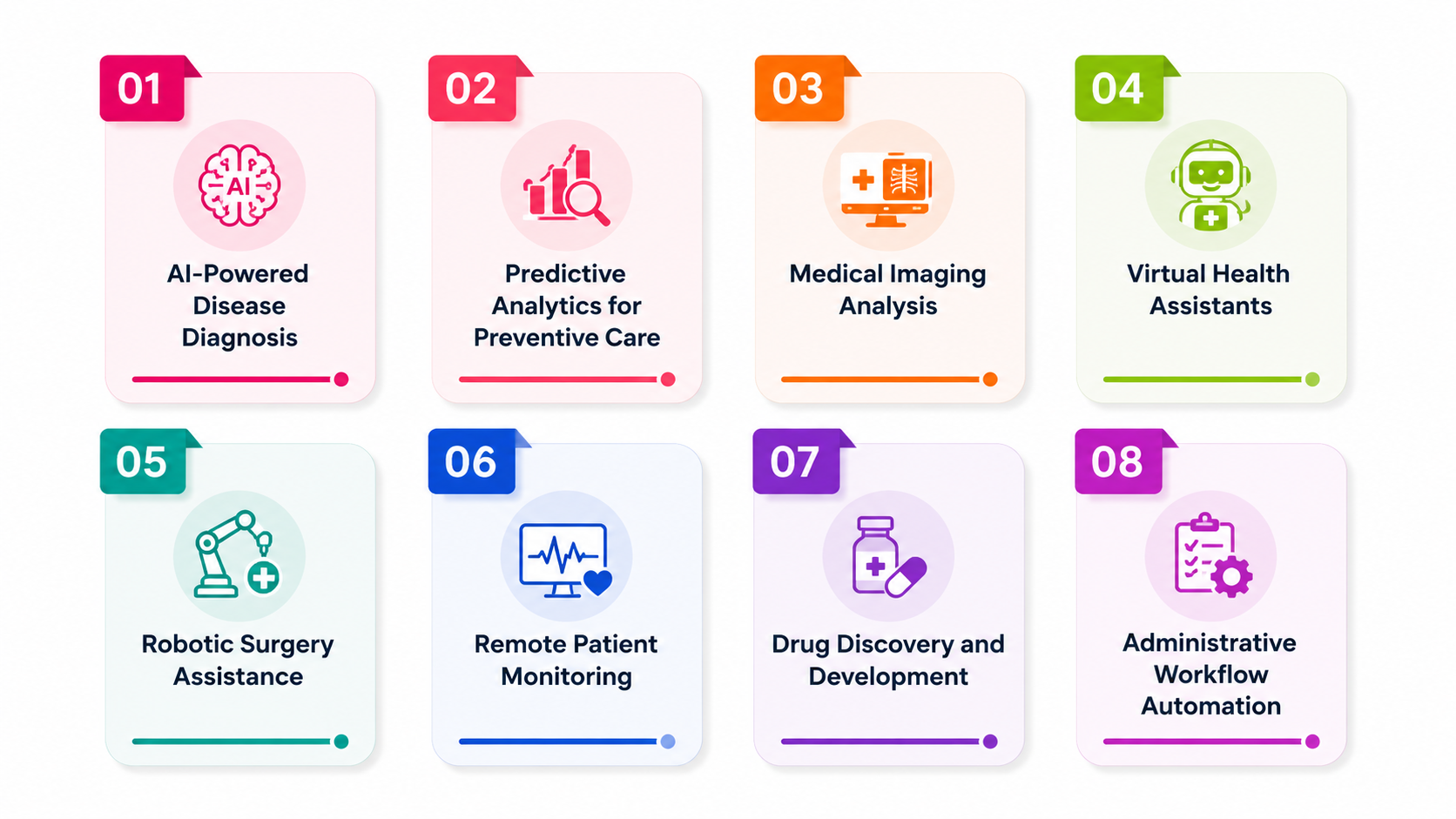
1. AI-Powered Disease Diagnosis
AI algorithms analyze medical images, laboratory reports, pathology slides, and patient histories to identify diseases with exceptional speed and precision. These systems support doctors in diagnosing complex conditions while minimizing the chances of human error and enabling earlier treatment interventions.
How it helps:
- Detects diseases at earlier stages
- Supports faster clinical decisions
- Improves diagnostic accuracy
- Reduces human errors
- Enhances patient outcomes
2. Predictive Analytics for Preventive Care
AI analyzes historical health records, genetic information, lifestyle habits, and real-time patient data to predict disease risks before symptoms become severe. This enables healthcare providers to develop preventive treatment plans and reduce hospital admissions.
How it helps:
- Identifies high-risk patients
- Prevents disease progression
- Enables personalized care plans
- Supports early medical intervention
- Improves population health management
3. Medical Imaging Analysis
AI-powered imaging systems interpret X-rays, CT scans, MRIs, ultrasounds, and mammograms with remarkable precision. Radiologists use AI as a second opinion to identify abnormalities more efficiently and improve diagnostic confidence.
How it helps:
- Detects abnormalities quickly
- Improves image interpretation
- Assists radiologists
- Reduces diagnostic delays
- Enhances imaging accuracy
4. Virtual Health Assistants
AI-driven virtual assistants provide patients with appointment scheduling, medication reminders, symptom assessments, and personalized health recommendations. They offer 24/7 support while reducing the workload on healthcare staff.
How it helps:
- Improves patient engagement
- Offers instant support
- Schedules appointments automatically
- Provides medication reminders
- Reduces administrative burden
5. Robotic Surgery Assistance
AI-enabled robotic surgical systems assist surgeons in performing minimally invasive procedures with greater precision, flexibility, and control. These technologies help reduce surgical risks and improve recovery times.
How it helps:
- Enhances surgical precision
- Reduces complications
- Shortens recovery periods
- Minimizes blood loss
- Improves patient safety
6. Remote Patient Monitoring
AI integrates with wearable devices and remote monitoring systems to continuously track patient health metrics. Healthcare providers receive real-time alerts when abnormal readings require immediate attention.
How it helps:
- Enables continuous monitoring
- Supports chronic disease management
- Reduces hospital visits
- Detects health deterioration early
- Improves patient convenience
7. Drug Discovery and Development
AI accelerates pharmaceutical research by analyzing millions of chemical compounds, predicting drug interactions, and identifying promising treatment candidates significantly faster than traditional research methods.
How it helps:
- Speeds up drug development
- Reduces research costs
- Identifies potential therapies
- Improves clinical trial efficiency
- Accelerates innovation
8. Administrative Workflow Automation
Healthcare organizations use AI to automate billing, claims processing, patient registration, medical coding, appointment management, and documentation, allowing healthcare professionals to spend more time caring for patients.
- How it helps:
- Automates repetitive tasks
- Reduces paperwork
- Improves operational efficiency
- Minimizes administrative errors
- Lowers operational costs
Major Benefits of AI Automation in Healthcare
AI automation is revolutionizing the healthcare industry by improving clinical accuracy, enhancing operational efficiency, and delivering better patient experiences. From intelligent diagnostics and personalized treatment plans to automated administrative workflows, AI empowers healthcare providers to make faster, data-driven decisions while reducing costs.
1. Improved Diagnostic Accuracy
AI analyzes complex medical datasets with exceptional precision, helping physicians identify diseases earlier and make evidence-based decisions. This improves treatment outcomes while reducing diagnostic inaccuracies.
Benefits include:
- Earlier disease detection
- Better treatment planning
- Reduced medical errors
- Enhanced physician confidence
- Improved patient safety
2. Enhanced Operational Efficiency
Automation eliminates repetitive manual processes across hospitals and clinics, allowing healthcare teams to focus on patient care while improving organizational productivity.
Benefits include:
- Faster workflows
- Reduced paperwork
- Improved resource allocation
- Better staff productivity
- Increased efficiency
3. Personalized Patient Care
AI evaluates individual patient data to recommend customized treatments, medications, and preventive care strategies tailored to each patient's unique health profile.
Benefits include:
- Individualized treatments
- Better patient engagement
- Improved recovery rates
- Personalized recommendations
- Higher patient satisfaction
4. Reduced Healthcare Costs
By optimizing operations, preventing unnecessary hospitalizations, and supporting early diagnosis, AI significantly lowers healthcare expenditures for providers and patients alike.
Benefits include:
- Lower operational expenses
- Fewer unnecessary procedures
- Reduced readmission rates
- Efficient resource utilization
- Better financial outcomes
5. Faster Clinical Decision-Making
AI delivers real-time insights by analyzing large volumes of medical information, enabling physicians to make faster and more informed clinical decisions.
Benefits include:
- Real-time recommendations
- Faster diagnoses
- Improved treatment decisions
- Better emergency response
- Enhanced clinical outcomes
A Step-by-Step Guide to Successfully Integrating AI in Healthcare
Implementing AI in healthcare requires a well-planned strategy that goes beyond simply adopting new technologies. Healthcare organizations must establish clear objectives, build a strong data infrastructure, ensure regulatory compliance, and prepare their workforce for digital transformation. A structured implementation approach minimizes risks, improves adoption, and maximizes the value of AI-driven solutions.
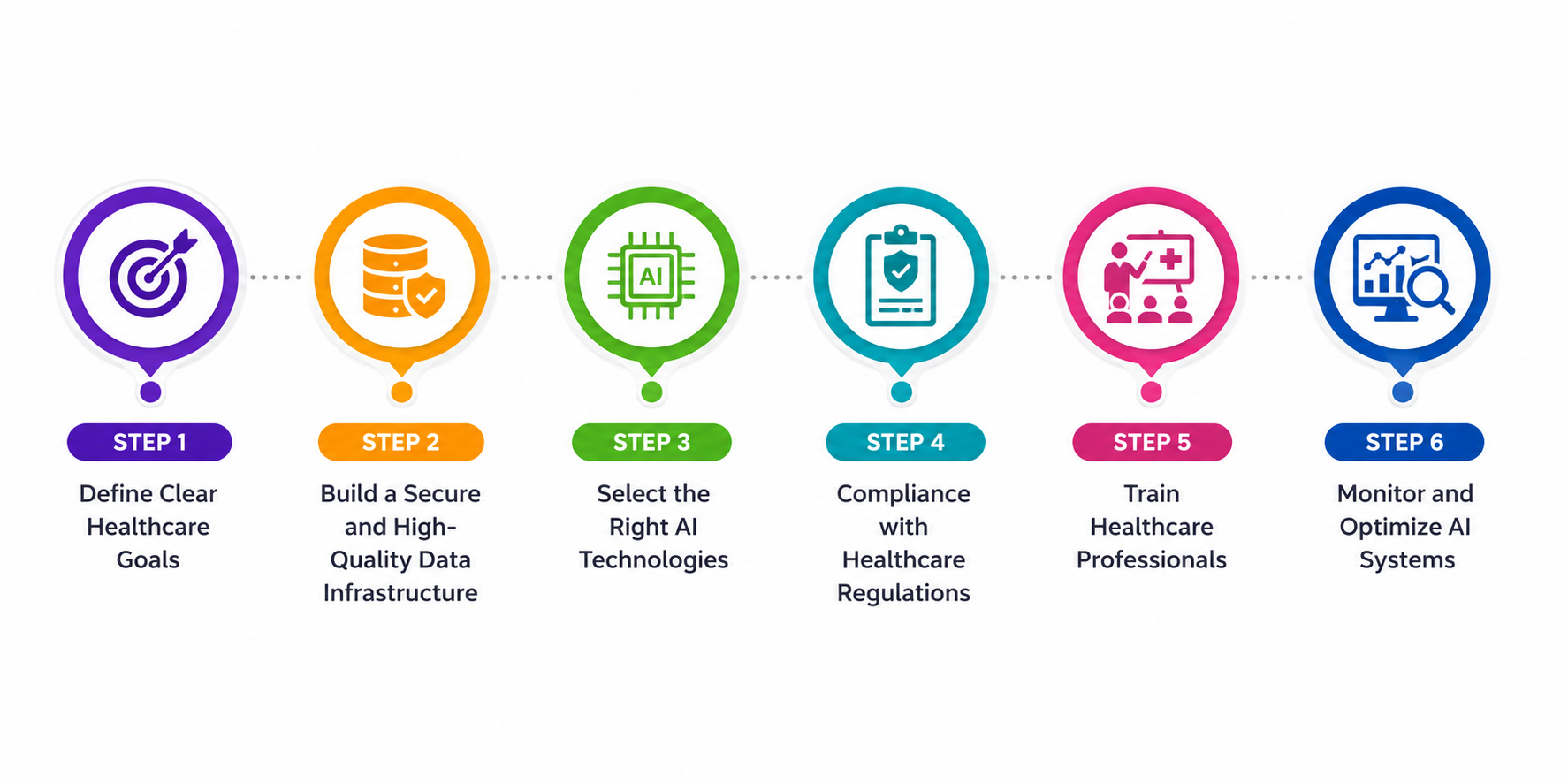
1. Define Clear Healthcare Goals
The first step toward successful AI adoption is identifying the specific challenges your organization aims to solve. Whether the objective is improving diagnostic accuracy, automating administrative workflows, enhancing patient engagement, or optimizing hospital operations, clearly defined goals ensure AI initiatives align with business priorities and deliver measurable value over time.
2. Build a Secure and High-Quality Data Infrastructure
AI systems rely on accurate, complete, and well-structured healthcare data to generate reliable insights. Organizations should invest in secure electronic health records software, standardized data management practices, and robust cybersecurity measures to ensure data quality, protect patient privacy, and support the development of effective AI-powered healthcare applications.
3. Select the Right AI Technologies
Choosing the right AI platform is essential for achieving successful implementation. Healthcare providers should evaluate AI solutions based on scalability, interoperability, security, regulatory compliance, and compatibility with existing healthcare systems. Selecting experienced technology partners also helps ensure seamless deployment, customization, and long-term system performance.
4. Compliance with Healthcare Regulations
Healthcare organizations must ensure that AI solutions comply with industry regulations and data privacy standards. Implementing strong governance frameworks, maintaining transparency, protecting sensitive patient information, and following ethical AI practices help build trust among patients, healthcare professionals, and regulatory authorities while minimizing legal and operational risks.
5. Train Healthcare Professionals
Successful AI integration depends on the people using the technology every day. Healthcare professionals should receive comprehensive training on AI tools, workflows, and best practices to build confidence and encourage adoption. Continuous education helps staff understand AI capabilities while ensuring they continue delivering high-quality, patient-centered healthcare services.
6. Monitor and Optimize AI Systems
AI implementation should not end after deployment. Healthcare organizations should continuously monitor system performance, evaluate outcomes, gather user feedback, and update AI models as medical practices and technologies evolve. Regular optimization ensures AI solutions remain accurate, secure, efficient, and capable of delivering long-term value across healthcare operations.
Conclusion
AI automation is no longer a futuristic concept, it is rapidly becoming the foundation of modern healthcare. From intelligent diagnostics and predictive analytics software to robotic surgery and administrative automation, AI is helping healthcare providers deliver faster, safer, and more personalized care while improving operational efficiency.
As technology continues to evolve, organizations that embrace AI today will be better equipped to meet the growing demands of patients and healthcare professionals alike. Successful implementation requires a strategic approach, quality data, regulatory compliance, and ongoing innovation.
At OZVID Technologies, we specialize in building intelligent AI-powered healthcare solutions that help hospitals, clinics, startups, and healthcare enterprises accelerate digital transformation. Our experienced development team delivers secure, scalable, and customized AI applications designed to improve patient care, optimize workflows, and drive long-term business growth. Whether you're looking to implement AI automation, predictive analytics, telemedicine platforms, or healthcare software solutions, OZVID Technologies is your trusted technology partner.
Frequently Asked Questions
1. What is AI automation in healthcare?
AI automation in healthcare refers to the use of artificial intelligence technologies to automate medical, clinical, and administrative processes, helping healthcare providers deliver faster, smarter, and more efficient patient care.
- Automates repetitive healthcare tasks
- Enhances clinical decision-making
- Improves patient care and outcomes
- Reduces administrative workload
- Increases operational efficiency
2. How does AI improve patient diagnosis?
AI analyzes medical images, laboratory reports, electronic health records, and patient data to identify diseases quickly and accurately, assisting healthcare professionals in making informed diagnostic decisions.
- Detects diseases at an early stage
- Improves diagnostic accuracy
- Supports doctors with real-time insights
- Minimizes human errors
- Enables faster treatment planning
3. Is AI replacing doctors in healthcare?
No. AI is designed to support healthcare professionals rather than replace them. It assists doctors by analyzing large volumes of medical data, providing recommendations, and automating routine tasks while human expertise remains essential.
- Assists rather than replaces physicians
- Supports faster decision-making
- Automates repetitive processes
- Enhances clinical productivity
- Improves patient outcomes through collaboration
4. What are the biggest benefits of AI in healthcare?
AI offers numerous advantages, including improved patient care, operational efficiency, personalized treatment plans, predictive analytics, and reduced healthcare costs.
- Improves diagnostic accuracy
- Enables personalized healthcare
- Reduces operational costs
- Enhances patient engagement
- Streamlines hospital workflows
5. Why should healthcare organizations invest in AI solutions?
Healthcare organizations should invest in AI to improve efficiency, optimize resource utilization, enhance patient experiences, and stay competitive in an increasingly digital healthcare environment.
- Increases operational efficiency
- Improves patient satisfaction
- Supports data-driven decision-making
- Strengthens healthcare security
- Enables long-term digital transformation