
Key Takeaways
- Automotive software powers connected vehicles, EVs, autonomous driving systems, infotainment platforms, and fleet management solutions.
- Custom software enables manufacturers to improve safety, efficiency, compliance, and customer experiences.
- AI, IoT, cloud computing, machine learning, and edge computing are transforming modern automotive ecosystems.
- Choosing an experienced automotive software development company reduces project risks and accelerates product delivery.
- Development costs vary depending on features, integrations, security requirements, and software complexity.
- Following industry standards such as ISO 26262, AUTOSAR, and cybersecurity regulations ensures long-term reliability.
The automotive industry in the United States is experiencing a significant digital transformation driven by connected vehicles, electric mobility, autonomous driving, artificial intelligence, and cloud computing. Modern vehicles have evolved into intelligent systems that rely heavily on software to improve safety, navigation, entertainment, predictive maintenance, and overall driving experiences.
According to industry reports, the global automotive software market is expected to witness substantial growth over the next decade as manufacturers continue investing in software-defined vehicles (SDVs), autonomous technologies, and connected ecosystems. Businesses looking to remain competitive are increasingly partnering with experienced automotive software development companies to build innovative, secure, and scalable software solutions.
Whether you are an automotive startup, OEM, fleet management company, EV manufacturer, or mobility service provider, investing in custom automotive software can improve operational efficiency, enhance customer experiences, reduce maintenance costs, and create new revenue opportunities.
While the global vehicle market is expected to grow at a modest 1% annually, the automotive software and electronics market is expanding much faster. According to McKinsey & Company, it is projected to grow at a 4.5% CAGR, reaching $519 billion by 2035. This rapid growth reflects the increasing demand for software-defined vehicles, connected technologies, AI-powered systems, and advanced driver assistance features, making software a key driver of innovation in the automotive industry.
Key Benefits of Investing in Automotive Software Development Services
Automotive software development helps manufacturers, dealerships, mobility providers, and fleet operators improve operational efficiency, enhance vehicle intelligence, increase customer satisfaction, and create innovative mobility solutions. Custom software also enables businesses to stay competitive in the rapidly evolving automotive market.
1. Enhanced Vehicle Safety
Advanced automotive software integrates real-time monitoring, AI-powered driver assistance, collision detection, predictive alerts, and intelligent diagnostics to improve road safety. These technologies help reduce accidents while enhancing driver confidence and ensuring better compliance with modern safety regulations.
Benefits:
- Driver assistance systems
- Collision warning capabilities
- Predictive safety alerts
- Improved regulatory compliance
2. Better Customer Experience
Modern consumers expect seamless digital experiences inside and outside their vehicles. Automotive software delivers personalized infotainment, navigation, smartphone integration, voice assistants, remote vehicle control, and predictive maintenance notifications that significantly improve overall customer satisfaction.
Benefits:
- Personalized driving experiences
- Smart infotainment systems
- Mobile application integration
- Remote vehicle management
3. Increased Operational Efficiency
Automotive software automates diagnostics, maintenance scheduling, inventory tracking, fleet monitoring, and business workflows. Automation minimizes manual processes, reduces downtime, optimizes resource utilization, and enables businesses to operate more efficiently while lowering operational expenses.
Benefits:
- Workflow automation
- Reduced maintenance downtime
- Efficient fleet operations
- Improved productivity
4. Real-Time Data Analytics
Connected vehicles continuously generate valuable operational data. Automotive software collects, processes, and analyses this information to provide actionable insights that improve vehicle performance, optimize maintenance schedules, reduce fuel consumption, and support better business decision-making.
Benefits:
- Performance monitoring
- Predictive analytics
- Maintenance optimization
- Business intelligence insights
5. Future Scalability
Custom automotive software can evolve alongside changing technologies, market demands, and business growth. Scalable architectures support future integrations with AI, autonomous driving, cloud services, electric vehicles, and smart mobility ecosystems without requiring complete software redevelopment.
Benefits:
- Easy feature expansion
- Cloud scalability
- Future technology integration
- Long-term business growth
How to Choose the Right Automotive Software Development Partner
Selecting the right automotive software development company is one of the most important decisions for any automotive business. The ideal technology partner brings industry expertise, technical excellence, regulatory knowledge, and scalable development capabilities that ensure your software performs reliably while supporting future innovation and business growth.
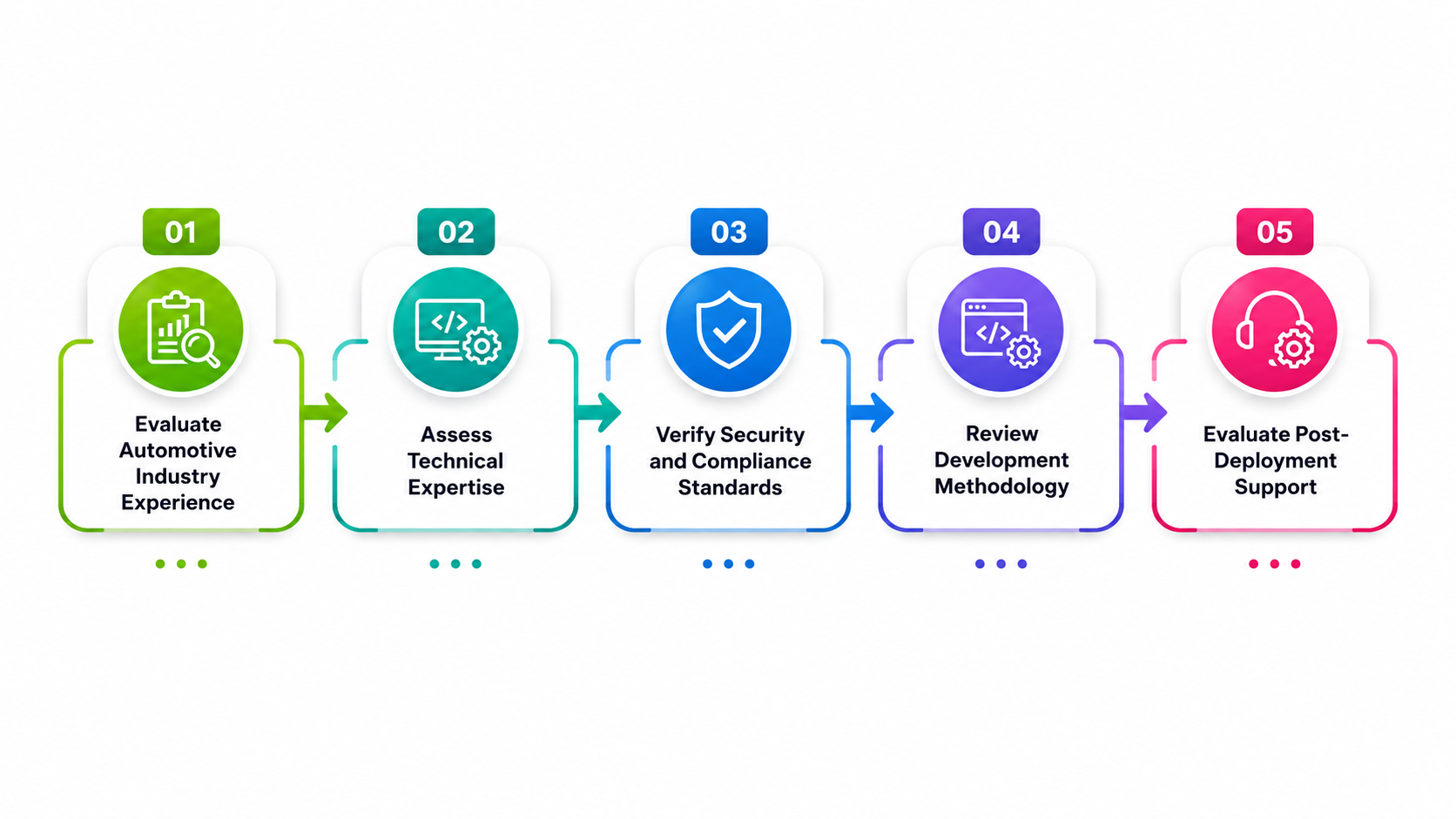
1. Evaluate Automotive Industry Experience
A development company with automotive expertise understands industry regulations, connected vehicle technologies, embedded systems, vehicle communication protocols, and safety standards. Their previous experience reduces development risks and ensures faster delivery of reliable software tailored specifically to automotive business requirements.
2. Assess Technical Expertise
The company should possess expertise in artificial intelligence, IoT, embedded systems, cloud computing, mobile development, cybersecurity, and vehicle communication technologies. Strong technical capabilities ensure your software remains scalable, secure, efficient, and compatible with emerging automotive technologies throughout its lifecycle.
3. Verify Security and Compliance Standards
Automotive software handles critical vehicle operations and sensitive user information. A reliable development partner should implement secure coding practices, data encryption, authentication mechanisms, penetration testing, and compliance with automotive safety and cybersecurity regulations to minimize operational risks.
4. Review Development Methodology
An experienced software company follows Agile development methodologies that enable continuous improvements, faster releases, transparent communication, and flexibility throughout the project lifecycle. Regular testing and sprint-based development help ensure higher quality software with reduced deployment risks.
5. Evaluate Post-Deployment Support
Automotive software requires continuous monitoring, updates, maintenance, and feature enhancements after deployment. Choose a company that offers long-term technical support, performance optimization, security updates, and system maintenance to ensure uninterrupted software performance.
Best Practices for Developing High-Performance Automotive Software
Developing automotive software requires more than technical expertise. Businesses must follow industry standards, implement rigorous testing, prioritise cybersecurity, and build scalable architectures that support continuous innovation. Following proven best practices helps ensure reliable, secure, and future-ready automotive software solutions.
1. Automotive Industry Standards
Compliance with standards such as ISO 26262, AUTOSAR, ASPICE, and cybersecurity regulations ensures automotive software meets strict safety, quality, and performance requirements. Adhering to these frameworks reduces development risks while improving software reliability and regulatory compliance.
2. Prioritise Cybersecurity
Connected vehicles exchange enormous volumes of sensitive data, making cybersecurity essential. Implement encryption, secure authentication, access controls, intrusion detection, and regular vulnerability assessments to protect vehicles, users, and business systems against evolving cyber threats.
3. Build Scalable Software Architecture
Automotive technologies evolve rapidly, requiring software capable of supporting future enhancements. Modular and scalable architectures simplify updates, accelerate feature additions, improve maintainability, and reduce long-term development costs while accommodating new technologies like autonomous driving and connected mobility.
4. Perform Comprehensive Testing
Automotive software must operate reliably under diverse environmental and driving conditions. Functional, performance, security, integration, and usability testing ensure software performs consistently while identifying potential issues before deployment into production environments.
5. Agile Development Methodology
Agile development enables faster iterations, improved collaboration, continuous feedback, and quicker software releases. Regular sprint planning and testing help development teams adapt to changing business requirements while maintaining high software quality throughout the project lifecycle.
Automotive Software Development Cost Analysis
The cost of automotive software development depends on project complexity, feature requirements, technology stack, security standards, integrations, team size, and development timeline. Basic fleet management applications cost significantly less than enterprise-grade connected vehicle platforms or autonomous driving systems.
Project Type | Estimated Cost (USD) | Estimated Timeline |
Basic Automotive Mobile App | $20,000–$40,000 | 2–4 months |
Fleet Management Software | $40,000–$80,000 | 4–6 months |
Connected Vehicle Platform | $80,000–$180,000 | 6–10 months |
EV Management Software | $90,000–$200,000 | 6–10 months |
Automotive ERP/Dealer Management System | $70,000–$150,000 | 5–8 months |
AI-Based Predictive Maintenance Platform | $120,000–$250,000+ | 8–12 months |
Autonomous Driving Software Modules | $250,000+ | 12+ months |
Factors That Influence Automotive Software Development Cost
The cost of automotive software development varies based on several technical and business factors. Project complexity, technology selection, security requirements, integrations, and development timelines all play a significant role in determining the overall investment. Understanding these factors helps businesses plan realistic budgets and choose the right development approach for long-term success.
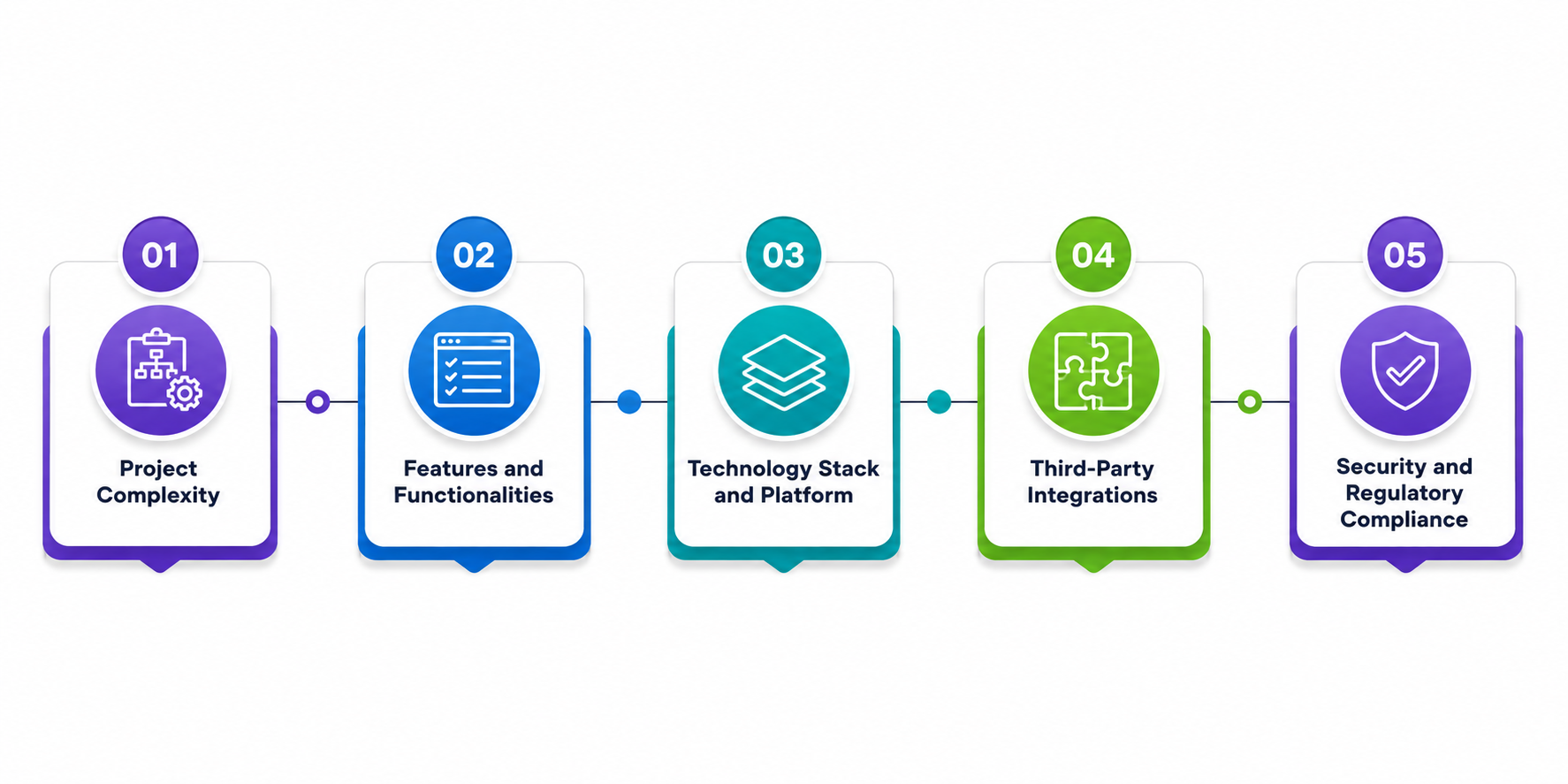
1. Project Complexity
The complexity of your automotive software is one of the biggest cost drivers. A basic fleet tracking application requires fewer resources than an AI-powered connected vehicle platform or autonomous driving solution. More complex projects involve advanced functionalities, longer development cycles, and extensive testing, leading to higher overall costs.
2. Features and Functionalities
The number and sophistication of features directly affect development costs. Capabilities such as real-time GPS tracking, predictive maintenance, AI-powered analytics, infotainment systems, and vehicle diagnostics require additional development time, specialised expertise, and rigorous testing.
3. Technology Stack and Platform
Choosing the right technology stack impacts both development time and long-term maintenance costs. Automotive software may require cloud computing, embedded systems, IoT integration, mobile applications, web dashboards, or cross-platform compatibility, each adding different levels of complexity and investment.
4. Third-Party Integrations
Many automotive applications integrate with external services such as GPS providers, payment gateways, mapping platforms, IoT devices, telematics systems, ERP software, and CRM solutions. Each integration requires additional development, testing, and ongoing maintenance, increasing the project's overall cost.
5. Security and Regulatory Compliance
Automotive software must comply with industry standards and cybersecurity regulations to protect vehicle systems and user data. Implementing encryption, secure authentication, vulnerability testing, and compliance with standards like ISO 26262 and AUTOSAR requires additional effort and specialised expertise.
Conclusion
The automotive industry is rapidly shifting towards software-defined vehicles, connected mobility, and intelligent transportation systems. Businesses that invest in custom automotive software gain a competitive advantage through enhanced safety, operational efficiency, predictive maintenance, improved customer experiences, and scalable digital innovation.
Whether you are developing connected vehicle platforms, EV management systems, fleet management software, infotainment solutions, or AI-powered automotive applications, choosing the right technology partner is critical to long-term success.
At OZVID Technologies, we specialise in delivering innovative automotive software development solutions tailored to the evolving needs of manufacturers, mobility providers, dealerships, and automotive startups. Our experienced development team leverages AI, IoT, cloud computing, and modern software engineering practices to build secure, scalable, and future-ready automotive solutions that accelerate business growth and digital transformation. Contact us to learn more
Frequently Asked Questions
1. What is automotive software development?
Automotive software development involves designing and building software solutions for vehicles, connected mobility, fleet management, infotainment systems, EV platforms, autonomous driving, diagnostics, and automotive business operations.
2. Which technologies are commonly used in automotive software development?
Common technologies include Artificial Intelligence (AI), Machine Learning (ML), IoT, Cloud Computing, Embedded Systems, Edge Computing, GPS, Computer Vision, Big Data Analytics, and Vehicle-to-Everything (V2X) communication.
3. How much does automotive software development cost in the USA?
Costs typically range from $20,000 for basic applications to $250,000+ for enterprise-grade connected vehicle platforms or autonomous driving solutions, depending on complexity, features, integrations, and compliance requirements.
4. Why is cybersecurity important in automotive software?
Automotive software manages sensitive vehicle data and connected services. Strong cybersecurity protects against data breaches, unauthorised access, cyberattacks, and system failures while ensuring compliance with industry regulations.
5. How long does it take to develop automotive software?
Development timelines generally range from 2–12 months, depending on project scope, software complexity, integrations, testing requirements, and regulatory compliance.