
Key Takeaways
- Define your business goals, technical requirements, target users, and expected outcomes before approaching a software development company.
- Evaluate a company's technical expertise, industry experience, portfolio, development methodology, and ability to handle projects similar to yours.
- Prioritize communication, transparency, documentation, security practices, and long-term collaboration rather than choosing a company based only on price.
- Check client reviews, testimonials, case studies, and references to understand the company's reliability and quality of delivery.
- Make sure the development team uses modern technologies, scalable architecture, secure coding practices, automated testing, and appropriate development tools.
- Compare pricing models, project timelines, maintenance services, and post-launch support before signing an agreement.
Choosing the right software development company can significantly influence the success, scalability, security, and long-term value of your digital product. Whether you want to build a mobile application, web platform, SaaS solution, enterprise software, CRM, ERP, or AI-powered application, the development partner you select can affect everything from initial planning and user experience to performance and maintenance.
The global custom software development market is projected to reach USD 146.2 billion by 2030, growing at a CAGR of 22.6% from 2025 to 2030. Meanwhile, the global IT services outsourcing market was valued at USD 744.6 billion in 2024 and is projected to reach USD 1.22 trillion by 2030.
These figures highlight how businesses increasingly rely on external technology partners to build and modernize their software. However, more choices also mean more responsibility when evaluating potential vendors.
A good software development company should do more than write code. It should understand your business requirements, recommend suitable technologies, create a scalable solution, maintain transparent communication, protect your data, and provide support after launch.
Why Choosing the Right Software Development Partner Matters
Selecting the right development partner can provide much more than technical implementation. A capable company can contribute to product strategy, user experience, architecture, quality assurance, security, scalability, and long-term improvements.
1. Access to Specialized Expertise
A professional development company brings experienced developers, designers, testers, architects, project managers, and other specialists together. This allows businesses to access diverse technical expertise without building a large internal technology team from scratch.
- Access to experienced technical professionals.
- Expertise across multiple development technologies.
- Faster access to specialized skills.
- Reduced dependency on a single developer.
2. Faster Product Development
An experienced software development team follows established processes for planning, designing, developing, testing, and deploying applications. This structured approach can reduce unnecessary delays and help businesses move from an initial idea to a functional product more efficiently.
- Structured development workflows.
- Better project coordination.
- Faster prototyping and MVP development.
- Efficient testing and deployment processes.
3. Scalable Technology Solutions
A professional development partner can design software with future growth in mind. Instead of building a solution that only works for today's requirements, developers can create flexible architecture capable of supporting additional users, features, integrations, and business processes.
- Flexible software architecture.
- Easier feature expansion.
- Better performance as usage grows.
- Reduced redevelopment requirements.
4. Improved Security and Quality
Security and quality should be considered throughout the development lifecycle rather than added at the end. A capable company can incorporate secure coding, testing, access controls, data protection, vulnerability assessment, and quality assurance into the development process.
- Secure development practices.
- Continuous quality testing.
- Better data protection.
- Reduced technical risks.
Top Tips for Choosing the Best Software Development Company
Finding a suitable development company requires more than searching for the lowest quotation. You should evaluate technical capabilities, business understanding, communication, experience, security, pricing, and post-launch support together.
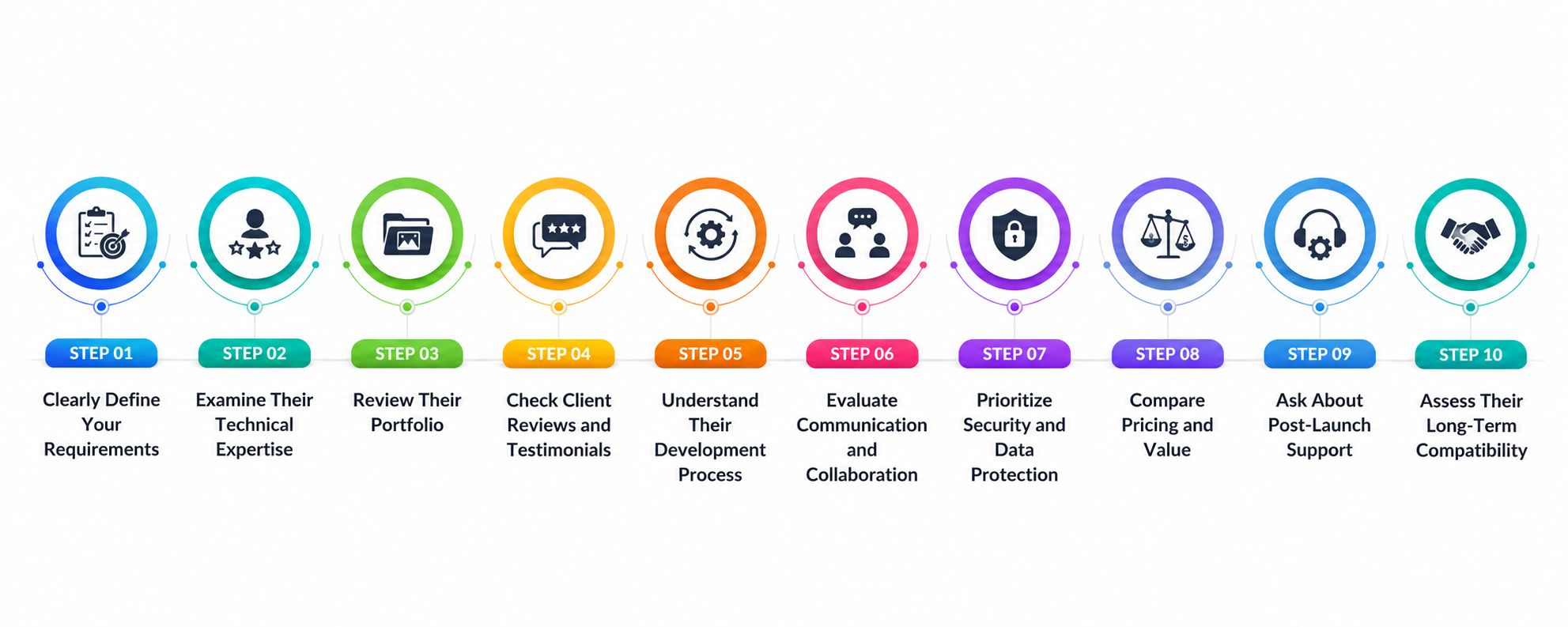
1. Clearly Define Your Requirements
Before contacting development companies, document your business objectives, target audience, essential features, preferred platforms, integrations, and expected outcomes. A clear requirement document makes it easier for vendors to understand the project and provide realistic estimates.
2. Examine Their Technical Expertise
Review whether the company has experience with the technologies required for your project. Depending on your needs, this could include web development, mobile development, cloud computing, AI, IoT, blockchain, enterprise systems, or SaaS development.
3. Review Their Portfolio
A portfolio provides practical evidence of a company's capabilities. Look for projects similar to yours in terms of complexity, industry, technology, user experience, or functionality. Pay attention to the quality of the final product rather than the number of projects listed.
4. Check Client Reviews and Testimonials
Client feedback can reveal important information about communication, reliability, project management, technical performance, and post-launch support. Look beyond testimonials published on the company's website and review independent feedback wherever possible.
5. Understand Their Development Process
Ask how the company manages requirements, design, development, testing, deployment, and revisions. Agile development, iterative releases, regular demonstrations, and continuous feedback can help keep projects aligned with changing business needs.
6. Evaluate Communication and Collaboration
Strong communication can prevent misunderstandings and project delays. Determine who will manage your project, how frequently you will receive updates, which communication channels will be used, and how quickly the team typically responds.
7. Prioritize Security and Data Protection
Security should be evaluated before development begins. Ask potential partners about secure coding standards, authentication, authorization, encryption, testing, vulnerability management, backups, and compliance requirements relevant to your industry.
8. Compare Pricing and Value
Avoid selecting a company solely because it offers the lowest price. An unusually low estimate can sometimes exclude essential services such as testing, project management, maintenance, security, or post-launch support.
9. Ask About Post-Launch Support
Software development does not necessarily end when an application goes live. Updates, bug fixes, security patches, performance optimization, monitoring, and feature enhancements may be required throughout the product lifecycle.
10. Assess Their Long-Term Compatibility
The best development company should be capable of becoming a long-term technology partner. Consider whether its team, processes, expertise, communication style, and strategic approach match your future business requirements.
How Much Does It Cost to Hire a Software Development Company?
Software development costs vary significantly depending on the project's complexity, features, technology stack, location, team size, development timeline, and ongoing support requirements. A simple application generally requires less development effort than a complex enterprise platform with advanced integrations, AI capabilities, or real-time functionality.
Instead of focusing only on the initial development price, businesses should consider the complete cost of ownership, including design, development, testing, deployment, cloud infrastructure, maintenance, security, and future improvements.
Project Type | Approximate Cost Range | Typical Timeline |
Basic Website/Web Application | $3,000–$10,000+ | 1–3 months |
Small Mobile Application | $10,000–$25,000+ | 2–4 months |
Medium-Complexity Application | $25,000–$60,000+ | 4–7 months |
Complex Business Platform | $60,000–$150,000+ | 6–12 months |
Enterprise Software | $150,000+ | 9–18+ months |
AI/Advanced Technology Solution | $30,000–$200,000+ | 4–12+ months |
What Determines the Cost of Software Development?
Understanding the elements behind development pricing helps businesses create realistic budgets and compare proposals more effectively.
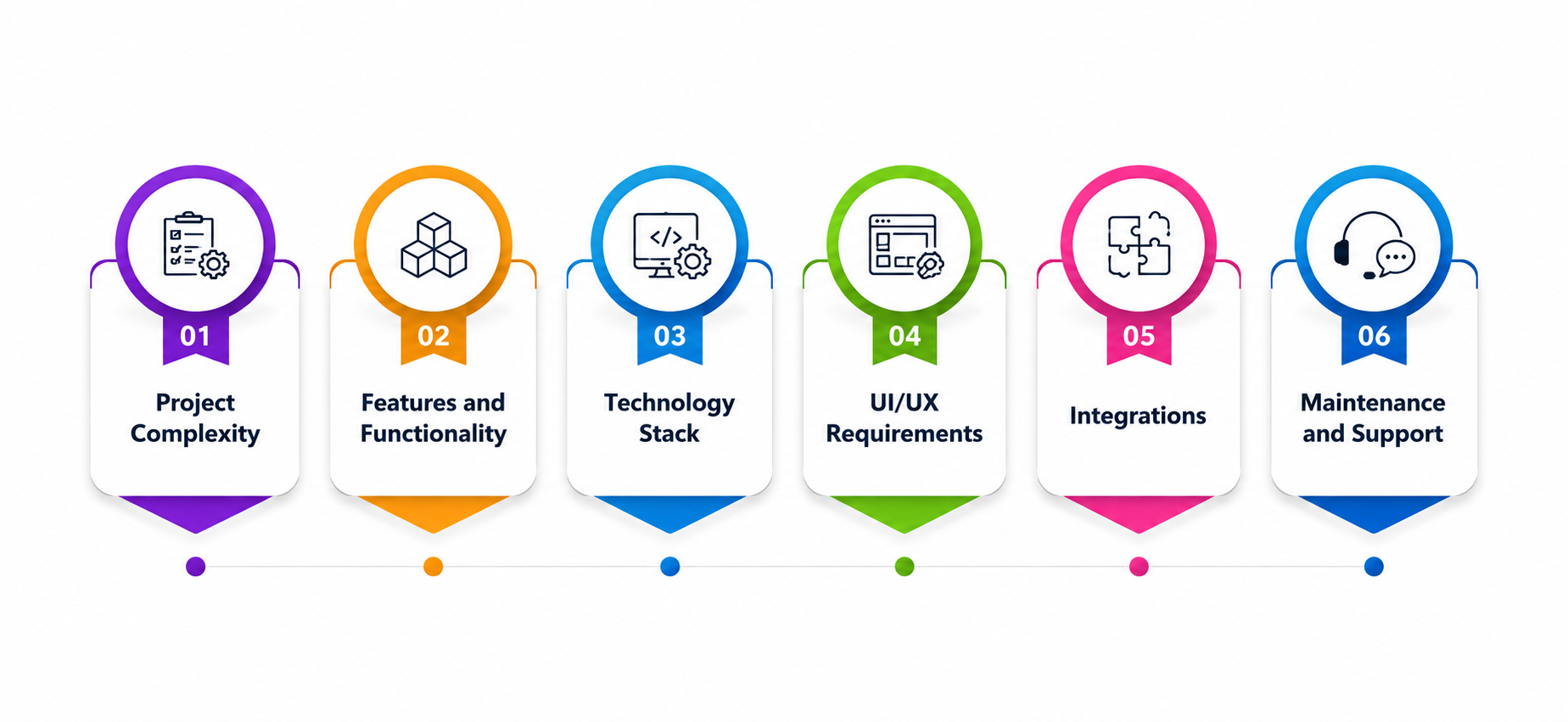
1. Project Complexity
Complex applications require more architecture planning, development, testing, integrations, and project management. A basic application with a few screens is considerably different from an enterprise platform supporting multiple user roles, workflows, dashboards, APIs, and third-party services.
2. Features and Functionality
Every feature adds development effort. Real-time communication, payment processing, location services, analytics, AI capabilities, dashboards, notifications, authentication, and advanced search can increase development time and overall project cost.
3. Technology Stack
The technologies used to build the application can influence development costs. Specialized technologies may require developers with specific expertise, while commonly used frameworks can provide access to larger talent pools and established development resources.
4. UI/UX Requirements
A simple interface generally requires less design effort than a highly customized product experience. Research, wireframing, prototyping, usability testing, responsive layouts, animations, and design systems can all influence the overall design budget.
5. Integrations
Connecting software with payment gateways, CRMs, ERPs, cloud platforms, maps, communication tools, analytics platforms, or external APIs can increase both development and testing requirements.
6. Maintenance and Support
After launch, software may require monitoring, security updates, bug fixes, performance improvements, operating-system updates, and new features. Including maintenance in the initial planning can make long-term budgeting more predictable.
Why Choose OZVID Technologies?
Choosing the right development partner is about finding a team that combines technical expertise with business understanding, transparent communication, and a commitment to long-term product success.
OZVID Technologies focuses on developing customized digital solutions designed around individual business requirements. Rather than relying on one-size-fits-all development, the team can work around specific product objectives, functionality, user expectations, and scalability requirements.
Key reasons to consider OZVID Technologies:
- Custom Development: Solutions are designed around specific business requirements and workflows.
- Experienced Technical Team: Access to professionals across development, design, testing, and technology.
- Modern Technologies: Development can leverage contemporary frameworks, cloud platforms, APIs, AI, and other technologies where appropriate.
- Scalable Architecture: Applications can be planned with future growth and functionality in mind.
- Quality Assurance: Testing helps identify functional, usability, compatibility, and performance issues.
- Transparent Communication: Clear communication helps businesses remain informed throughout development.
- Flexible Engagement: Development arrangements can be adapted to different project requirements and business needs.
- Post-Launch Support: Ongoing maintenance and enhancements can help keep software secure, stable, and relevant.
Conclusion
Choosing the best software development company is an important business decision that can influence the performance, security, scalability, and long-term success of your software. Instead of selecting a vendor based only on pricing, evaluate its technical expertise, portfolio, development methodology, communication practices, security standards, scalability, and post-launch support.
A reliable development partner should understand your business goals and transform them into a practical technology solution. It should also be prepared to collaborate throughout the complete product lifecycle - from discovery and planning to development, testing, deployment, maintenance, and future enhancements.
At OZVID Technologies, we understand that every business has different technology requirements. Our focus is on helping businesses turn ideas into reliable, scalable, and user-focused digital solutions through customized software development. Whether you are planning a new application, modernizing an existing platform, or developing an enterprise solution, choosing the right technology partner can help you build with greater confidence and prepare your product for long-term growth. Contact us for more information.
Frequently Asked Questions
1. How do I choose the best software development company?
The best company should align with your business objectives, technical requirements, budget, and long-term goals. Evaluate its experience, portfolio, technical expertise, communication, development process, and support capabilities before making a decision.
- Review relevant project experience.
- Evaluate technical expertise.
- Check client feedback.
- Compare development processes.
- Assess long-term support.
2. What should I ask a software development company before hiring?
Ask questions about its experience, team structure, technology stack, project methodology, communication process, security practices, pricing, timelines, intellectual property, and post-launch support.
- Who will work on the project?
- Which technologies will be used?
- How will progress be reported?
- How is project security handled?
- What support is provided after launch?
3. How much does custom software development cost?
There is no universal price because development costs depend on application complexity, features, integrations, technology, design, development time, team composition, and support requirements.
- Define the project scope.
- Identify essential features.
- Estimate development hours.
- Consider third-party integrations.
- Include maintenance costs.
4. How long does it take to develop software?
Development timelines vary according to project complexity. A small application may take a few months, while a feature-rich enterprise platform can require many months of planning, development, testing, and deployment.
- Simple applications require less development time.
- Complex workflows increase project duration.
- Integrations can extend timelines.
- Testing requires dedicated time.
- Scope changes can affect deadlines.
5. Should I choose a software company based on the lowest price?
No. Price should be considered alongside quality, experience, security, communication, technology expertise, and long-term support. A low initial quotation may not include important services required for a successful product.
- Compare complete project proposals.
- Review included deliverables.
- Check development expertise.
- Evaluate support services.
- Consider long-term value.
6. Why is post-launch support important?
Software requires ongoing attention after deployment. Updates, bug fixes, security improvements, performance optimization, monitoring, and new features can help keep an application stable and useful as business requirements evolve.
- Resolve production issues.
- Apply security updates.
- Improve application performance.
- Add future functionality.
- Maintain compatibility with evolving platforms