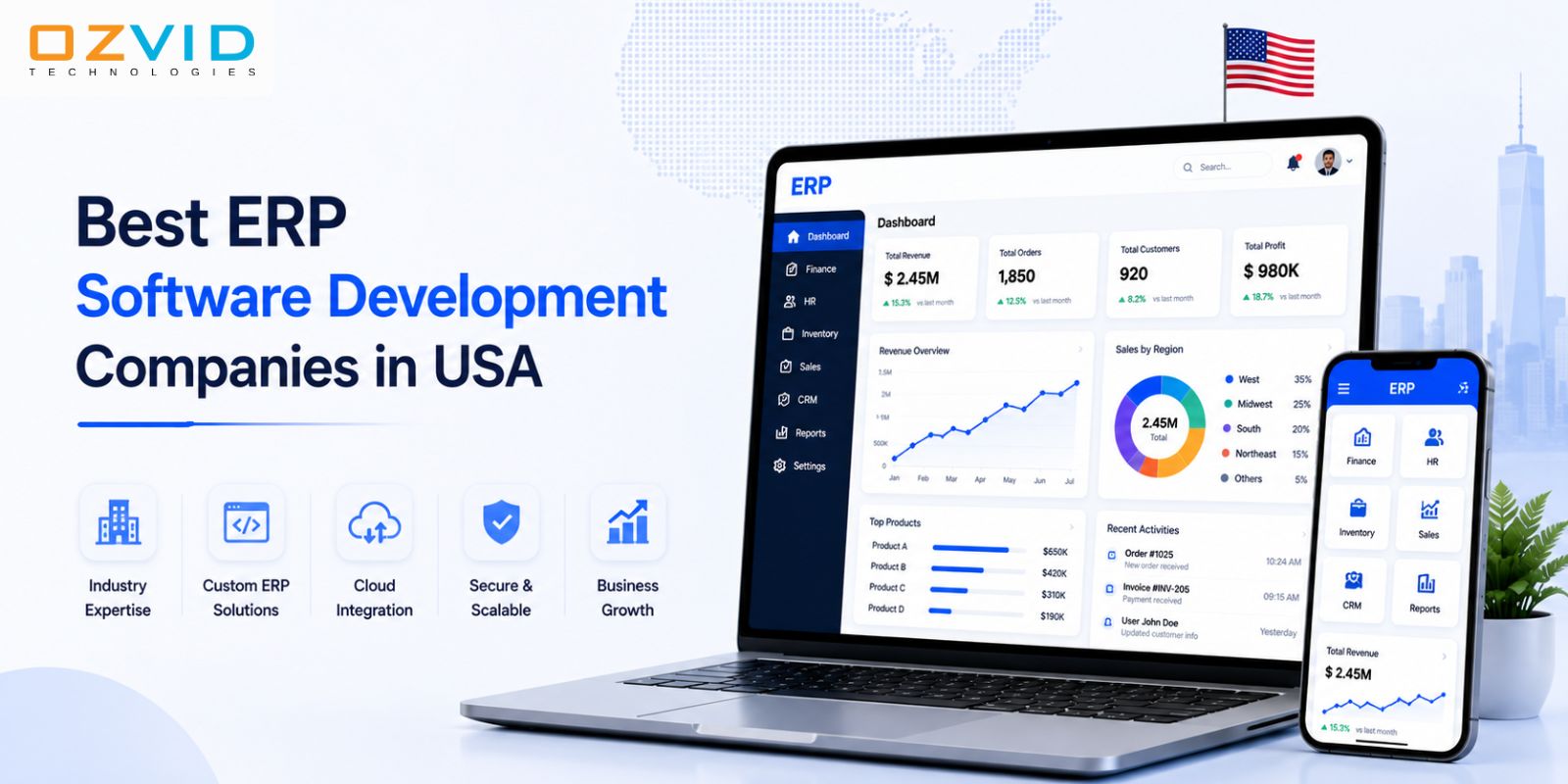
The global Enterprise Resource Planning (ERP) software market size is projected to grow from USD 106.22 billion in 2026 to USD 281.58 billion by 2034, at a CAGR of 13%. This growth is driven by increasing demand for automation, real-time data insights, and integrated business operations across industries. ERP systems help organizations streamline processes such as finance, supply chain, HR, and customer management into a unified platform.
ERP systems play a critical role in integrating key functions such as finance, human resources, supply chain management, procurement, inventory, and customer relationship management into one centralized platform. This integration helps organizations eliminate data silos, reduce manual errors, and improve operational accuracy. In the USA, ERP adoption is especially strong among enterprises seeking scalability, automation, and real-time analytics to stay ahead in a fast-paced digital economy.
With advancements in cloud computing, artificial intelligence, and machine learning, modern ERP solutions are becoming more intelligent, flexible, and accessible. Businesses are now able to make data-driven decisions faster than ever before. As a result, ERP software has become a foundational technology for organizations aiming to achieve long-term growth and operational excellence.
Key Takeaways
- ERP systems integrate core business functions like finance, HR, supply chain, and operations into a single unified platform for better efficiency.
- The global ERP market is growing rapidly, driven by increasing demand for automation, real-time data access, and digital transformation across industries.
- Choosing the right ERP development company requires evaluating experience, technical expertise, customization capabilities, and long-term support services.
- Cloud-based ERP solutions are becoming the preferred choice due to scalability, flexibility, cost-effectiveness, and remote accessibility.
- Leading ERP companies in the USA, including global giants and specialized providers, help businesses streamline operations and improve decision-making.
How to Hire the Best ERP Software Development Company
Hiring the right ERP software development company is a critical decision that directly impacts business efficiency, scalability, and long-term digital transformation. A well-developed ERP system streamlines operations, integrates departments, and improves real-time decision-making. Therefore, businesses must carefully evaluate potential vendors based on technical expertise, industry experience, customization capabilities, and post-deployment support before making a final choice. Below are the key steps to help you choose the best ERP development partner:
1. Define Business Requirements
Before approaching any ERP development company, it is essential to clearly understand your internal business processes and operational challenges. A detailed requirement analysis ensures the ERP solution is aligned with your goals. Key Focus Areas:
- Identify departments that need automation and integration
- List current workflow challenges and inefficiencies
- Define must-have and optional ERP features
- Determine short-term and long-term business goals
2. Evaluate Industry Experience
The success of an ERP system depends heavily on the vendor’s experience in handling complex enterprise solutions. Companies with proven expertise can better understand business logic and deliver scalable systems. Key Focus Areas:
- Check portfolio of ERP projects across industries
- Evaluate experience with technologies like cloud, AI, and analytics
- Review case studies and client success stories
- Assess understanding of your specific industry domain
3. Customization Capabilities
Every business operates differently, so a one-size-fits-all ERP solution rarely works. The ideal development company should offer flexible and scalable customization options. Key Focus Areas:
- Ability to build modular and scalable ERP systems
- Integration with third-party tools and legacy systems
- Support for cloud-based and on-premise deployment
- Flexibility to upgrade features as business grows
4. Check Development Process
A structured development approach ensures timely delivery and high-quality ERP solutions. Agile methodologies are often preferred for better transparency and collaboration. Key Focus Areas:
- Use of Agile or DevOps development practices
- Clear project timelines and milestone tracking
- Transparent communication throughout development
- Regular testing and quality assurance processes
5. Evaluate Post-Deployment Support
ERP systems require continuous updates, monitoring, and technical support to ensure smooth performance after deployment. Key Focus Areas:
- Availability of 24/7 technical support
- Regular system updates and bug fixes
- Employee training and onboarding assistance
- Long-term maintenance and SLA commitments
6. Consider Cost vs Value Offered
While cost is an important factor, the cheapest option is not always the best. Focus on overall value, scalability, and long-term ROI. Key Focus Areas:
- Compare pricing models and hidden costs
- Evaluate ROI and long-term scalability
- Balance budget with feature requirements
- Avoid compromising quality for lower cost
Best ERP Software Development Companies in the USA
The United States is home to some of the most advanced and innovative ERP (Enterprise Resource Planning) solution providers in the world. These companies help businesses streamline operations, integrate core processes, and enable data-driven decision-making through powerful, scalable, and secure ERP platforms.
These companies offer solutions that combine cloud computing, artificial intelligence, automation, and advanced analytics to help organizations improve productivity and reduce operational costs. Whether it is a large enterprise seeking complex system integration or a growing business looking for flexible ERP tools, the USA ERP market provides a wide range of options to meet diverse business needs.
Below are some of the leading ERP companies in USA known for their innovation, reliability, and enterprise-grade solutions.
1. OZVID Technologies
OZVID Technologies is a trusted ERP software development company delivering scalable, secure, and customized enterprise solutions for global clients. The company specializes in building intelligent ERP systems that unify business processes such as finance, HR, inventory, supply chain, and customer management into a single integrated platform.
With a strong focus on innovation and digital transformation, OZVID Technologies helps businesses streamline operations, reduce manual efforts, and improve decision-making through real-time insights. Our ERP solutions are designed to support startups, SMEs, and enterprises across various industries with flexibility and long-term scalability.
Our Services:
- Custom ERP Development
- Cloud-Based ERP Solutions
- CRM & HRM Integration
- Business Process Automation
- Mobile ERP Applications
Why Businesses Choose OZVID Technologies:
Businesses prefer OZVID Technologies because we consistently delivers high-quality ERP solutions designed to meet modern enterprise needs.
1. Customized ERP Solutions
OZVID Technologies builds ERP systems tailored to specific industry requirements, ensuring that every feature aligns with real business workflows and operational goals.
2. Strong Focus on Innovation
The company integrates modern technologies such as AI, cloud computing, and automation to build intelligent ERP systems that improve efficiency and decision-making.
3. Cost-Effective Solutions
OZVID Technologies provides ERP solutions that are budget-friendly while maintaining high performance and scalability for growing businesses.
4. End-to-End Development Support
From consultation to deployment and maintenance, the company offers complete ERP development services to ensure smooth digital transformation.
5. Post-Deployment Support
OZVID Technologies ensures long-term system performance by offering dedicated support and maintenance services after deployment.
2. ToXSL Technologies
ToXSL Technologies is a global IT services and ERP solution provider known for delivering innovative and scalable enterprise applications. The company focuses on building intelligent ERP systems that enhance business efficiency, automation, and decision-making. Their solutions integrate advanced technologies such as AI, IoT, and cloud computing to ensure seamless business operations. ToXSL Technologies serves clients across healthcare, education, logistics, and retail industries, offering end-to-end ERP development from consultation to deployment and support.
3. Oracle
Oracle is one of the world’s leading ERP providers, offering Oracle Fusion Cloud ERP solutions designed for modern enterprises. The company enables organizations to automate financial processes, procurement, supply chain management, and project operations. Oracle’s ERP platform is known for its advanced analytics, AI-driven insights, and high scalability, making it suitable for businesses of all sizes. With strong cloud infrastructure and global reach, Oracle helps enterprises improve efficiency, reduce operational costs, and make faster, data-driven decisions in competitive markets.
4. SAP
SAP is a global leader in ERP software solutions, widely used by enterprises across industries. Its flagship product, SAP S/4HANA, provides real-time data processing, intelligent automation, and advanced analytics capabilities. SAP enables organizations to integrate key business functions such as finance, procurement, supply chain, and human resources into a unified system. Known for its reliability and scalability, SAP supports both large enterprises and mid-sized companies in achieving digital transformation and operational excellence through data-driven decision-making.
5. 360 Degree Cloud
360 Degree Cloud is a cloud-focused technology company specializing in ERP and CRM solutions. The company helps businesses optimize workflows, improve customer engagement, and enhance operational efficiency through scalable cloud platforms. With strong expertise in Salesforce and enterprise integration, 360 Degree Cloud delivers customized ERP solutions that support automation, data visibility, and business growth. Their services are widely adopted by organizations seeking modern, flexible, and cloud-based enterprise systems.
6. SDLC Corp
SDLC Corp is a leading software development company offering custom ERP solutions tailored to business needs. The company focuses on delivering secure, scalable, and high-performance ERP systems powered by modern technologies such as AI, blockchain, and cloud computing. SDLC Corp helps organizations automate workflows, improve productivity, and achieve operational efficiency across industries including healthcare, retail, and logistics. Their ERP solutions are designed to support digital transformation and long-term business growth.
7. Deloitte
Deloitte provides world-class ERP consulting and implementation services to enterprises globally. The company specializes in helping organizations adopt leading ERP platforms such as SAP, Oracle, and cloud-based systems. Deloitte focuses on business transformation, process optimization, and enterprise integration to improve efficiency and reduce operational costs. With deep industry expertise, Deloitte supports businesses in achieving seamless ERP adoption and maximizing return on investment through strategic planning and execution.
8. IBM
IBM delivers advanced ERP solutions powered by AI, cloud computing, and data analytics. The company helps enterprises streamline operations, improve supply chain visibility, and automate complex business processes. IBM’s ERP systems are designed for scalability, security, and real-time insights, enabling organizations to make smarter decisions. With strong global infrastructure and innovation capabilities, IBM supports digital transformation across industries such as finance, healthcare, and manufacturing.
9. Wipro
Wipro is a global IT services leader offering comprehensive ERP implementation and consulting services. The company specializes in SAP, Oracle, and custom ERP solutions that help businesses automate operations and improve efficiency. Wipro focuses on digital transformation, process optimization, and enterprise integration to deliver measurable business outcomes. Its ERP solutions are widely used across industries including banking, healthcare, and manufacturing to support scalable and future-ready operations.
10. CGI
CGI is a leading provider of ERP consulting and implementation services worldwide. The company delivers scalable enterprise solutions that help organizations improve operational efficiency, security, and performance. CGI specializes in integrating ERP systems across various industries, including government, healthcare, and financial services. With a strong focus on digital transformation, CGI enables businesses to streamline processes, enhance decision-making, and achieve long-term growth through advanced ERP technologies.
The Future of ERP App Development
The future of ERP app development is rapidly evolving with the integration of advanced technologies such as artificial intelligence, machine learning, blockchain, and cloud computing. Modern ERP systems are shifting from traditional, rigid platforms to intelligent, flexible, and highly scalable solutions that support real-time decision-making. Businesses are increasingly adopting cloud-based ERP systems due to their accessibility, lower infrastructure costs, and seamless updates.
In the coming years, ERP applications will become more predictive and automated, enabling organizations to forecast demand, optimize supply chains, and improve financial planning with greater accuracy. Mobile ERP solutions will also gain importance, allowing business leaders to access critical data anytime, anywhere.
Additionally, low-code and no-code platforms will simplify ERP customization, reducing dependency on heavy development cycles. As cybersecurity threats continue to rise, ERP systems will also focus heavily on data protection and compliance. Overall, ERP development is moving toward smarter, faster, and more connected business ecosystems.
Conclusion
In conclusion, ERP systems have become a vital part of modern business transformation, enabling organizations to streamline operations, improve efficiency, and make data-driven decisions. With numerous ERP providers available in the USA, choosing the right partner is essential for long-term success. OZVID Technologies stands out as a reliable ERP development company in USA delivering customized, scalable, and innovative enterprise solutions.
By combining technical expertise with industry understanding, OZVID Technologies helps businesses automate processes, reduce operational costs, and achieve sustainable growth in an increasingly competitive digital landscape.
Frequently Asked Questions
1. What is ERP software and how does it work?
ERP (Enterprise Resource Planning) software is designed to integrate and manage core business processes within a single unified system. It helps organizations streamline operations and improve efficiency by connecting different departments in real time.
- Centralizes business data into one platform
- Automates key processes like finance and HR
- Enables real-time reporting and analytics
- Improves collaboration across departments
2. Why is ERP important for modern businesses?
ERP systems are essential for modern businesses because they reduce operational complexity and improve decision-making through accurate and real-time data access.
- Enhances productivity and workflow efficiency
- Reduces manual errors and duplication
- Improves financial and operational visibility
- Supports better strategic planning
3. What industries benefit most from ERP systems?
ERP solutions are widely used across multiple industries where process automation and data integration are critical for success.
- Manufacturing and production industries
- Healthcare and pharmaceutical sector
- Retail and eCommerce businesses
- Banking and financial services
4. How long does it take to implement an ERP system?
The implementation timeline depends on business size, customization requirements, and system complexity. It can vary significantly from one project to another.
- Small businesses: a few months
- Medium enterprises: 6–12 months
- Large enterprises: 12+ months
- Customization may extend timelines
5. What are the key benefits of ERP systems?
ERP systems offer a wide range of benefits that help businesses improve efficiency, reduce costs, and achieve better control over operations.
- Streamlined business processes
- Improved data accuracy and reporting
- Cost savings through automation
- Better decision-making capabilities