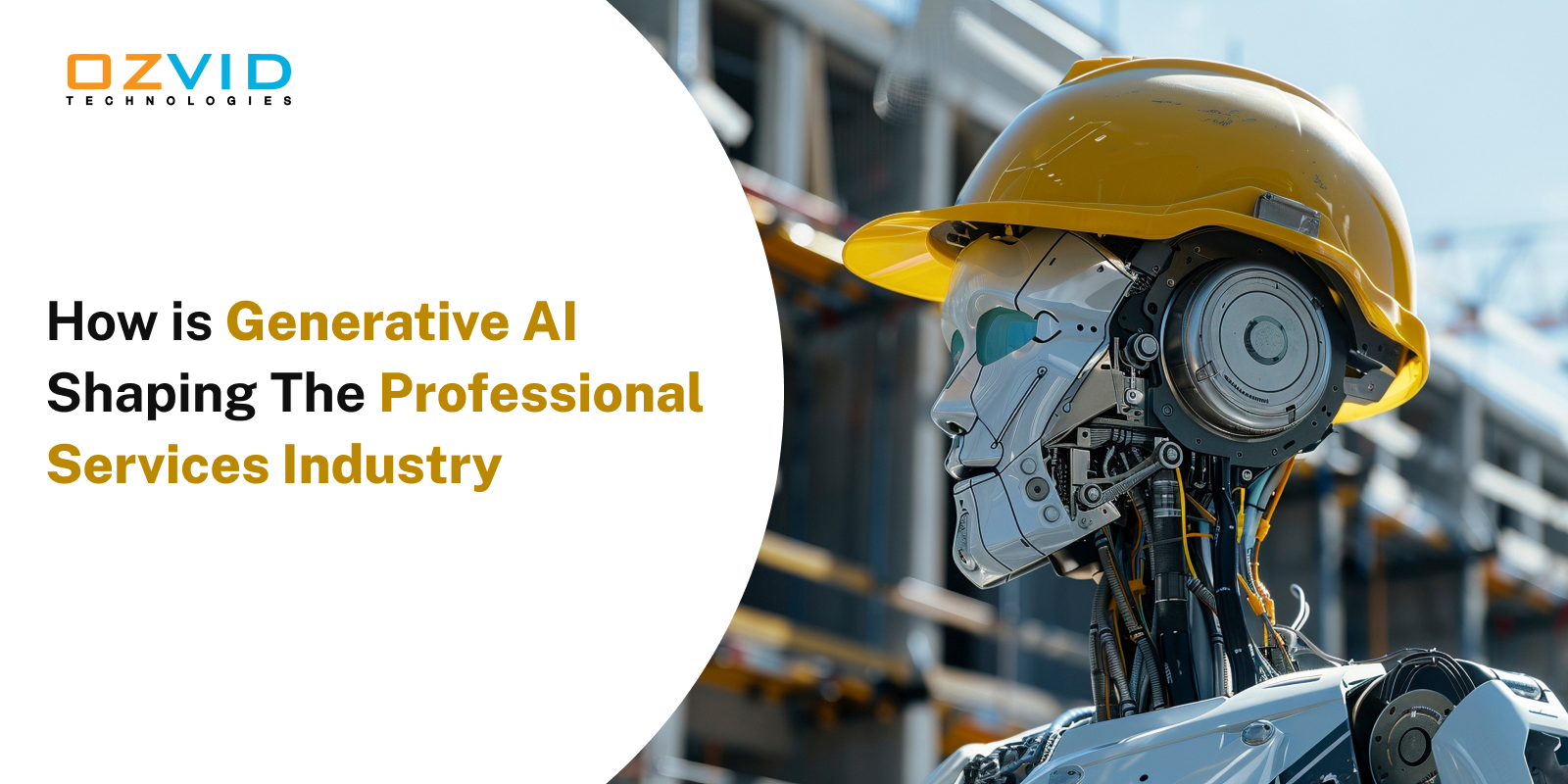
Generative AI is revolutionizing various sectors by enhancing capabilities and transforming workflows. In the professional services industry, this technology is particularly impactful, driving efficiency, creativity, and innovation. In this blog, we'll explore the top AI trends, the potential impact of Generative AI, the challenges faced, and the future outlook for this transformative technology.
Key Takeaways
Generative AI automates repetitive tasks like document drafting and financial reporting, freeing up professionals to focus on higher-value work.
AI tools help professionals generate innovative ideas, personalized solutions, and content, boosting creativity in sectors like marketing and design.
AI analyzes data to provide valuable insights and make predictions, improving decision-making in areas like legal, finance, and consulting.
AI enables firms to deliver highly customized solutions, improving client satisfaction through tailored reports, recommendations, and strategies.
While AI offers major benefits, concerns around data privacy, job displacement, and bias require careful attention to ensure responsible use.
Top AI Trends Shaping Professional Services
In recent years, the professional services industry has undergone a seismic shift, driven by advancements in artificial intelligence (AI). As firms in accounting, consulting, legal, and other sectors grapple with the evolving landscape, it's crucial to understand the top AI trends shaping these fields. Here’s a comprehensive look at how AI is transforming professional services and what trends are set to dominate the future.
1. Enhanced Data Analytics and Insights
One of the most significant ways AI is impacting professional services is through enhanced data analytics. The ability to process and analyze vast amounts of data in real-time is revolutionizing how firms make decisions and deliver value to clients. AI-driven analytics tools can sift through enormous datasets, uncovering patterns and insights that would be impossible for humans to identify manually.
For example, in consulting, AI-powered analytics platforms help firms understand market trends, customer behavior, and operational efficiencies. This allows consultants to provide more accurate forecasts and tailored recommendations. Similarly, in accounting, AI tools can automate data reconciliation and identify anomalies, reducing errors and improving financial accuracy.
2. Automation of Routine Tasks
AI is significantly reducing the time spent on routine and repetitive tasks across professional services. In the legal industry, for instance, AI tools can handle document review, contract analysis, and legal research. These technologies use natural language processing (NLP) and machine learning to understand legal documents, identify key clauses, and even predict case outcomes.
In accounting, automation tools streamline processes like invoice management, expense reporting, and tax preparation. By reducing the manual workload, firms can focus on more strategic activities and enhance their service offerings. This trend towards automation not only increases efficiency but also reduces the risk of human error.
3. Personalized Client Experiences
AI is enabling a more personalized approach to client interactions. Through advanced analytics and machine learning, firms can tailor their services to meet individual client needs more precisely. For instance, AI-driven customer relationship management (CRM) systems analyze client data to offer personalized recommendations and insights.
In consulting, AI tools can segment clients based on their behavior and preferences, allowing firms to create customized strategies and solutions. In the legal sector, AI chatbots provide clients with personalized legal advice and document preparation based on their specific situations. This level of personalization enhances client satisfaction and fosters stronger client relationships.
4. Predictive Analytics and Forecasting
Predictive analytics is another area where AI is making a significant impact. By leveraging historical data and advanced algorithms, AI can predict future trends and outcomes with a high degree of accuracy. In financial services, for example, predictive analytics can forecast market movements, assess investment risks, and optimize portfolio management.
Consulting firms use predictive analytics to anticipate industry shifts, identify emerging opportunities, and guide strategic planning. Legal firms can predict case outcomes and litigation risks, allowing them to develop more effective legal strategies. This predictive capability enables firms to stay ahead of the curve and make informed decisions.
5. Enhanced Decision-Making Capabilities
AI is enhancing decision-making capabilities by providing more accurate and timely information. Machine learning algorithms analyze vast amounts of data and provide actionable insights, helping professionals make informed decisions faster. In the consulting sector, AI-driven decision support systems assist in strategic planning and risk management.
For legal professionals, AI tools offer detailed analyses of case law, statutes, and precedents, supporting more informed legal arguments and strategies. In accounting, AI algorithms provide real-time financial insights, enabling quicker adjustments and more effective financial planning. This enhanced decision-making capability leads to more strategic and impactful outcomes for clients.
6. Improved Client Communication
AI is transforming how firms communicate with clients. AI-powered chatbots and virtual assistants are becoming increasingly common in client interactions. These tools provide instant responses to client inquiries, schedule meetings, and even handle complex queries.
In legal services, chatbots can offer preliminary legal advice and guide clients through the documentation process. In consulting, virtual assistants can manage client communications, track project progress, and provide real-time updates. This improved communication streamlines interactions and ensures clients receive timely and accurate information.
7. Advanced Cybersecurity Measures
As professional services firms handle sensitive client data, ensuring robust cybersecurity is paramount. AI is playing a crucial role in enhancing cybersecurity measures. AI-driven security systems can detect and respond to threats in real-time, identifying unusual patterns and potential breaches before they escalate.
Machine learning algorithms continuously learn from new threats and adapt security protocols accordingly. This proactive approach to cybersecurity helps firms protect client data, comply with regulatory requirements, and maintain trust. Advanced threat detection and response systems are essential for safeguarding sensitive information in today’s digital landscape.
8. AI-Driven Knowledge Management
Effective knowledge management is critical in professional services, where expertise and information are key assets. AI is revolutionizing knowledge management by organizing and retrieving information more efficiently. AI-powered systems can categorize and index vast amounts of data, making it easier for professionals to access relevant information quickly.
In consulting, AI tools can aggregate industry research, case studies, and best practices, providing consultants with valuable resources at their fingertips. In the legal sector, AI systems can manage legal research, precedents, and case files, streamlining information retrieval and improving case preparation. This AI-driven knowledge management enhances productivity and ensures that professionals have the right information when they need it.
9. AI in Talent Management and Recruitment
AI is also making waves in talent management and recruitment within professional services. AI-driven recruitment platforms can screen resumes, assess candidate qualifications, and even conduct initial interviews. These tools use machine learning algorithms to match candidates with job requirements and predict their potential success in specific roles.
In talent management, AI helps firms identify skill gaps, predict employee performance, and develop targeted training programs. By analyzing employee data and performance metrics, AI can recommend career development opportunities and succession planning strategies. This AI-driven approach to talent management enhances workforce effectiveness and aligns talent with organizational goals.
10. Ethical and Regulatory Considerations
As AI becomes more integrated into professional services, ethical and regulatory considerations are increasingly important. Firms must navigate issues related to data privacy, algorithmic bias, and transparency. Ensuring that AI systems are designed and implemented ethically is crucial for maintaining client trust and compliance with regulations.
Professional services firms need to establish robust policies and frameworks for AI ethics and governance. This includes conducting regular audits of AI systems, addressing potential biases, and ensuring transparency in AI-driven decision-making processes. By prioritizing ethical considerations, firms can leverage AI while upholding the highest standards of integrity and accountability.
The Benefits of Generative AI in Professional Services
The rise of Generative AI has sparked a transformative wave across numerous industries, and one of the sectors most notably impacted is professional services. Generative AI, powered by advanced machine learning models, can create, generate, and optimize a variety of outputs, including text, images, and even code. This technology has immense potential to revolutionize the professional services sector by automating mundane tasks, enabling more innovative solutions, and driving personalized experiences for clients.
1. Increased Efficiency
2. Cost Reduction
3. Improved Creativity and Innovation
While it may seem counterintuitive that AI, a tool designed to automate tasks, could drive creativity, generative AI is in fact a powerful enabler of innovation and new ideas. By removing the burden of repetitive work, AI gives professionals the freedom and mental space to focus on creative and high-level problem-solving activities. Generative AI also fosters innovation by enabling collaboration across different domains. For example, a marketing team working with a generative AI model trained on customer behavior data can use the model's suggestions to inspire more personalized campaigns. Likewise, a law firm leveraging AI tools to analyze case law can uncover new legal precedents or strategies that might lead to creative solutions for clients.
4. Personalization
The growing demand for personalized experiences is a significant driver in today’s business world, and generative AI is uniquely positioned to help professional services firms deliver highly tailored solutions to their clients. AI models can analyze vast amounts of data, including client preferences, past interactions, and behavioral patterns, to generate personalized recommendations, products, or services. Personalization through generative AI goes beyond just client-facing services—it also extends to internal operations. AI can help firms build personalized workflows, training programs, and tools for their employees, thereby increasing engagement and improving job satisfaction. For instance, generative AI can create customized training materials for different roles within the company, ensuring that employees receive relevant and efficient training that suits their specific needs.
5. Scalability and Growth
Generative AI enables professional services firms to scale more effectively. As firms grow and expand their operations, AI can help maintain consistency and quality of service while handling an increased volume of work. By automating routine tasks and optimizing workflows, firms can manage a larger client base and more complex projects without a proportional increase in headcount. This scalability is particularly beneficial for smaller firms looking to compete with larger players in the market. With generative AI, smaller firms can access the same advanced capabilities as larger firms, leveling the playing field and providing them with a competitive advantage. Whether it’s through faster report generation, automated legal research, or improved customer support, AI empowers firms to grow while keeping operational costs in check.
6. Enhanced Decision-Making
Generative AI provides professionals with powerful tools to support better decision-making. In many industries, including finance, consulting, and law, the ability to analyze vast amounts of data and generate insights quickly is critical for success. AI can help professionals sift through data, identify relevant trends, and generate predictive models that support strategic decision-making. By providing actionable insights and recommendations, AI can improve the quality and speed of decision-making, which ultimately leads to better outcomes for both clients and firms.
Conclusion
The AI revolution of 2026 and onwards is poised to drive significant changes across a range of sectors, including healthcare, climate change mitigation, education, and entertainment. It is essential to approach these advancements with responsibility and ethics to fully harness AI's potential and achieve a positive global impact. As we adapt to the shifting AI landscape, collaborative efforts in research, development, policy, and society will be key to guiding this revolution and fostering innovation for the greater good. If you are aiming to elevate your business, consider partnering with OZVID Technologies. Our skilled AI developers have a track record of helping businesses thrive in their respective industries. Get in touch to find out more.
Frequently Asked Questions
1. What is Generative AI and how is it used in professional services?
Generative AI is a type of artificial intelligence that can create new content, predictions, or solutions based on existing data. In professional services, it’s used to improve decision-making, automate routine tasks, analyze large datasets, and personalize client experiences. For example, it can help law firms automate document review or assist consultants in forecasting market trends.
2. How does Generative AI improve efficiency in professional services?
Generative AI helps professional service firms by automating repetitive tasks, like data entry or report generation. This reduces human error, speeds up processes, and frees up time for employees to focus on more strategic activities. For example, in accounting, AI can handle financial reconciliations, making the process faster and more accurate.
3. How does Generative AI enhance client experiences in professional services?
Generative AI helps firms provide more personalized services by analyzing client data and offering customized recommendations. In legal services, AI chatbots can provide clients with quick, tailored legal advice. Similarly, in consulting, AI helps create solutions based on a client’s specific needs, improving overall satisfaction and fostering stronger client relationships.
4. What challenges do professional services face when adopting Generative AI?
While Generative AI brings many benefits, professional services face challenges such as data privacy concerns, the need for skilled professionals to manage AI systems, and potential resistance to change. Additionally, firms must ensure AI systems are ethical and comply with industry regulations to maintain client trust and avoid legal issues.