Artificial Intelligence (AI) is rapidly reshaping the travel and tourism industry, enabling businesses to deliver smarter, faster, and more personalized experiences. From AI-powered chatbots and virtual travel assistants to predictive analytics and dynamic pricing systems, AI is helping travel companies streamline operations while enhancing customer satisfaction.
Modern travelers expect seamless booking experiences, personalized recommendations, real-time support, and customized itineraries. AI makes all of this possible by analyzing massive amounts of data and automating complex processes. Whether it is helping travelers find the perfect destination, managing airline operations, improving hotel guest experiences, or optimizing tourism marketing campaigns, Artificial Intelligence has become a powerful force driving innovation across the travel ecosystem.
Key Takeaways
- AI is revolutionizing travel planning through personalized recommendations and intelligent trip management.
- Travel companies use AI-powered chatbots and virtual assistants to provide 24/7 customer support.
- AI helps optimize pricing strategies, resource allocation, and operational efficiency.
- Predictive analytics enables businesses to forecast travel demand and customer preferences.
- AI enhances traveler safety through fraud detection, risk assessment, and real-time alerts.
- The growing adoption of AI is expected to significantly transform the global tourism industry over the next decade.
AI Market Size in the Tourism Industry
The global AI in tourism market size is projected to reach USD 13,868.8 million by 2030, growing at a CAGR of 26.7%. The adoption of artificial intelligence in tourism continues to grow at an unprecedented pace. As travel businesses seek innovative ways to enhance customer experiences and improve operational efficiency, investments in AI technologies are increasing worldwide.
Several factors are driving this growth, including the rising demand for personalized travel experiences, the widespread use of mobile applications, increasing digital transformation initiatives, and the need for automation across the travel ecosystem. Airlines, hotels, travel agencies, tour operators, and destination management organizations are leveraging AI-powered solutions to stay competitive and meet evolving customer expectations.
As AI technologies become more advanced and accessible, they are expected to play an even greater role in shaping the future of tourism and hospitality.
How AI Can Change Travel for the Better
AI is fundamentally changing how travelers research, plan, book, and experience their journeys. By analyzing user behavior, preferences, and historical data, AI delivers highly personalized experiences that improve convenience and satisfaction.
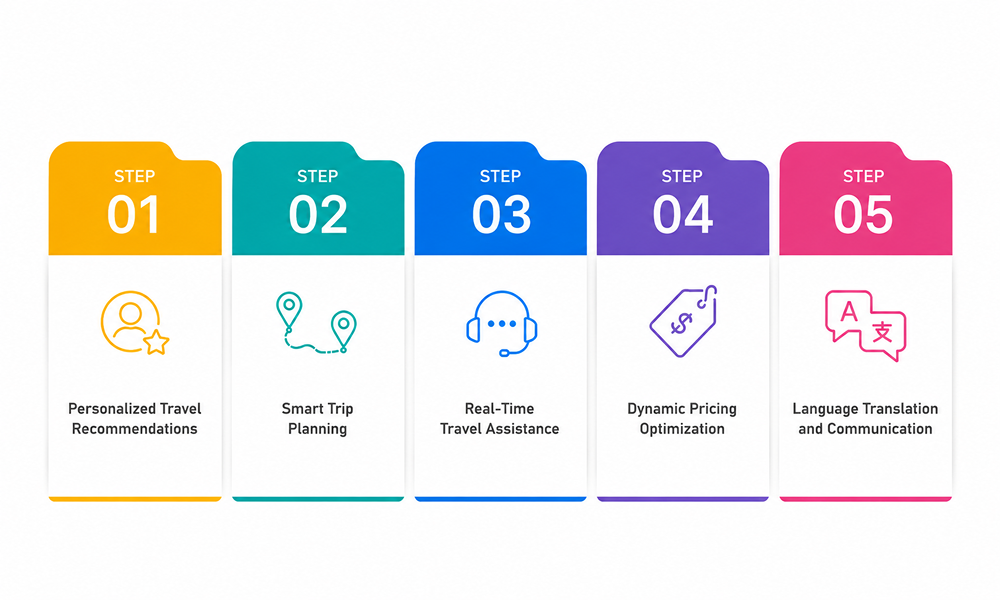
1. Personalized Travel Recommendations
AI algorithms analyze traveler preferences, booking history, spending habits, and online behavior to recommend destinations, accommodations, activities, and transportation options tailored to individual interests.
- Customized travel experiences
- Better customer satisfaction
- Increased booking conversions
- Improved traveler engagement
2. Smart Trip Planning
AI-powered travel assistants can create personalized itineraries based on traveler preferences, budgets, weather conditions, and local events, helping users save time and make informed decisions.
- Automated itinerary creation
- Real-time schedule adjustments
- Improved travel convenience
- Enhanced planning accuracy
3. Real-Time Travel Assistance
Virtual assistants and chatbots provide instant support throughout the travel journey, answering questions, managing bookings, and offering recommendations around the clock.
- 24/7 customer support
- Faster issue resolution
- Reduced support costs
- Improved traveler experience
4. Dynamic Pricing Optimization
AI helps airlines, hotels, and travel agencies adjust prices in real time based on demand, seasonality, competitor pricing, and market conditions.
- Increased revenue generation
- Better occupancy rates
- Competitive pricing strategies
- Improved profitability
5. Language Translation and Communication
AI-powered translation tools help travelers communicate effectively across different regions and languages, making international travel easier and more accessible.
- Improved communication
- Enhanced customer experiences
- Reduced language barriers
- Greater travel confidence
How Travel Companies Are Leveraging AI for Growth
Travel organizations across the globe are integrating AI into their operations to improve customer experiences and achieve greater efficiency.
1. Personalized Customer Experiences
Travel companies are increasingly using AI to deliver highly personalized experiences that cater to the unique preferences of each traveler. By analyzing customer data such as browsing history, booking behavior, travel patterns, and personal interests, AI systems can recommend destinations, accommodations, activities, and travel packages that align with individual expectations. This level of personalization not only enhances customer satisfaction but also increases booking conversions and encourages repeat business. As travelers receive recommendations that feel relevant and timely, they are more likely to engage with travel brands and remain loyal over the long term.
2. Intelligent Customer Support
AI-powered chatbots and virtual assistants have become essential tools for travel businesses seeking to improve customer service while reducing operational costs. These intelligent systems provide instant responses to customer inquiries, assist with bookings, offer travel updates, and resolve common issues around the clock. Unlike traditional customer support channels that may experience delays, AI enables immediate assistance at any time of day. This improved accessibility enhances the customer experience while allowing businesses to handle a larger volume of inquiries without significantly increasing staffing requirements.
3. Dynamic Revenue Optimization
Travel companies are leveraging AI-driven pricing models to maximize revenue and remain competitive in a constantly changing market. AI algorithms analyze factors such as seasonal demand, competitor pricing, booking trends, customer behavior, and market conditions to adjust prices in real time. This enables airlines, hotels, and travel agencies to offer competitive rates while optimizing profitability. By accurately predicting demand fluctuations, businesses can make informed pricing decisions that balance occupancy, customer acquisition, and revenue growth.
4. Better Decision-Making
AI-powered predictive analytics allows travel companies to forecast customer demand, identify emerging travel trends, and anticipate operational challenges before they occur. By analyzing large volumes of historical and real-time data, businesses can gain valuable insights into traveler behavior and market dynamics. These insights help organizations make data-driven decisions related to marketing strategies, resource allocation, inventory management, and service improvements.
5. Streamlined Operations
Many travel businesses are using AI to automate repetitive and time-consuming tasks that traditionally required significant manual effort. Functions such as reservation management, itinerary planning, payment processing, document verification, and customer communications can now be handled automatically through intelligent systems. This automation reduces human error, improves operational efficiency, and allows employees to focus on more strategic activities.
6. Enhanced Marketing
AI is transforming the way travel companies approach marketing by enabling highly targeted and data-driven campaigns. Through machine learning and customer segmentation, businesses can identify potential travelers, understand their preferences, and deliver personalized promotions across multiple channels. AI can determine the most effective messaging, timing, and offers for specific audiences, significantly improving campaign performance. This targeted approach helps increase customer engagement, generate qualified leads, and improve return on marketing investment.
7. Improved Demand Forecasting
Travel companies use AI to accurately forecast demand for flights, hotel rooms, transportation services, and tourism activities. By analyzing booking patterns, market trends, seasonal fluctuations, and external factors, AI helps businesses optimize capacity planning and resource allocation. Accurate forecasting minimizes the risks of overbooking, under utilization, and revenue loss while ensuring that customer demand is met efficiently. This level of operational intelligence contributes directly to business growth and improved profitability.
Key Applications of AI in the Tourism Industry
AI is being implemented across various segments of the tourism sector to improve experiences and optimize business operations.
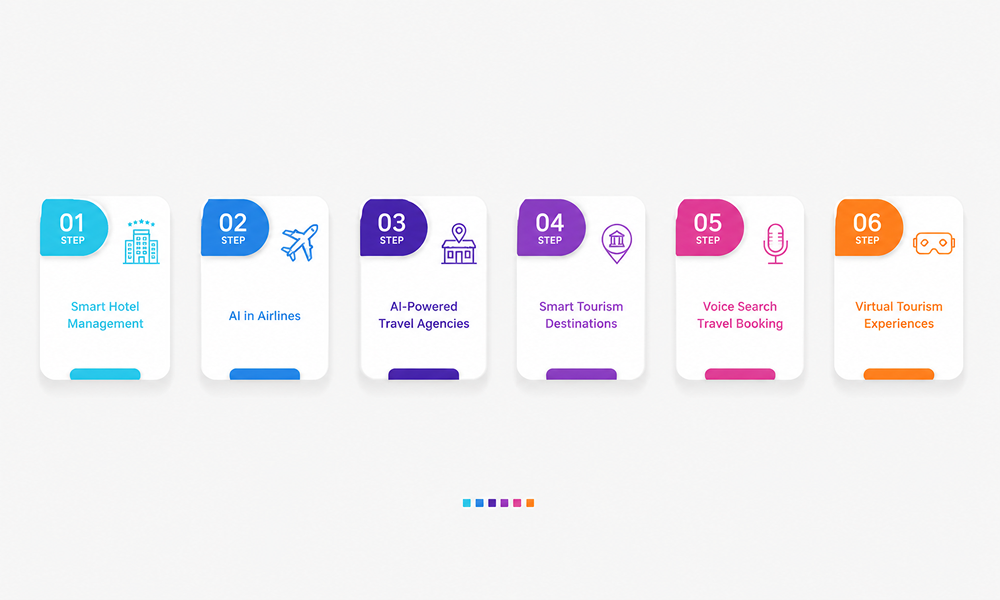
1. Smart Hotel Management
Hotels use AI for automated check-ins, smart room controls, guest personalization, and predictive maintenance.
Applications:
- Contactless services
- Personalized guest experiences
- Energy management
- Smart room automation
2. AI in Airlines
Airlines leverage AI to optimize routes, improve maintenance scheduling, and enhance passenger services.
Applications:
- Flight scheduling
- Predictive maintenance
- Customer support
- Revenue management
3. AI-Powered Travel Agencies
Travel agencies utilize AI to automate recommendations and provide customized travel packages.
Applications:
- Trip planning
- Package recommendations
- Customer engagement
- Sales optimization
4. Smart Tourism Destinations
Cities and tourism boards use AI to manage visitor flows and improve tourist experiences.
Applications:
- Crowd management
- Visitor analytics
- Destination marketing
- Tourism planning
5. Voice Search Travel Booking
AI-powered voice assistants allow users to search, compare, and book travel services through voice commands.
Applications:
- Voice booking
- Travel assistance
- Information retrieval
- Personalized recommendations
6. Virtual Tourism Experiences
AI and immersive technologies provide virtual tours and destination previews before actual travel.
Applications:
- Virtual tours
- Interactive experiences
- Destination promotion
- Customer engagement
Major Benefits of AI in Travel and Tourism
Artificial Intelligence is revolutionizing the travel and tourism industry by helping businesses deliver smarter, faster, and more personalized services. From enhancing customer experiences to streamlining operations and improving decision-making, AI is enabling travel companies to meet evolving customer expectations while maximizing efficiency and profitability.
1. Enhanced Customer Experience
Artificial Intelligence enables travel companies to deliver highly personalized and seamless experiences throughout the customer journey. By analyzing traveler preferences, booking history, and behavioral patterns, AI helps businesses provide tailored recommendations, customized itineraries, and relevant travel offers. This personalized approach improves customer satisfaction and creates memorable travel experiences that encourage repeat bookings and long-term loyalty.
2. Improved Operational Efficiency
AI automates many repetitive and time-consuming tasks that are common in the travel industry, including reservation management, customer inquiries, itinerary updates, and payment processing. Automation reduces manual workload, minimizes human errors, and allows travel companies to optimize their resources more effectively. As a result, businesses can improve productivity while maintaining high service standards.
3. Personalized Travel Recommendations
One of the most significant advantages of AI is its ability to generate highly relevant recommendations based on individual traveler preferences. AI analyzes various data points to suggest destinations, accommodations, activities, restaurants, and transportation options that align with customer interests. This helps travelers make informed decisions while increasing engagement with travel platforms.
4. Better Revenue Management
Travel businesses use AI-driven analytics and dynamic pricing models to maximize revenue opportunities. By evaluating market demand, competitor pricing, booking trends, and seasonal fluctuations, AI enables companies to adjust pricing strategies in real time. This data-driven approach helps optimize occupancy rates, increase bookings, and improve overall profitability.
5. Faster and Smarter Decision-Making
AI provides travel companies with valuable insights derived from large volumes of customer and operational data. Predictive analytics helps businesses identify travel trends, forecast demand, and understand customer behavior more accurately. These insights support strategic decision-making and allow organizations to respond quickly to changing market conditions.
6. Increased Customer Engagement
AI helps businesses engage customers through personalized marketing campaigns, targeted promotions, and relevant travel recommendations. By delivering content that aligns with individual interests and travel preferences, companies can create stronger customer relationships and improve conversion rates. Enhanced engagement ultimately contributes to higher customer retention and brand loyalty.
7. Enhanced Safety and Security
AI technologies play a crucial role in improving safety and security across the travel ecosystem. Advanced monitoring systems, fraud detection tools, and predictive risk analysis help identify potential threats and suspicious activities in real time. These capabilities protect travelers and businesses while building trust in digital travel platforms.
Essential Features of an AI-Powered Travel and Tourism Solution
As traveler expectations continue to evolve, businesses in the travel and tourism industry are increasingly investing in AI travel app development services to deliver personalized, efficient, and seamless experiences. To meet these demands, travel companies must integrate advanced AI capabilities into their digital platforms.
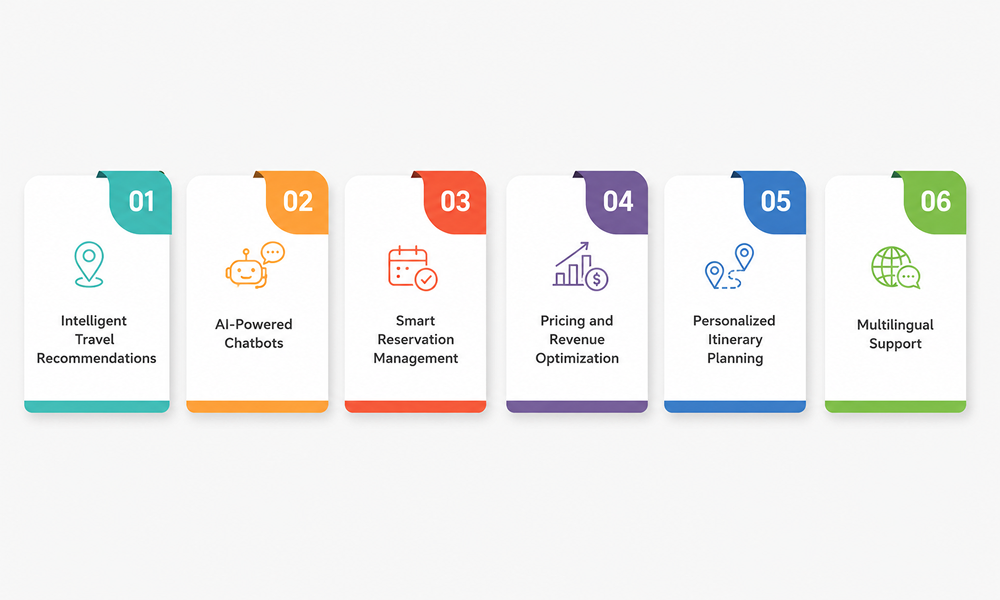
1. Intelligent Travel Recommendations
One of the most valuable features of an AI-powered travel platform is its ability to provide personalized recommendations. By analyzing user preferences, search history, travel behavior, budget constraints, and booking patterns, AI can suggest destinations, accommodations, transportation options, restaurants, and activities that align with individual traveler interests. These recommendations help users make faster decisions while creating a more engaging and personalized travel experience.
2. AI-Powered Chatbots
AI-driven chatbots and virtual assistants enable travel businesses to provide instant customer support around the clock. These intelligent assistants can answer frequently asked questions, assist with bookings, provide itinerary information, handle cancellations, and offer travel guidance in real time. By delivering immediate responses and reducing wait times, AI-powered support systems significantly improve customer satisfaction while reducing the workload on customer service teams.
3. Smart Reservation Management
An advanced AI travel solution should include intelligent booking capabilities that simplify the reservation process for users. AI can analyze customer preferences and automatically suggest the most suitable flight schedules, hotel options, transportation services, and travel packages. Automated reservation management ensures that users can modify, cancel, or update bookings easily while minimizing manual intervention from service providers.
4. Pricing and Revenue Optimization
Dynamic pricing is a critical feature that helps travel businesses maximize revenue while remaining competitive. AI algorithms continuously analyze market demand, competitor pricing, seasonal trends, booking patterns, and customer behavior to adjust prices in real time. This capability allows airlines, hotels, and travel agencies to optimize occupancy rates, increase profitability, and offer competitive pricing to customers.
5. Personalized Itinerary Planning
AI-powered itinerary planning helps travelers organize their trips more efficiently. Based on travel preferences, destination information, weather forecasts, budget considerations, and available attractions, AI can automatically generate personalized travel schedules. These customized itineraries save time for travelers and ensure a more enjoyable and organized travel experience from start to finish.
6. Multilingual Support
Travelers often interact with businesses across different countries and languages. AI-powered translation and language processing capabilities allow platforms to communicate effectively with global audiences. Real-time language translation enhances customer interactions, removes communication barriers, and makes travel services more accessible to international travelers.
Cost to Develop an AI-Powered Travel and Tourism Solution
The development cost of an AI-powered travel application depends on project complexity, AI capabilities, integrations, platform selection, and customization requirements.
Solution Type | Estimated Cost |
Basic AI Travel App | $20,000 - $40,000 |
Medium Complexity AI Platform | $40,000 - $80,000 |
Advanced AI Travel Solution | $80,000 - $150,000+ |
Enterprise AI Tourism Ecosystem | $150,000 - $500,000+ |
Summary
Artificial Intelligence is rapidly transforming the travel and tourism industry, enabling businesses to deliver personalized customer experiences, automate operations, optimize pricing strategies, and make smarter business decisions. As traveler expectations continue to evolve, AI-powered solutions are becoming essential for companies seeking to improve efficiency, increase revenue, and maintain a competitive edge in an increasingly digital marketplace.
As a leading AI app development company, we specialize in developing innovative AI-powered travel and tourism solutions tailored to the unique needs of modern businesses. Our team at OZVID Technologies combines industry expertise with advanced technologies to build scalable, secure, and feature-rich travel applications that help organizations streamline operations, engage customers, and accelerate growth. Whether you are a travel startup, tour operator, hotel chain, or enterprise travel platform, OZVID Technologies can help you leverage the power of AI to transform your business and stay ahead in the evolving travel landscape. Contact us and get started today.
Frequently Asked Questions
1. Why should travel and tourism businesses invest in AI solutions?
AI helps travel businesses improve operational efficiency, enhance customer experiences, and increase revenue through automation and data-driven decision-making. By leveraging AI, companies can stay competitive in a rapidly evolving digital landscape while meeting the growing expectations of modern travelers.
- Automates repetitive tasks and reduces operational costs.
- Improves customer engagement and satisfaction.
- Increases revenue through personalized offerings.
- Enables data-driven business decisions.
2. How can AI help travel companies increase revenue?
AI enables businesses to identify new revenue opportunities by optimizing pricing strategies, personalizing customer experiences, and improving marketing performance. Intelligent analytics help companies better understand customer behavior and maximize conversions.
- Supports dynamic pricing and revenue optimization.
- Improves booking conversion rates.
- Delivers personalized promotions and offers.
- Enhances customer retention and loyalty.
3. What types of travel businesses can benefit from AI?
AI solutions can be implemented across various segments of the travel and tourism industry, including travel agencies, hotels, airlines, tour operators, transportation providers, and online travel platforms. Businesses of all sizes can leverage AI to streamline operations and improve customer experiences.
- Travel agencies and tour operators.
- Hotels, resorts, and hospitality businesses.
- Airlines and transportation providers.
- Online travel booking platforms and marketplaces.
4. How does AI improve customer service in the travel industry?
AI-powered tools enable businesses to provide faster, more accurate, and personalized support throughout the customer journey. Automated support systems ensure travelers receive assistance whenever needed, leading to improved satisfaction and stronger customer relationships.
- Provides 24/7 customer support through chatbots.
- Delivers instant responses to customer inquiries.
- Reduces support workload and response times.
- Personalizes interactions based on customer preferences.
5. What factors affect the cost of developing an AI-powered travel solution?
The cost of development depends on several factors, including project complexity, AI functionalities, third-party integrations, platform requirements, and customization needs. Businesses should evaluate their objectives carefully before defining the scope of development.
- Number and complexity of AI features.
- Mobile, web, or cross-platform requirements.
- Integration with booking systems and APIs.
- Level of customization and scalability required.
6. How long does it take to develop an AI-powered travel application?
Development timelines vary depending on the project's size, features, and technical requirements. Basic solutions can be launched relatively quickly, while enterprise-grade platforms may require extensive development and testing.
- Basic solutions may take 3–6 months.
- Mid-level platforms typically require 6–9 months.
- Enterprise applications can take 9–18 months or longer.
- Timelines depend on features, integrations, and project scope.