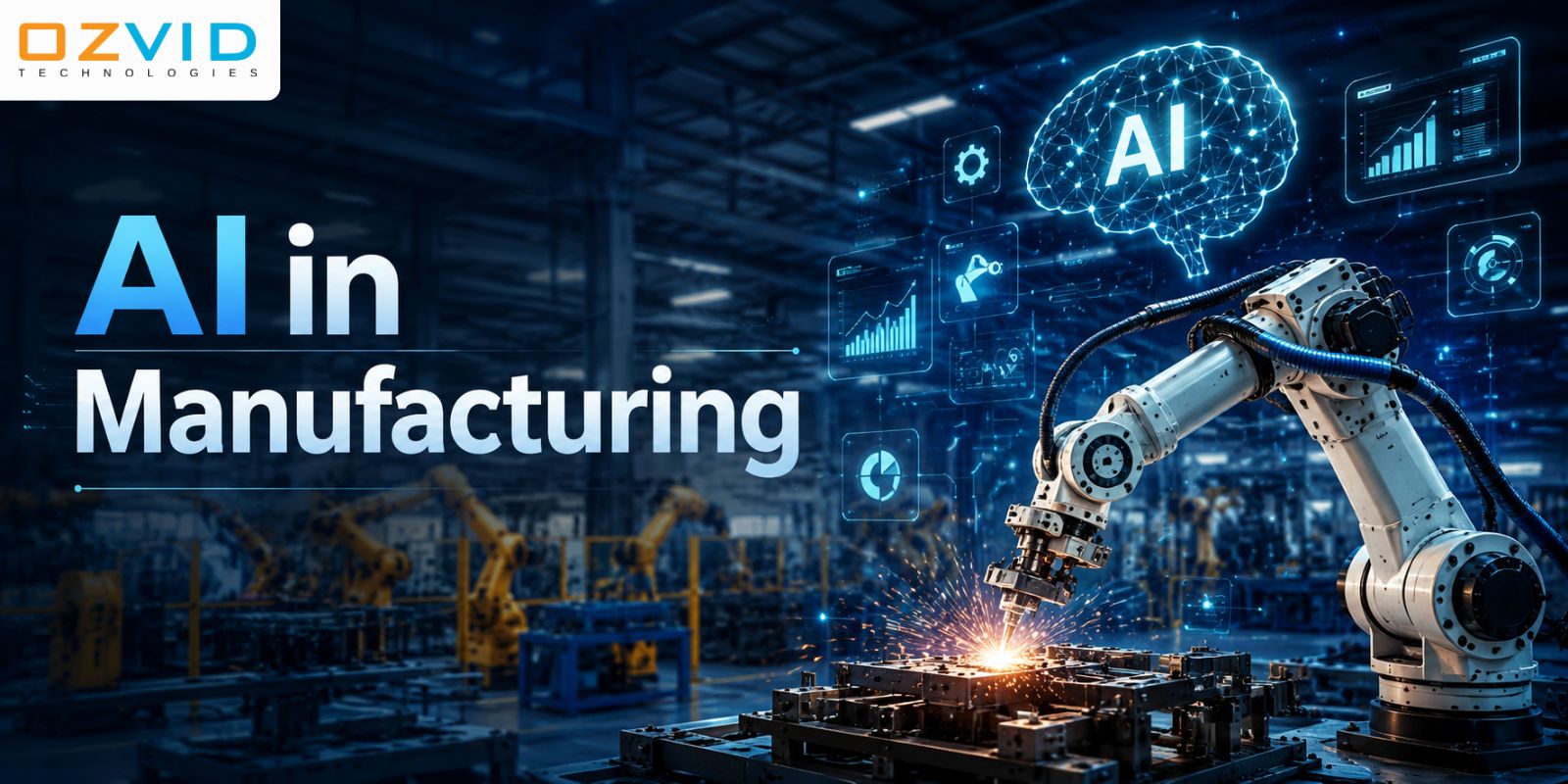
The manufacturing industry is undergoing a major transformation driven by emerging technologies, and Artificial Intelligence (AI) is at the center of this evolution. From predictive maintenance and quality inspection to supply chain optimization and process automation, AI is helping manufacturers improve productivity, reduce costs, and gain a competitive advantage in increasingly complex markets.
The global artificial intelligence in manufacturing market size is projected to reach USD 47.88 billion by 2030, growing at a CAGR of 46.5% from 2025 to 2030. This remarkable growth highlights the increasing adoption of AI technologies across factories, production facilities, and industrial operations worldwide.
Manufacturers are leveraging AI-powered software solutions to analyze vast amounts of production data, automate repetitive tasks, predict equipment failures, and optimize operational performance. As customer demands continue to evolve and operational costs rise, businesses are turning to AI to achieve greater efficiency, flexibility, and profitability.
In this blog, we explore the rise of AI in manufacturing, its key benefits, practical use cases, development costs, and how businesses can choose the right AI development partner.
Key Takeaways
- AI is transforming manufacturing by improving automation, productivity, and decision-making.
- Operational costs can be reduced through predictive maintenance, quality control, and process optimization.
- AI supports multiple manufacturing functions, including supply chain management, forecasting, and production planning.
- Development costs vary based on project complexity, integrations, AI features, and deployment requirements.
- Choosing an experienced AI partner is essential for successful implementation and long-term business growth.
The Rise of AI in Manufacturing
The manufacturing sector has traditionally relied on automation and industrial machinery to improve production efficiency. However, modern AI technologies are taking automation to an entirely new level by enabling machines and systems to learn, adapt, and make intelligent decisions in real time.
With advancements in machine learning, computer vision, robotics, and industrial IoT, manufacturers can now collect and analyze data from every stage of production. This data-driven approach helps organizations identify inefficiencies, forecast maintenance needs, improve product quality, and streamline operations.
The rise of Industry 4.0 has further accelerated AI adoption. Smart factories equipped with AI-powered systems can monitor production lines, optimize workflows, and automatically respond to changing production requirements without human intervention.
As manufacturers face challenges such as labor shortages, rising operational costs, and increasing customer expectations, AI has become an essential technology for achieving sustainable growth and operational excellence.
Key Advantages of Integrating AI into Manufacturing Operations
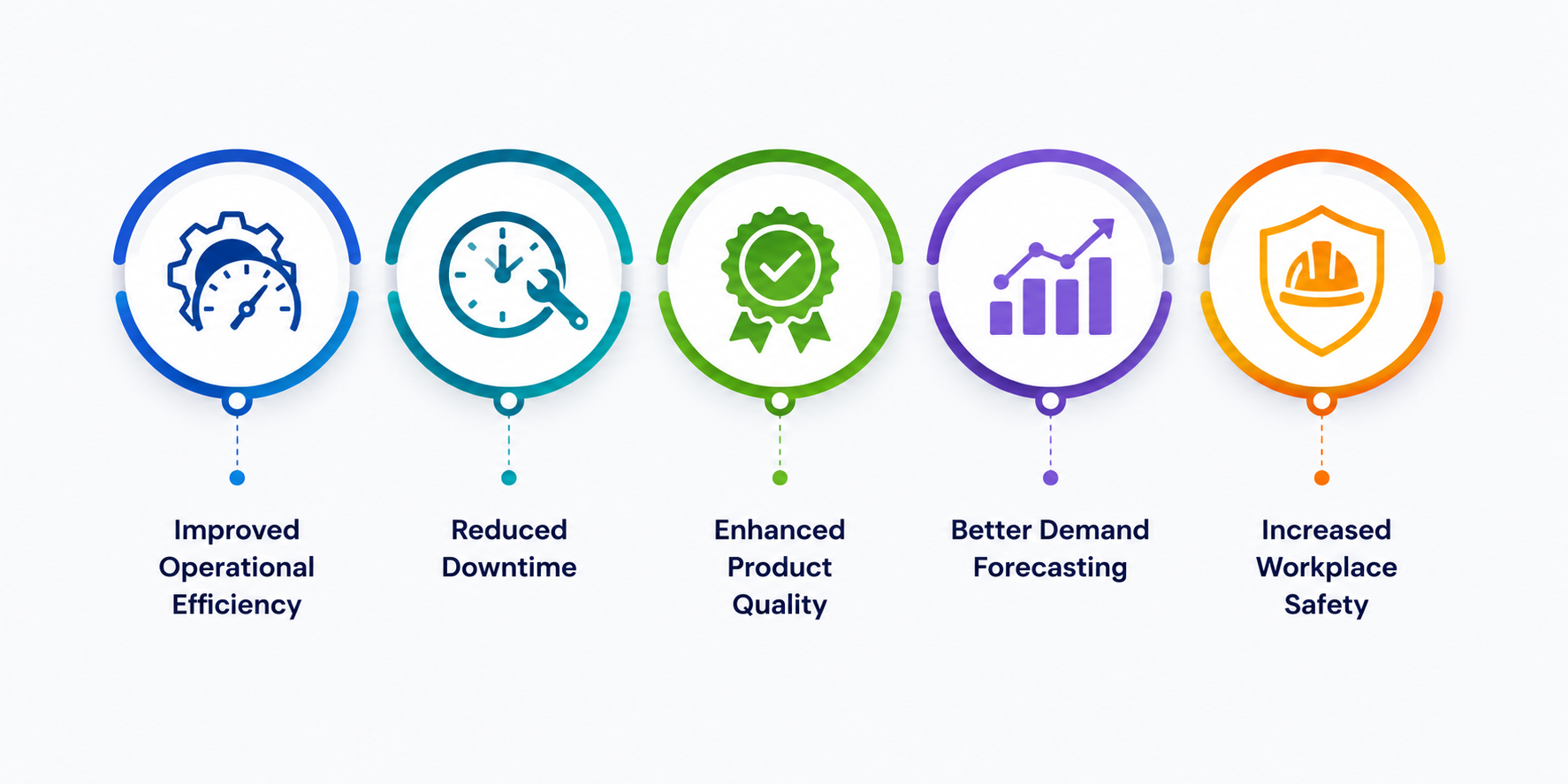
AI provides numerous benefits that help manufacturers improve productivity, quality, and profitability. Organizations implementing AI-driven solutions are experiencing significant operational improvements across multiple business functions.
1. Improved Operational Efficiency
AI automates repetitive manufacturing processes, monitors workflows continuously, and identifies operational bottlenecks in real time. This allows manufacturers to streamline production activities, reduce manual intervention, and maximize resource utilization while maintaining consistent output quality and production performance.
2. Reduced Downtime
AI-powered predictive maintenance systems continuously analyze equipment data to identify potential failures before they occur. Early detection of issues helps businesses schedule maintenance proactively, reducing unexpected machine breakdowns and minimizing costly production interruptions across manufacturing facilities.
3. Enhanced Product Quality
AI-driven quality control systems use computer vision and machine learning algorithms to inspect products with exceptional accuracy. These systems detect defects, inconsistencies, and quality issues faster than manual inspections, ensuring higher product standards and customer satisfaction.
4. Better Demand Forecasting
AI analyzes historical sales data, market trends, and customer behavior patterns to generate accurate demand forecasts. Manufacturers can optimize inventory levels, reduce excess stock, and improve production planning based on anticipated market requirements.
5. Increased Workplace Safety
AI-powered monitoring systems identify potential safety hazards and risky working conditions within manufacturing environments. Real-time alerts and predictive analytics help organizations prevent accidents, improve compliance, and create safer workplaces for employees.
AI-Powered Manufacturing Software Development Cost
The cost of developing AI-powered manufacturing software varies significantly depending on project complexity, AI features, system integrations, infrastructure requirements, and deployment models. Simple AI applications focused on automation and reporting typically require lower investments, while enterprise-grade platforms featuring predictive analytics, computer vision, digital twins, and real-time monitoring require higher budgets. The following table provides an estimated cost breakdown:
Software Type | Estimated Cost (USD) | Development Timeline |
Basic AI Manufacturing Dashboard | $10,000 – $25,000 | 2 – 4 Months |
Predictive Maintenance Solution | $25,000 – $50,000 | 4 – 6 Months |
AI-Based Quality Inspection System | $50,000 – $100,000 | 5 – 8 Months |
Inventory & Supply Chain Optimization Platform | $60,000 – $120,000 | 6 – 9 Months |
Smart Factory Management Software | $90,000 – $150,000+ | 8 – 12 Months |
Enterprise AI Manufacturing Platform | $150,000+ | 12+ Months |
Note: Actual development costs may vary depending on business requirements, AI model complexity, location of the development team, and third-party integrations.
Key Factors Influencing AI Manufacturing Software Development Costs
The cost of developing AI-powered manufacturing software depends on multiple technical, operational, and business-related factors. Every manufacturing organization has unique requirements, which means development costs can vary significantly from one project to another. Understanding these cost drivers helps businesses plan their budgets effectively and make informed investment decisions when implementing AI solutions.
1. Project Complexity
Project complexity is one of the most significant factors affecting AI software development costs. The more advanced the features and functionalities, the higher the development effort required. Basic AI applications focused on reporting and workflow automation generally cost less, while enterprise-grade platforms with advanced analytics, predictive maintenance, digital twins, computer vision, and intelligent automation require larger investments.
2. Data Availability and Quality
Artificial Intelligence relies heavily on data to train, validate, and optimize machine learning models. The quality, quantity, and accessibility of manufacturing data play a crucial role in determining development costs. Organizations with well-structured and readily available datasets can accelerate development, while businesses with fragmented or incomplete data may require additional preparation efforts.
3. Integration Requirements
Manufacturing environments typically operate with multiple software platforms and connected systems. AI-powered applications often need to integrate with Enterprise Resource Planning (ERP) systems, Manufacturing Execution Systems (MES), Customer Relationship Management (CRM) platforms, Industrial IoT devices, warehouse management systems, and other third-party tools.
4. AI Model Development
Developing custom AI models is a specialized process that requires expertise in machine learning, data science, and advanced analytics. The cost of AI model development depends on the type of solution being built, whether it involves predictive maintenance, demand forecasting, quality inspection, process optimization, or intelligent automation.
5. Deployment Environment
The choice between cloud-based, on-premise, or hybrid deployment significantly affects the overall investment required for AI manufacturing software. Cloud deployments generally offer lower upfront infrastructure costs, greater scalability, and easier maintenance, making them a popular choice for many organizations.
6. Maintenance and Support
The cost of AI software development does not end after deployment. Continuous maintenance and support are essential to ensure optimal performance, security, and reliability over time. AI systems require regular monitoring, software updates, bug fixes, and performance enhancements to adapt to changing business needs.
Choosing the Right AI Development Partner for Manufacturing Success
Selecting the right AI development company is one of the most important decisions manufacturers can make when implementing artificial intelligence solutions. The success of an AI project depends not only on the technology itself but also on the expertise, industry knowledge, and capabilities of the development team behind it. A reliable AI partner can help businesses identify the right opportunities for automation, overcome technical challenges, ensure smooth implementation, and maximize long-term return on investment. When evaluating potential partners, manufacturers should consider the following factors:
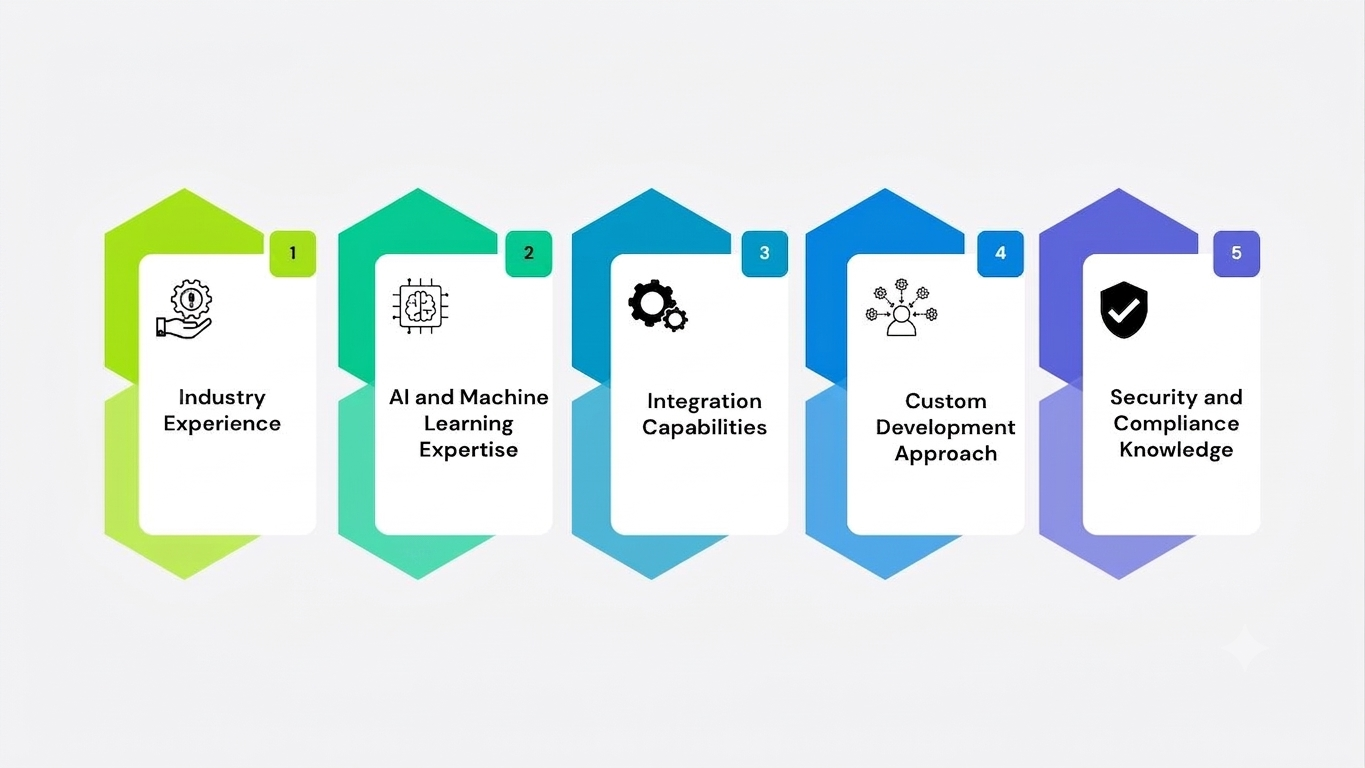
1. Industry Experience
Manufacturing is a highly specialized industry with unique workflows, operational challenges, compliance requirements, and production processes. An AI-powered app development company with manufacturing experience can better understand business needs and develop solutions that align with operational goals.
Experienced providers are more likely to recommend practical AI applications that address real-world manufacturing challenges while minimizing implementation risks.
Key Considerations:
- Manufacturing project portfolio
- Industry certifications and standards knowledge
- Understanding of production workflows
- Proven implementation experience
- Familiarity with Industry 4.0 technologies
- Experience working with manufacturing enterprises
2. AI and Machine Learning Expertise
A successful AI project requires deep technical expertise in artificial intelligence, machine learning, data science, and advanced analytics. The development team should be capable of designing, training, testing, and optimizing AI models that deliver measurable business outcomes. Strong AI capabilities ensure the solution remains accurate, scalable, and effective as business requirements evolve over time.
Key Considerations:
- Machine learning and deep learning expertise
- Computer vision development capabilities
- Predictive analytics experience
- Natural language processing knowledge
- AI model training and optimization skills
- Data engineering and analytics expertise
3. Integration Capabilities
Manufacturing facilities typically rely on multiple software systems and connected devices to manage operations. AI solutions must integrate seamlessly with existing infrastructure to ensure efficient data exchange and process automation.
An experienced mobile app development company should have the technical expertise to connect AI applications with enterprise systems, industrial equipment, and third-party platforms without disrupting existing operations.
Key Considerations:
- ERP integration expertise
- MES and SCM system integration experience
- IoT device connectivity capabilities
- Legacy system modernization support
- API development and management
- Real-time data synchronization expertise
4. Custom Development Approach
Every manufacturing organization has unique production processes, operational objectives, and technology requirements. A one-size-fits-all solution may not effectively address specific business challenges.
The right AI development Company should focus on creating customized solutions tailored to organizational goals, ensuring maximum value and operational efficiency.
Key Considerations:
- Comprehensive requirement analysis
- Custom feature development capabilities
- Flexible and scalable architecture
- Industry-specific solution design
- Personalized implementation strategies
- Ability to adapt to changing business needs
5. Security and Compliance Knowledge
Manufacturing companies generate and manage large volumes of sensitive operational, financial, and production data. Protecting this information is critical for maintaining business continuity and safeguarding intellectual property.
An experienced AI development partner should implement robust security measures and ensure compliance with relevant industry regulations and standards.
Key Considerations:
- Data protection frameworks
- Compliance with industry regulations
- Access control and authentication systems
- Cybersecurity best practices
- Secure cloud and on-premise deployments
- Risk assessment and threat monitoring capabilities
How AI-Powered Manufacturing Software Enhances Production Efficiency
AI-powered manufacturing software is transforming production environments by enabling businesses to automate processes, improve decision-making, and optimize resource utilization. Unlike traditional software systems that primarily collect and display data, AI-driven solutions analyze large volumes of information in real time, identify patterns, and provide actionable recommendations. This allows manufacturers to improve operational performance, reduce inefficiencies, and achieve higher levels of productivity.
1. Real-Time Production Monitoring
AI-powered software continuously monitors production lines, equipment performance, and operational activities in real time. By collecting data from sensors, machines, and connected devices, AI systems provide complete visibility into manufacturing operations. This allows managers to identify bottlenecks, detect performance issues, and take corrective actions before they impact production output.
Real-time monitoring also helps manufacturers maintain consistent production quality and ensure that operations run smoothly without unnecessary interruptions. The ability to access accurate operational insights at any moment enables faster and more effective decision-making across the organization.
2. Predictive Maintenance and Reduced Downtime
Unexpected equipment failures can significantly impact production schedules and profitability. AI-powered predictive maintenance software analyze machine data, operating conditions, and historical maintenance records to identify potential equipment issues before failures occur.
By predicting maintenance requirements in advance, manufacturers can schedule repairs during planned downtime rather than dealing with costly emergency breakdowns. This proactive approach improves equipment reliability, extends asset lifespan, and minimizes production disruptions, leading to greater overall efficiency.
3. Automated Workflow Optimization
Manufacturing processes often involve multiple interconnected tasks and workflows. AI software analyzes these workflows to identify inefficiencies, redundancies, and operational bottlenecks. Based on real-time data and performance metrics, AI can recommend process improvements and optimize production sequences.
Automated workflow optimization helps manufacturers reduce delays, improve throughput, and ensure that resources are allocated effectively. As a result, production operations become more streamlined, leading to increased output and improved operational performance.
4. Improved Quality Control
Maintaining high product quality is essential for customer satisfaction and business success. AI-powered quality control systems use machine learning and computer vision technologies to inspect products throughout the manufacturing process.
These systems can detect defects, inconsistencies, and quality deviations with greater accuracy and speed than traditional inspection methods. Early identification of quality issues allows manufacturers to address problems immediately, reducing waste, minimizing rework, and ensuring that only high-quality products reach customers.
5. Intelligent Production Planning and Scheduling
Production planning is a complex task that requires balancing customer demand, resource availability, inventory levels, and operational capacity. AI-powered software analyzes historical data, market trends, and real-time production information to create optimized production schedules.
By intelligently allocating resources and prioritizing tasks, AI helps manufacturers improve production efficiency, reduce idle time, and meet delivery deadlines more effectively. Better planning also enables organizations to adapt quickly to changing market conditions and customer requirements.
6. Enhanced Resource Utilization
Efficient utilization of labor, machinery, materials, and energy is critical for maximizing production efficiency. AI-powered systems continuously evaluate resource usage and identify opportunities for improvement. By analyzing operational data, AI can recommend adjustments that reduce waste, optimize machine usage, and improve workforce productivity. This ensures that manufacturing resources are used effectively, helping organizations achieve higher output without significantly increasing operational costs.
Conclusion
Artificial Intelligence is revolutionizing the manufacturing industry by enabling smarter operations, predictive decision-making, and enhanced production efficiency. From predictive maintenance and quality inspection to supply chain optimization and intelligent automation, AI is helping manufacturers overcome operational challenges while driving innovation and profitability.
As the adoption of Industry 4.0 continues to accelerate, businesses that invest in AI-powered manufacturing solutions will be better positioned to improve productivity, reduce costs, and remain competitive in a rapidly evolving marketplace.
At OZVID Technologies, we specialize in developing custom AI-powered manufacturing software solutions tailored to modern industrial requirements. Our team combines deep technical expertise with industry knowledge to deliver scalable, secure, and innovative AI applications that help manufacturers optimize operations, improve efficiency, and achieve sustainable business growth. Contact us to learn more.
Frequently Asked Questions
1. How can AI improve operational efficiency in manufacturing businesses?
AI improves efficiency by automating repetitive tasks, optimizing workflows, reducing downtime, and providing real-time production insights. Manufacturers can streamline operations and maximize productivity while lowering operational costs.
- Workflow automation
- Reduced downtime
- Real-time monitoring
- Improved productivity
- Lower operational costs
2. What is the average cost of developing AI-powered manufacturing software?
The cost typically ranges from $10,000 to over $150,000, depending on software complexity, AI features, integration requirements, infrastructure, and customization needs.
- Project complexity
- AI functionality
- System integrations
- Deployment model
- Custom requirements
3. Which manufacturing processes benefit most from AI implementation?
Processes such as predictive maintenance, quality inspection, inventory management, supply chain optimization, demand forecasting, production scheduling, and energy management benefit significantly from AI technologies.
- Predictive maintenance
- Quality control
- Inventory optimization
- Demand forecasting
- Production planning
4. How long does it take to develop an AI manufacturing solution?
Development timelines generally range from 2 months to 12+ months, depending on project scope, AI complexity, data availability, and integration requirements.
5. What should businesses consider before investing in AI manufacturing software?
Businesses should evaluate operational challenges, available data, project objectives, budget, scalability requirements, integration needs, and the expertise of the development partner before starting implementation.
- Business goals
- Budget allocation
- Data quality
- Scalability needs
- Technology partner expertise
6. Why should manufacturers partner with a specialized AI development company?
A specialized AI development company brings industry expertise, advanced technical skills, proven methodologies, and ongoing support to ensure successful implementation and maximum return on investment from AI initiatives.
Advantages of a Specialized Partner:
- Industry knowledge
- AI expertise
- Custom solutions
- Faster implementation
- Ongoing support and maintenance