
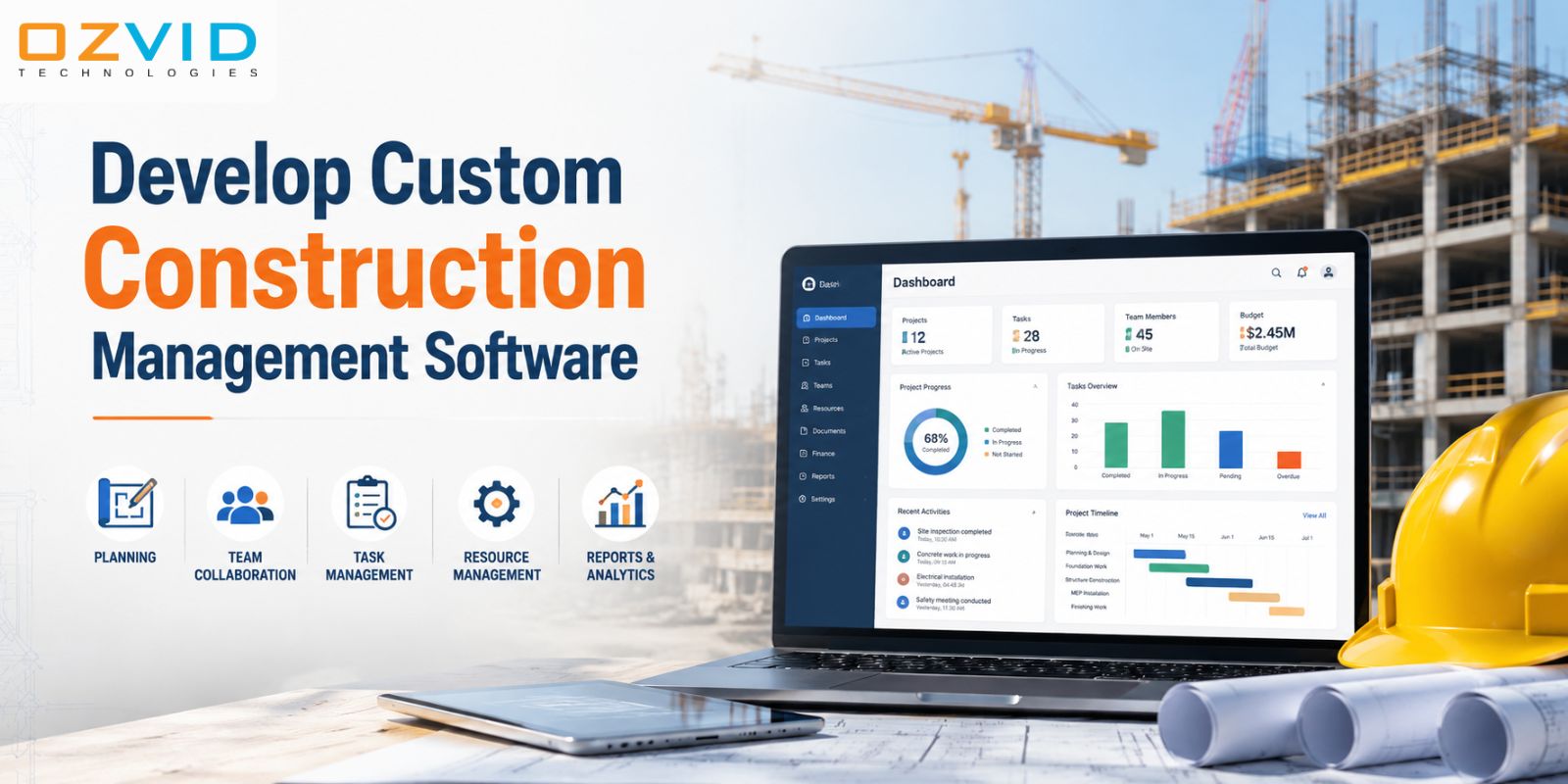
The global construction management software market is experiencing significant growth as construction companies increasingly adopt digital solutions to streamline operations, improve project visibility, and enhance overall productivity. According to industry reports, the market is projected to grow from USD 11.58 billion in 2026 to USD 17.81 billion by 2031, registering a compound annual growth rate (CAGR) of 8.99% during the forecast period. This growth is being driven by the rising demand for real-time project tracking, resource optimization, automated workflows, and cloud-based collaboration tools across the construction sector.
As construction projects become more complex, businesses are turning to Custom Construction Management Software to overcome challenges related to scheduling, budgeting, workforce management, document handling, and communication. Unlike generic solutions, custom-built software is tailored to meet specific business requirements, enabling organizations to improve efficiency, reduce operational costs, and gain greater control over project execution. By partnering with an experienced software development company, construction businesses can build scalable and feature-rich platforms that support long-term growth and competitive advantage.
In this guide, we will explore the step-by-step process of developing Construction Management Software, its key features, development costs, and the factors businesses should consider when choosing the right development partner.
Key Takeaways
- Custom construction software helps automate project planning, scheduling, budgeting, and resource allocation.
- Real-time collaboration improves communication between contractors, project managers, suppliers, and clients.
- Mobile accessibility allows teams to manage projects efficiently from construction sites.
- Development costs vary depending on features, integrations, technology stack, and platform requirements.
- A structured development process ensures scalability, security, and long-term performance.
- Partnering with an experienced software development company reduces risks and accelerates project delivery.
Step-by-Step Process to Build Custom Construction Management Software
Developing Custom Construction Management Software requires a strategic approach that aligns technology with business goals. Below are the eight essential steps involved in building a successful construction management software solution.
1. Business Requirement Analysis
The development process begins with understanding the company's operational challenges, project workflows, and long-term business objectives. This phase involves gathering detailed requirements from stakeholders, project managers, contractors, and administrative teams to identify existing pain points and desired functionalities.
2. Perform Market Research
Before designing the software, it is important to evaluate current market trends and analyze competing construction management platforms. This research helps identify industry best practices, emerging technologies, and feature gaps that can create opportunities for innovation. Market analysis also helps determine user expectations and ensures that the software remains relevant and adaptable to future industry changes.
3. Define Features and Create Wireframes
Once the requirements are finalized, the next step is to define the software's core features and create wireframes that visualize the platform's structure. Wireframes provide a blueprint of how users will navigate the system and interact with different modules. This stage helps stakeholders review the software layout before development begins, reducing misunderstandings and costly revisions later.
4. Select the Right Technology Stack
Choosing the appropriate technology stack is critical for ensuring software performance, scalability, and security. Developers must select frontend frameworks, backend technologies, databases, cloud infrastructure, and development tools that support current requirements and future growth. The technology stack should be capable of handling large volumes of project data, multiple user roles, and complex workflows.
5. Design an Intuitive User Experience
A user-friendly interface is essential for improving software adoption and productivity. Construction professionals often need quick access to project information, reports, schedules, and documents, making usability a key factor in software success. During this phase, designers focus on creating intuitive navigation, responsive layouts, role-based dashboards, and seamless workflows.
6. Develop Core Features and Integrations
After finalizing the design, developers begin building the software's core modules, including project management, scheduling, budgeting, document management, workforce tracking, and reporting capabilities. Depending on business requirements, additional features such as equipment monitoring, AI-powered analytics, and workflow automation may also be implemented. This stage also involves integrating the platform with third-party systems such as ERP software, accounting tools, payroll solutions, cloud services, and communication platforms.
7. Test the Software and Deploy the Solution
Comprehensive testing is performed to ensure that the software functions properly across different devices, operating systems, and usage scenarios. Testing helps identify performance issues, security vulnerabilities, and functionality gaps before deployment. Once quality assurance is completed, the software is deployed to a live environment. Proper deployment planning ensures a smooth transition and minimizes disruption to ongoing business operations.
8. Provide Ongoing Maintenance and Enhancements
The development process does not end after deployment. Continuous maintenance is essential for keeping the software secure, reliable, and aligned with evolving business needs. Regular updates help improve system performance, address technical issues, and introduce new features that enhance functionality.
Essential Features Every Construction Project Management Software Should Include
Modern construction businesses require more than basic project tracking tools. Advanced software solutions provide comprehensive functionality that improves operational efficiency, project visibility, and decision-making. The right feature set enables businesses to manage projects from planning to completion while maintaining control over budgets, resources, and timelines.
1. Project Planning and Scheduling
Project scheduling forms the foundation of successful construction management. The software should allow managers to create timelines, assign tasks, track milestones, and monitor project progress in real time.
Key Capabilities:
- Project timeline creation
- Task assignment and tracking
- Milestone management
- Calendar integration
- Deadline notifications
2. Budget and Cost Management
Construction projects involve multiple financial variables that require continuous monitoring. Cost management features help businesses track expenses, forecasts, and overall project profitability.
Key Capabilities:
- Budget planning tools
- Cost estimation
- Expense tracking
- Financial reporting
- Profitability analysis
3. Resource Management
Efficient allocation of labor, equipment, and materials is critical for project success. Resource management tools ensure optimal utilization and reduce operational waste.
Key Capabilities:
- Workforce allocation
- Equipment tracking
- Material planning
- Resource forecasting
- Availability monitoring
4. Document Management
Construction projects generate extensive documentation, including contracts, permits, blueprints, invoices, and reports. Centralized document storage improves accessibility and collaboration.
Key Capabilities:
- Cloud-based document storage
- Version control
- File sharing
- Digital approvals
- Secure access management
5. Real-Time Communication and Collaboration
Construction teams often operate across multiple locations. Integrated communication tools help stakeholders stay aligned and informed throughout the project lifecycle.
Key Capabilities:
- Team messaging
- Project discussions
- Notifications and alerts
- Stakeholder collaboration
- Activity tracking
6. Mobile Accessibility
Field teams require instant access to project information from construction sites. Mobile-friendly solutions enhance productivity and improve reporting accuracy.
Key Capabilities:
- Site reporting
- Mobile dashboards
- Offline accessibility
- Photo and video uploads
- Instant updates
7. Reporting and Analytics
Data-driven insights enable project managers to make informed decisions. Advanced analytics help identify risks, optimize operations, and improve project outcomes.
Key Capabilities:
- Performance dashboards
- Custom reports
- KPI tracking
- Predictive analytics
- Risk assessment
Custom Construction Management Software: Cost and Factors
Developing custom software requires careful budget planning. The total investment depends on business requirements, feature complexity, technology stack, and integration needs.
Software Type | Estimated Cost |
Basic Construction Management Software | $15,000 – $40,000 |
Mid-Level Software Solution | $40,000 – $80,000 |
Advanced Enterprise Solution | $80,000 – $150,000+ |
AI-Powered Construction Platform | $150,000 – $300,000+ |
Enterprise Multi-Platform Ecosystem | $300,000+ |
Note: Actual costs may vary depending on project scope, development location, and technical requirements.
Major Factors Influencing Construction Software Development Cost
The cost of developing Custom Construction Management Software is influenced by multiple technical, operational, and business-related factors. Every construction company has unique requirements, workflows, and project management processes, which directly affect the scope and complexity of software development.
1. Feature Complexity
The scope and complexity of features are among the most significant factors affecting software development costs. A basic construction management platform with project scheduling, task management, and reporting functionality requires less development time than an advanced solution equipped with artificial intelligence, predictive analytics, workflow automation, and real-time collaboration tools.
2. Platform Selection
The choice of platform plays a crucial role in determining development expenses. Businesses must decide whether they require a web-based solution, mobile applications, or a combination of both. While web applications provide centralized access from desktops and laptops, mobile applications enable field workers and project managers to access critical information directly from construction sites.
3. Third-Party Integrations
Modern construction companies rely on multiple software systems to manage different business operations. As a result, integrating construction management software with third-party applications has become a critical requirement. These integrations help eliminate manual data entry, improve operational efficiency, and create a seamless flow of information across departments.
4. UI/UX Design Requirements
The success of any construction management platform largely depends on its usability and user experience. Construction professionals, project managers, contractors, and field workers need software that is intuitive, easy to navigate, and capable of providing quick access to important information.
Creating a customized user interface requires extensive research, wireframing, prototyping, and user testing. Businesses often request personalized dashboards, role-based access controls, interactive reporting screens, and mobile-friendly designs to improve productivity.
5. Security and Compliance Requirements
Construction companies manage large volumes of sensitive information, including project documentation, financial records, employee data, vendor contracts, and client information. Protecting this data from unauthorized access, cyber threats, and security breaches is essential for business continuity and reputation management. Implementing advanced security measures requires additional development effort and specialized expertise.
6. Development Team Location and Expertise
The location and experience level of the development team significantly impact software development costs. Hiring an experienced software development company with expertise in construction technology may involve a higher initial investment, but it often results in better software quality, faster delivery, and fewer long-term issues. Development rates vary across regions, and highly skilled professionals with experience in cloud computing, artificial intelligence, and enterprise software development typically charge more than general developers.
7. Scalability and Future Enhancements
Many construction companies begin with a limited set of features and gradually expand their software capabilities as their business grows. Building a scalable architecture from the start ensures that new modules, integrations, and functionalities can be added without major system redesigns.
Although scalable development requires a higher upfront investment, it reduces future redevelopment costs and supports long-term business growth.
Choosing the Right Custom Construction Management Software Development Company
Selecting the right development partner is one of the most important decisions in the software development journey. An experienced partner can significantly impact project success, software quality, and long-term scalability.
1. Evaluate Industry Experience
A company with construction technology experience understands industry-specific challenges, workflows, and compliance requirements. This expertise reduces development risks and accelerates project delivery.
Key Evaluation Points:
- Construction software portfolio
- Industry expertise
- Relevant case studies
- Domain knowledge
- Client success stories
2. Assess Technical Expertise
The development team should possess expertise in modern technologies, cloud infrastructure, AI integration, and mobile application development.
Key Evaluation Points:
- Technology proficiency
- Mobile app development software expertise
- Cloud capabilities
- Security knowledge
- Integration experience
3. Review Development Methodology
A structured development methodology ensures transparency, collaboration, and predictable outcomes throughout the project lifecycle.
Key Evaluation Points:
- Agile development approach
- Communication processes
- Project management practices
- Progress reporting
- Quality assurance standards
4 Analyze Support and Maintenance Services
Long-term support is essential for software performance and scalability. Evaluate post-launch services before selecting a partner.
Key Evaluation Points:
- Technical support availability
- Maintenance plans
- Upgrade services
- Monitoring capabilities
- Issue resolution process
5. Compare Pricing and Project Transparency
The ideal development partner offers transparent pricing and detailed project planning without hidden costs.
Key Evaluation Points:
- Cost structure clarity
- Project timelines
- Resource allocation
- Deliverable breakdown
- Contract transparency
Final Thoughts
The construction industry is undergoing a significant digital transformation, making Custom Construction Management Software a valuable investment for businesses seeking operational efficiency, project visibility, and long-term growth. From project scheduling and budgeting to resource management and real-time collaboration, a tailored solution can streamline every stage of the construction lifecycle.
However, successful implementation requires careful planning, feature prioritization, technology selection, and ongoing support. Partnering with an experienced development team ensures the software aligns with your unique business requirements while remaining scalable and secure for future growth.
At OZVID Technologies, we specialize in developing innovative and scalable Construction Management Software solutions tailored to the needs of modern construction businesses. Our experienced team leverages advanced technologies, industry best practices, and agile development methodologies to deliver powerful software that drives efficiency, productivity, and business success.
Frequently Asked Questions
1. Why should construction companies invest in custom construction management software?
Custom software addresses specific operational challenges and workflows that generic platforms may not support. Benefits:
- Tailored functionality
- Improved efficiency
- Better scalability
- Enhanced productivity
- Competitive advantage
2. How long does it take to develop construction management software?
Development timelines vary depending on project complexity, features, and integration requirements. Typical Timeline:
- Basic solution: 3–4 months
- Mid-level solution: 4–8 months
- Enterprise platform: 8–12+ months
- Testing included
- Deployment phase required
3. What technologies are commonly used for construction software development?
Modern solutions utilize scalable technologies to ensure performance, security, and flexibility. Common Technologies:
- React.js
- Angular
- Node.js
- Python
- AWS and Azure
4. Can construction management software integrate with existing business systems?
Yes. Custom solutions can integrate with various third-party tools and enterprise systems. Integration Options:
- ERP platforms
- Accounting software
- CRM systems
- Payroll tools
- GPS solutions
5. Is mobile accessibility important for construction management software?
Mobile access enables field teams to update project information and communicate efficiently from job sites. Advantages:
- Real-time updates
- Faster reporting
- Improved communication
- Remote access
- Better productivity
6. How can construction software improve project profitability?
The software provides visibility into budgets, resources, and project performance, helping businesses reduce waste and improve decision-making. Key Benefits:
- Cost control
- Resource optimization
- Reduced delays
- Improved forecasting
- Better project outcomes