The healthcare industry is rapidly embracing digital transformation to improve patient care, optimize hospital operations, and enhance clinical decision-making. From electronic health records (EHRs) and telemedicine platforms to AI-powered diagnostics and wearable health applications, healthcare software has become the backbone of modern medical services. These solutions help healthcare providers streamline workflows, improve patient engagement, ensure regulatory compliance, and deliver personalized care.
This rapid digital adoption is driving significant market growth. The global healthcare IT market size is projected to grow from USD 998.8 billion in 2026 to USD 2,864.4 billion by 2033, registering a CAGR of 16.2% during the forecast period (2026–2033). This remarkable growth is fueled by increasing investments in digital health technologies, rising demand for cloud-based healthcare solutions, growing adoption of artificial intelligence (AI), stricter regulatory compliance requirements, and the expanding use of connected medical devices.
This comprehensive guide explores healthcare software development costs, major software types, latest industry trends, development process, key cost factors, benefits, future outlook, and frequently asked questions to help healthcare organizations make informed investment decisions.
Key Takeaways
- Healthcare software development costs typically range from $10,000 to over $250,000, depending on complexity, features, compliance requirements, and technology stack.
- AI, IoT, cloud computing, telemedicine, and wearable integrations are transforming healthcare software development globally.
- Regulatory compliance such as HIPAA, GDPR, and HL7 significantly impacts development time, security implementation, and overall project cost.
- Choosing the right technology partner helps reduce development expenses while ensuring quality, scalability, and long-term maintenance.
- Custom healthcare software improves patient outcomes, operational efficiency, data security, and overall healthcare service delivery.
How Much Does Healthcare Software Development Cost?
Healthcare software development costs vary significantly based on project scope, features, platform compatibility, security requirements, integrations, and compliance standards. A simple appointment booking application requires far less investment than an AI-powered hospital management system or telemedicine platform with electronic health records and wearable integrations.
Businesses should also consider additional expenses such as UI/UX design, quality assurance, maintenance, cloud hosting, cybersecurity, API integrations, and post-launch support when estimating their overall software development budget.
Software Type | Estimated Development Cost | Development Timeline |
|---|---|---|
Healthcare Mobile App | $10,000 – $20,000 | 2–4 Months |
Telemedicine Platform | $20,000 – $40,000 | 4–7 Months |
Electronic Health Record (EHR) System | $40,000 – $60,000 | 6–10 Months |
Hospital Management System | $60,000 – $100,000 | 8–12 Months |
Pharmacy Management Software | $40,000 – $100,000 | 4–6 Months |
Patient Portal | $55,000 – $90,000 | 3–5 Months |
AI Healthcare Software | $120,000+ | 8–15 Months |
Different Types of Healthcare Software
Healthcare organizations require different software solutions to improve patient care, simplify administration, automate workflows, and increase operational efficiency. Each software category serves specific healthcare needs while addressing unique challenges within hospitals, clinics, laboratories, pharmacies, and insurance providers.
Software Type | Purpose |
|---|---|
Electronic Health Record (EHR) | Stores and manages patient medical records digitally |
Electronic Medical Record (EMR) | Maintains patient treatment history within one healthcare organization |
Telemedicine Software | Enables virtual consultations and remote healthcare services |
Hospital Management System | Manages hospital operations, billing, inventory, and staff |
Pharmacy Management Software | Handles prescriptions, inventory, billing, and medicine tracking |
Laboratory Information System | Manages laboratory testing workflows and reporting |
Medical Billing Software | Automates insurance claims and billing processes |
Patient Portal | Provides patients access to appointments, records, and prescriptions |
Remote Patient Monitoring Software | Tracks patient health through connected devices |
Healthcare CRM | Improves patient communication and relationship management |
Medical Imaging Software | Stores, analyzes, and shares diagnostic images |
Mental Health Applications | Supports therapy sessions, counseling, and mental wellness |
Emerging Trends Transforming Healthcare Software Development
Healthcare technology continues to evolve as organizations adopt innovative digital solutions to improve patient outcomes, automate clinical workflows, and reduce operational costs. Emerging technologies are reshaping how healthcare providers diagnose diseases, communicate with patients, and manage sensitive medical data. Staying updated with these trends enables organizations to build future-ready healthcare software that meets evolving industry demands.
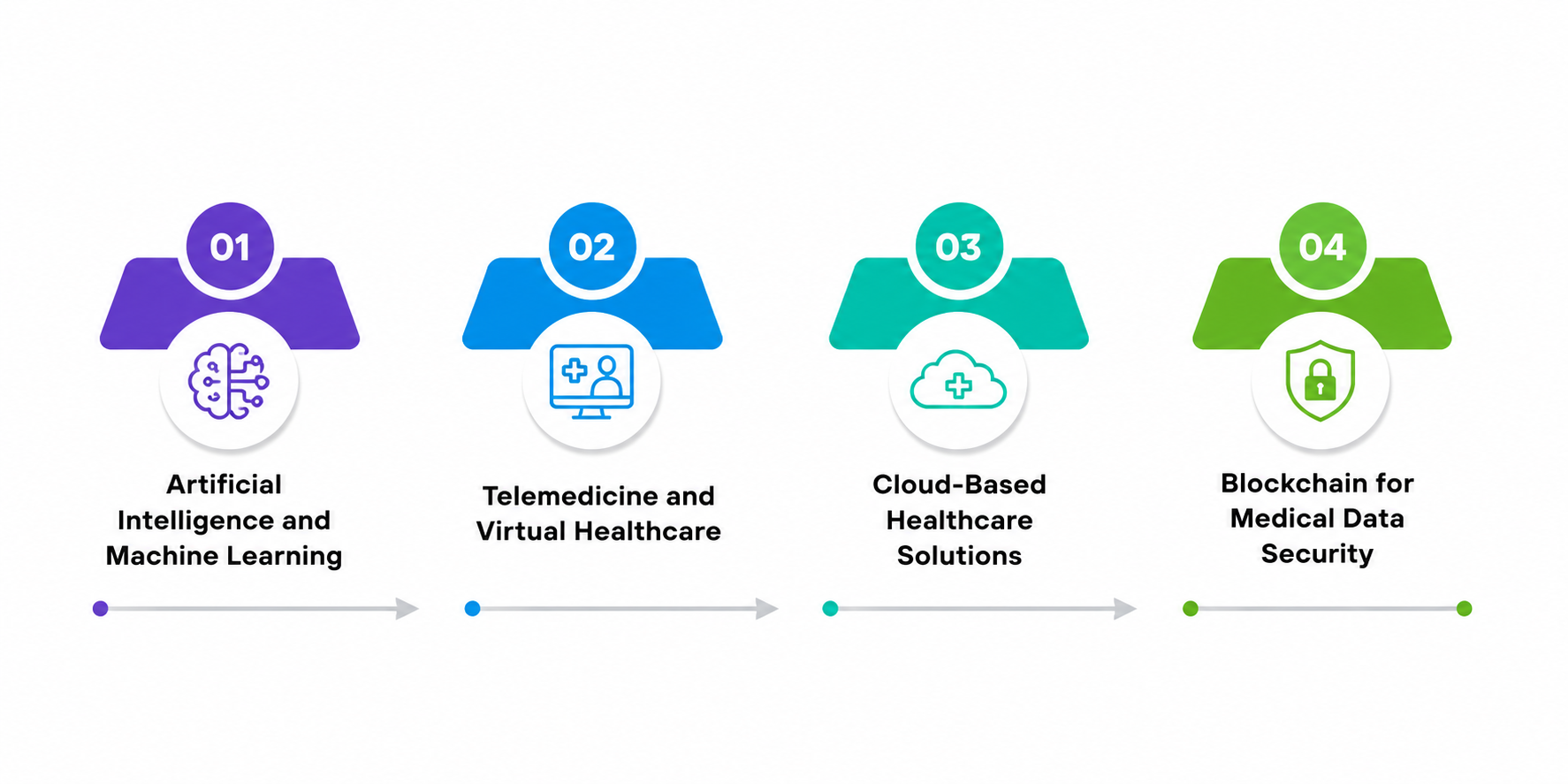
1. Artificial Intelligence and Machine Learning
Artificial Intelligence is revolutionizing healthcare by improving diagnostics, predicting diseases, automating administrative tasks, and assisting doctors in clinical decision-making. AI-powered healthcare software analyzes massive datasets to deliver faster, more accurate, and personalized treatment recommendations while reducing human errors.
- Faster disease diagnosis through AI-powered analytics
- Intelligent medical image recognition
- Personalized treatment recommendations
- Automated administrative workflows
2. Telemedicine and Virtual Healthcare
Telemedicine has become one of the fastest-growing healthcare technologies. Patients can consult healthcare professionals remotely through secure video conferencing, messaging, and digital prescriptions, improving accessibility while reducing hospital visits and operational costs.
- Online doctor consultations
- Digital prescriptions
- Secure video communication
- Improved healthcare accessibility
3. Internet of Medical Things
Connected healthcare devices continuously monitor patient health, collect real-time medical data, and transmit information directly to healthcare providers. IoMT improves chronic disease management, emergency response, and preventive healthcare through continuous remote monitoring.
- Smart wearable devices
- Remote patient monitoring
- Continuous health tracking
- Faster emergency response
4. Cloud-Based Healthcare Solutions
Cloud computing enables healthcare organizations to securely store patient records, scale applications efficiently, and improve collaboration across multiple healthcare facilities. Cloud infrastructure also reduces hardware costs while enhancing data accessibility and disaster recovery.
- Secure cloud storage
- Easy scalability
- Improved collaboration
- Reduced infrastructure costs
5. Blockchain for Medical Data Security
Blockchain technology improves healthcare data integrity by creating tamper-proof medical records. It enhances transparency, simplifies data sharing between organizations, and strengthens patient privacy while reducing fraud in medical transactions.
- Secure patient records
- Tamper-proof transactions
- Improved transparency
- Enhanced data privacy
Top Benefits of Healthcare Software Development for Modern Healthcare Organizations
Healthcare software development is transforming the healthcare industry by enabling providers to deliver high-quality patient care while improving operational efficiency and reducing costs. From hospitals and clinics to diagnostic centers and pharmacies, digital healthcare solutions automate complex processes, enhance communication, strengthen data security, and support better clinical decision-making.
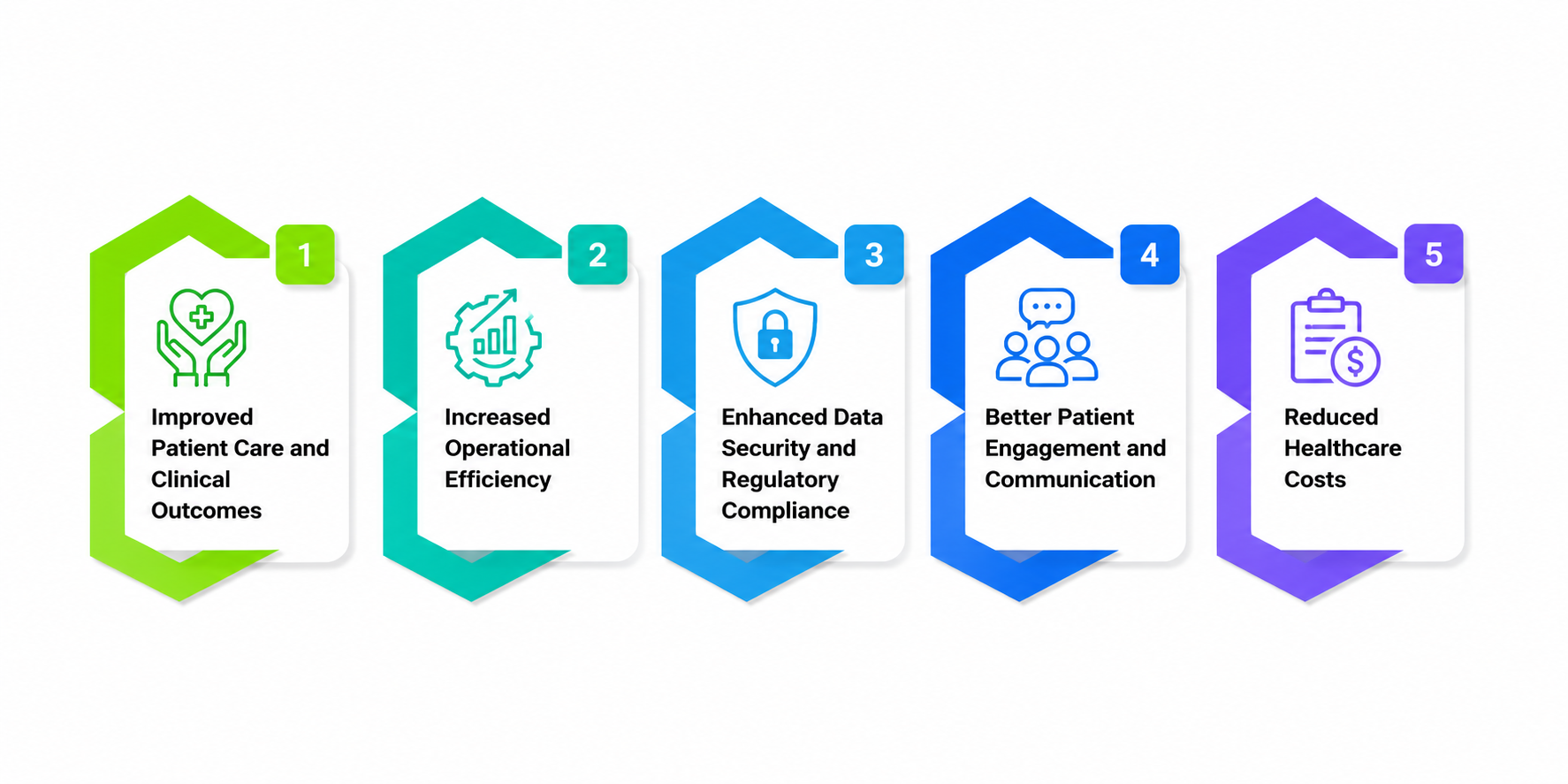
1. Improved Patient Care and Clinical Outcomes
Healthcare software enables medical professionals to access accurate patient information in real time, leading to faster diagnoses, personalized treatment plans, and improved healthcare outcomes. Electronic Health Records (EHRs), AI-powered diagnostic tools, and remote patient monitoring systems reduce medical errors while ensuring seamless collaboration between healthcare providers.
2. Increased Operational Efficiency
Healthcare software automates time-consuming administrative tasks such as appointment scheduling, billing, patient registration, inventory management, and medical documentation. By reducing manual processes and paperwork, hospitals and clinics can optimize staff productivity, minimize operational delays, and improve resource utilization. Automation allows healthcare professionals to focus more on delivering quality patient care instead of handling repetitive administrative responsibilities, resulting in smoother and more efficient healthcare operations.
3. Enhanced Data Security and Regulatory Compliance
Protecting sensitive patient information is a top priority for every healthcare organization. Modern healthcare software incorporates advanced security measures, including data encryption, multi-factor authentication, role-based access control, and secure cloud storage, to safeguard confidential medical records. Additionally, these solutions help organizations comply with industry regulations such as HIPAA, GDPR, HL7, and FHIR, reducing legal risks while ensuring secure data sharing and maintaining patient trust.
4. Better Patient Engagement and Communication
Healthcare software strengthens communication between patients and healthcare providers by offering convenient digital services such as online appointment scheduling, secure messaging, telemedicine consultations, prescription management, and patient portals. These features encourage patients to actively participate in their healthcare journey while improving accessibility to medical services. Better communication leads to higher patient satisfaction, improved treatment adherence, and stronger long-term relationships between providers and patients.
5. Reduced Healthcare Costs
Digital healthcare solutions help organizations significantly reduce operational expenses by automating repetitive tasks, minimizing paperwork, improving workflow efficiency, and optimizing resource allocation. Predictive analytics and AI-powered insights also help reduce unnecessary hospital readmissions and improve preventive care. Cloud-based infrastructure further lowers hardware and maintenance costs, allowing healthcare providers to achieve greater financial efficiency while continuing to deliver high-quality medical services.
Future Outlook
The future of healthcare software development is set to be driven by rapid technological advancements, increasing digital adoption, and the growing demand for patient-centric healthcare services. As healthcare organizations continue to modernize their operations, technologies such as Artificial Intelligence (AI), Machine Learning (ML), cloud computing, blockchain, and the Internet of Medical Things (IoMT) will play a pivotal role in improving clinical outcomes, operational efficiency, and patient engagement. These innovations will enable healthcare providers to deliver more accurate diagnoses, personalized treatment plans, and proactive care while reducing costs and administrative burdens.
Telemedicine and remote patient monitoring will continue to expand, making healthcare services more accessible to patients regardless of their location. Wearable devices and smart medical equipment will generate real-time health data, allowing physicians to monitor patients remotely and intervene before health conditions worsen. Additionally, predictive analytics will empower healthcare organizations to forecast disease outbreaks, optimize resource allocation, and improve decision-making through data-driven insights.
Cloud-native healthcare platforms will further enhance interoperability by enabling seamless data exchange between hospitals, laboratories, pharmacies, insurance providers, and wearable devices. Moreover, Generative AI and intelligent automation will streamline administrative processes, automate medical documentation, assist in clinical decision-making, and enhance patient support through AI-powered virtual assistants.
Conclusion
Healthcare software has become a cornerstone of modern healthcare, enabling organizations to deliver better patient care, improve operational efficiency, and stay compliant with evolving industry regulations. Whether it's a telemedicine platform, Electronic Health Record (EHR) system, hospital management software, or an AI-powered healthcare application, investing in the right digital solution can significantly enhance healthcare delivery while reducing costs and streamlining clinical workflows. However, the success of any healthcare software project depends on careful planning, choosing the right features, ensuring robust security, and partnering with an experienced development team
At OZVID Technologies, we specialize in building secure, scalable, and innovative healthcare software solutions tailored to the unique needs of hospitals, clinics, healthcare startups, diagnostic centers, and enterprises. From initial consultation and UI/UX design to development, integration, testing, deployment, and ongoing support, we provide end-to-end healthcare software development services that help organizations accelerate digital transformation. Whether you are planning to build a new healthcare application or modernize an existing system, OZVID Technologies is your trusted technology partner for delivering reliable, future-ready, and high-performance healthcare solutions.
Frequently Asked Questions
1. How much does healthcare software development cost?
The cost of healthcare software development typically ranges from $10,000 to over $250,000, depending on the application's complexity, features, technology stack, security requirements, third-party integrations, and regulatory compliance. Enterprise-grade solutions with AI, IoT, or EHR integrations generally require a higher investment.
2. What factors affect the cost of healthcare software development?
Several factors influence development costs, including software complexity, UI/UX design, platform selection (web, mobile, or both), HIPAA/GDPR compliance, cloud infrastructure, API integrations, AI and analytics features, testing, deployment, and ongoing maintenance and support.
3. How long does it take to develop healthcare software?
The development timeline depends on the project's scope and functionality. A basic healthcare application may take 2–4 months, while advanced solutions such as hospital management systems, telemedicine platforms, or AI-powered healthcare software can require 6–12 months or longer.
4. What are the must-have features in healthcare software?
Essential features include secure patient registration, Electronic Health Records (EHR), appointment scheduling, telemedicine support, e-prescriptions, billing and payment integration, patient portals, real-time notifications, analytics dashboards, and robust security measures such as data encryption and multi-factor authentication.
5. Why should you choose OZVID Technologies for healthcare software development?
OZVID Technologies delivers custom healthcare software solutions that are secure, scalable, and compliant with industry regulations such as HIPAA, GDPR, HL7, and FHIR. Our experienced development team specializes in AI-powered healthcare applications, telemedicine platforms, hospital management systems, EHR solutions, and mobile healthcare apps, helping organizations accelerate digital transformation and improve patient care.