The demand for custom mobile applications continues to grow as businesses prioritize digital transformation, customer engagement, and operational efficiency. Whether you're a startup launching a new product or an established enterprise modernizing business processes, hiring skilled app developers is one of the most important investments in your digital journey.
According to market research, the global custom software development market size is anticipated to grow from USD 53.02 billion in 2025 to USD 334.49 billion by 2034, registering an impressive CAGR of 22.71%. Additionally, enterprise software accounted for 61% of the market, while large enterprises contributed more than 61% of the total revenue share, highlighting the increasing reliance on tailored software solutions across industries.
As competition intensifies, businesses are searching for experienced mobile app developers who can build scalable, secure, and feature-rich applications. However, one of the most common questions remains: How much does it cost to hire an app developer for a custom mobile app?
The answer depends on several factors, including the developer's location, experience level, project complexity, technology stack, development timeline, and engagement model. Understanding these variables helps businesses plan realistic budgets while maximizing their return on investment.
In this comprehensive guide, we'll explore the average cost of hiring app developers, the factors affecting pricing, hiring tips, best practices, and how to choose the right development partner for your project.
Key Takeaways
- Clearly define your app requirements, business goals, and target audience before hiring an app developer.
- Evaluate developers based on technical expertise, relevant industry experience, and a strong project portfolio.
- Review client testimonials, case studies, and past app performance to assess credibility and reliability.
- Prioritize developers who maintain transparent communication and follow an organized development process.
- Ensure the development team follows security best practices and complies with applicable data privacy standards.
Top Benefits of Hiring a Professional App Developer
Hiring a professional app developer gives businesses access to the expertise needed to build secure, scalable, and user-friendly mobile applications. From strategic planning and modern development practices to ongoing maintenance and performance optimization, experienced developers help transform ideas into high-quality digital products that support long-term business growth.
1. Access to Specialized Technical Expertise
Professional app developers possess extensive knowledge of programming languages, frameworks, databases, APIs, and mobile technologies. Their technical expertise enables them to build reliable, high-performing applications while implementing industry best practices throughout the development lifecycle.
- Advanced technical knowledge.
- Modern development practices.
- High-quality code standards.
- Strong architectural planning.
2. Faster Time-to-Market
Experienced developers streamline the development process through structured workflows, efficient coding practices, and agile methodologies. This reduces project delays, accelerates deployment, and allows businesses to launch their applications faster while maintaining high development standards.
- Faster project completion.
- Efficient development cycles.
- Agile project execution.
- Quicker product launch.
3. High-Quality User Experience
A professional developer focuses on creating responsive, intuitive, and engaging applications that provide seamless navigation and consistent performance. An improved user experience enhances customer satisfaction, increases engagement, and encourages long-term user retention.
- Intuitive user interface.
- Better customer engagement.
- Higher user satisfaction.
- Improved user retention.
4. Scalable and Future-Ready Applications
Professional developers design applications with scalability in mind, allowing businesses to add new features, integrate emerging technologies, and support increasing user demands without requiring major architectural changes in the future.
- Easy feature expansion.
- Supports business growth.
- Better long-term performance.
- Simplified future upgrades.
5. Enhanced Security and Compliance
Experienced app developers implement secure coding standards, data encryption, authentication mechanisms, and regulatory compliance practices. These security measures help protect sensitive business information and build trust among users.
- Strong data protection.
- Regulatory compliance.
- Reduced security risks.
- Safe user transactions.
6. Cost-Effective Long-Term Investment
Although hiring experienced developers may require a higher initial investment, their expertise minimizes costly errors, reduces maintenance expenses, and delivers a more stable application that provides better long-term business value.
- Fewer development mistakes.
- Lower maintenance costs.
- Better resource utilization.
- Higher return on investment.
7. Ongoing Maintenance and Support
Application success continues after deployment. Professional developers provide regular updates, bug fixes, security patches, and performance improvements, ensuring your mobile application remains reliable, secure, and compatible with evolving technologies.
- Regular software updates.
- Faster issue resolution.
- Reliable technical support.
- Improved application stability.
8. Competitive Business Advantage
Hiring skilled app developers enables businesses to build innovative applications with advanced features and modern technologies. A well-developed mobile app strengthens brand reputation, improves customer experiences, and helps businesses stay competitive in a rapidly evolving digital marketplace.
- Stronger brand presence.
- Increased customer loyalty.
- Innovative digital solutions.
- Greater market competitiveness.
How Much Does It Cost to Hire the Best App Developers
Hiring app developers is not a one-size-fits-all investment. Costs vary significantly depending on the complexity of your application, the developer's expertise, the geographical location, and the engagement model you choose. While freelance developers may charge lower rates, experienced app development companies provide complete project management, quality assurance, UI/UX design, ongoing maintenance, and long-term support. The table below provides a general estimate of app developer hiring costs.
Developer Type | Hourly Cost | Monthly Cost | Best For |
|---|---|---|---|
Junior App Developer | $20–$40/hour | $3,000–$5,500 | Simple applications, bug fixes |
Mid-Level App Developer | $40–$70/hour | $6,000–$9,500 | Medium-complexity business apps |
Senior App Developer | $70–$150/hour | $10,000–$20,000+ | Enterprise applications |
Hybrid App Developer | $30–$80/hour | $5,000–$12,000 | Cross-platform mobile apps |
Native App Developer | $50–$120/hour | $8,000–$18,000 | High-performance iOS or Android apps |
Dedicated Development Team | Custom Pricing | Project-Based | Large-scale digital transformation |
Mobile App Development Company | Project-Based | Custom Quote | End-to-end app development |
Factors That Affect App Developer Hiring Costs
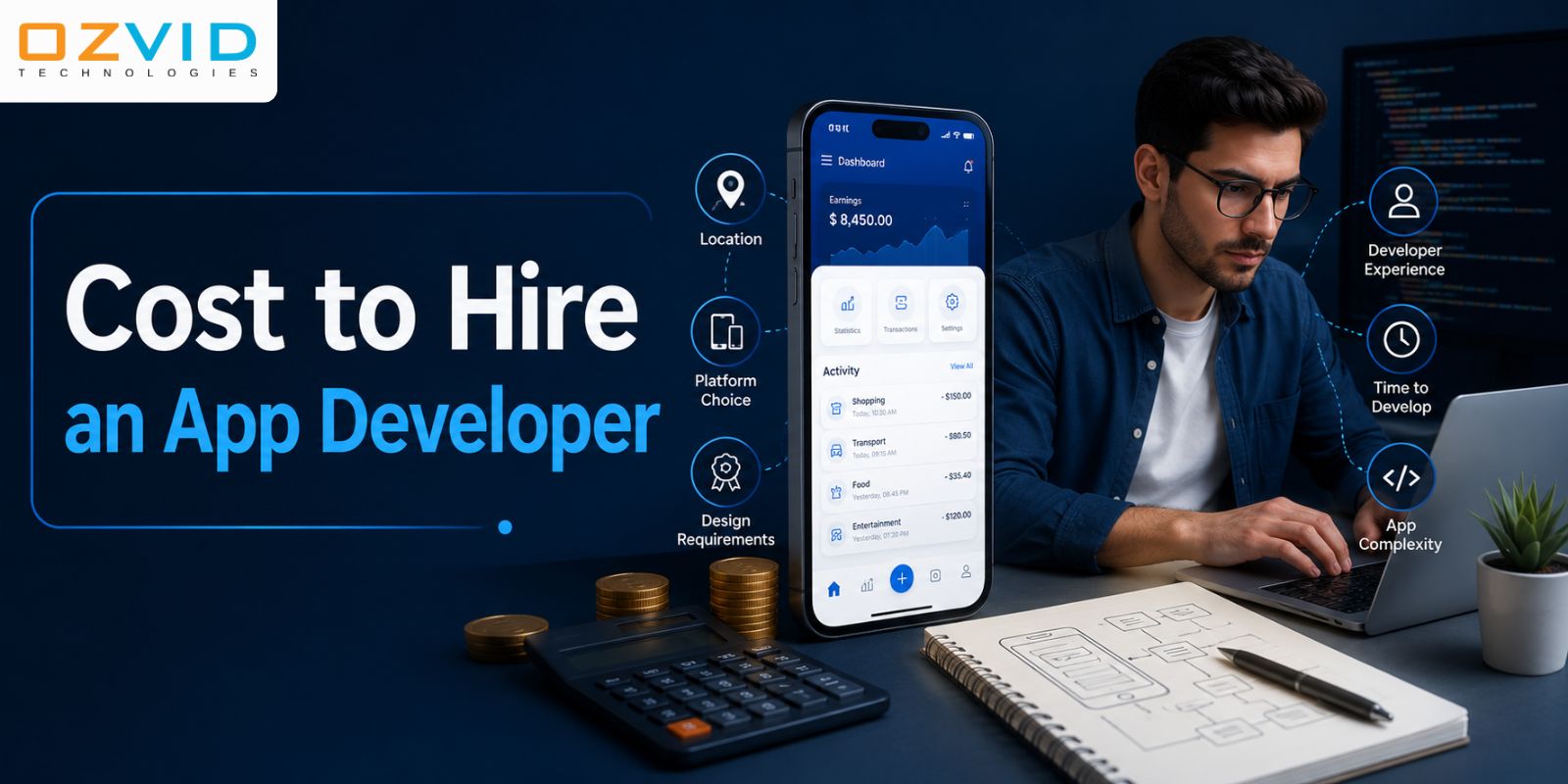
The cost of hiring an app developer depends on much more than just hourly rates. Every mobile app project has unique requirements, and several technical and business factors influence the overall development budget. Understanding these cost-driving factors helps businesses estimate expenses accurately, choose the right hiring model, and maximize their return on investment. Below are the key factors that determine the cost of hiring app developers for a custom mobile application.
1. Project Complexity
The complexity of your mobile application is one of the biggest factors affecting development costs. A simple app with basic features requires fewer development hours, while an enterprise-grade application with advanced functionalities demands a larger team, extensive testing, and longer development timelines.
2. App Development Platform
Whether you choose Android, iOS, or hybrid app development significantly impacts the overall hiring cost. Native applications require separate development for each platform, while hybrid apps allow developers to use a single codebase for multiple operating systems, making them more cost-effective.
3. Developer Experience and Expertise
The experience level of an app developer directly affects pricing. Senior developers charge higher hourly rates because they bring deeper technical expertise, industry knowledge, and problem-solving abilities that reduce development risks and improve project quality.
4. Technology Stack
The technologies required to build your application also influence hiring costs. Projects using modern frameworks, AI, cloud computing, blockchain, or advanced backend systems often require specialized developers with niche expertise, increasing the overall development budget.
5. UI/UX Design Requirements
An engaging and intuitive user interface plays a vital role in the success of any mobile application. Custom designs, interactive animations, user research, and accessibility improvements require additional design resources, which increase the overall project cost.
6. Third-Party Integrations
Most modern mobile applications integrate with external services to enhance functionality. Payment gateways, CRM systems, cloud storage, maps, social media logins, and analytics tools require additional development and testing efforts, affecting the total hiring cost.
Tips to Hire the Right App Developers for Your Business
Hiring the right app developer is one of the most important decisions for your mobile app project. The ideal development partner should understand your business objectives, possess strong technical expertise, communicate effectively, and deliver scalable solutions.
1. Define Your Project Requirements
Before approaching app developers, prepare a detailed outline of your project goals, target audience, preferred platforms, required features, budget, and expected timeline. Clear requirements enable developers to provide accurate estimates and recommend the most suitable development approach.
2. Evaluate Technical Skills
Review the developer's expertise in relevant programming languages, frameworks, and technologies. Developers with experience in projects similar to yours are better equipped to anticipate challenges and deliver high-quality, scalable mobile applications.
3. Review Portfolio and Client Testimonials
A developer's portfolio provides valuable insights into design quality, technical capabilities, and industry experience. Client testimonials and case studies help you understand their professionalism, reliability, and ability to deliver successful mobile applications.
4. Assess Communication
Effective communication plays a significant role in project success. Developers who provide regular updates, respond promptly, and maintain transparent communication help reduce misunderstandings and keep the project progressing smoothly.
5. Understand Development Process
An organized development methodology ensures consistent quality throughout the project lifecycle. Ask about planning, UI/UX design, coding standards, testing procedures, deployment strategy, and post-launch maintenance before making your decision.
6. Security and Compliance Standards
Security should never be overlooked when hiring app developers. Ensure the development team follows secure coding practices, complies with relevant data privacy regulations, and implements robust security measures throughout the application.
7. Discuss Post-Launch Support
App development doesn't end after deployment. Ongoing maintenance, bug fixes, security updates, performance optimization, and feature enhancements are essential for keeping your application competitive and reliable in the long term.
8. Compare Pricing with Overall Value
While budget is important, choosing the lowest-cost developer may lead to compromises in quality. Focus on overall value by considering technical expertise, communication, experience, support services, and long-term reliability alongside pricing.
Best Practices for Hiring the Right Hybrid App Developer
Hiring a hybrid app developer requires more than evaluating technical skills alone. The ideal developer should have expertise in cross-platform frameworks, understand your business objectives, follow industry best practices, and deliver scalable applications with consistent performance across multiple devices.
1. Choose Skilled Developers
A skilled hybrid app developer should have hands-on experience with leading cross-platform frameworks and understand how to build applications that perform consistently on both Android and iOS while maintaining a single codebase.
2. Review Portfolio of Hybrid Applications
Analyzing previous hybrid app projects helps you evaluate design quality, user experience, technical execution, and industry expertise. A strong portfolio demonstrates the developer's ability to deliver successful applications for different business requirements.
3. Understand Business Goals
The best hybrid app developers focus on solving business challenges rather than simply writing code. They should understand your objectives, recommend practical solutions, and align technical decisions with your long-term business strategy.
4. Evaluate Project Management
Clear communication and structured project management contribute significantly to project success. Developers should provide regular updates, maintain transparency, and use modern collaboration tools to keep stakeholders informed throughout development.
5. Verify Quality Assurance Processes
Reliable hybrid applications require comprehensive testing across multiple devices, operating systems, and screen sizes. Developers should follow structured quality assurance processes to ensure stability, usability, and performance before deployment.
6. Discuss Post-Launch Maintenance
Successful mobile applications require continuous updates after launch. Ensure the developer offers ongoing maintenance, security patches, feature enhancements, and technical support to keep the application running efficiently over time.
7. Prioritize Data Protection
Security should be integrated throughout the development lifecycle. Choose developers who follow secure coding practices, implement robust authentication mechanisms, and comply with relevant data protection regulations to safeguard user information.
Conclusion
Developing a custom mobile app is a strategic investment that can transform the way your business operates, engages customers, and drives revenue. While the cost of hiring an app developer varies based on factors such as project complexity, platform selection, developer expertise, technology stack, and ongoing maintenance, choosing the right development partner is essential to achieving long-term success. Rather than focusing solely on the lowest price, businesses should prioritize quality, scalability, security, and technical expertise to ensure a high-performing application that delivers measurable business value.
At OZVID Technologies, we understand that every business has unique goals and development requirements. Our experienced team of mobile app developers specializes in building innovative, secure, and scalable Android, iOS, and hybrid applications tailored to your specific needs. From project consultation and UI/UX design to development, testing, deployment, and post-launch support, we offer end-to-end app development services that help businesses stay ahead in today's competitive digital landscape. Contact us to learn more.
Frequently Asked Questions
1. How much does it cost to hire an app developer for a custom mobile app?
The cost of hiring an app developer depends on various factors, including the app's complexity, the developer's experience, the technology stack, and the engagement model. Simple applications typically cost less, while feature-rich enterprise apps require a larger investment due to increased development time and technical expertise.
- Costs vary based on project scope
- Developer experience impacts pricing
- Platform choice affects the overall budget
- Advanced features increase development costs
2. What factors influence the cost of custom mobile app development?
Several technical and business factors determine the overall development cost of a custom mobile application. Understanding these variables helps businesses create realistic budgets and choose the right development approach for their project.
- Project complexity and feature requirements
- Android, iOS, or hybrid platform selection
- UI/UX design requirements
- Third-party API integrations
3. Should I hire a freelance app developer or an app development company?
The right choice depends on your project size, budget, and long-term goals. Freelancers may be suitable for smaller projects, while app development companies provide complete teams, structured workflows, quality assurance, and ongoing technical support for larger and more complex applications.
- Freelancers are ideal for smaller projects
- Dedicated teams ensure faster delivery
- Better project management and communication
- Long-term maintenance and scalability support
4. Is hybrid app development more cost-effective than native app development?
Yes, hybrid app development is generally more cost-effective because it uses a single codebase to build applications for multiple platforms. This approach reduces development time, simplifies maintenance, and allows businesses to reach both Android and iOS users with a lower overall investment.
- Single codebase for multiple platforms
- Lower development and maintenance costs
- Easier updates and feature enhancements
- Suitable for most business applications
5. How long does it take to develop a custom mobile app?
The development timeline varies depending on the complexity of the application, the number of features, integrations, and testing requirements. Basic apps can be completed within a few months, while enterprise-level applications may require significantly more time to ensure quality and scalability.
- Simple apps require less development time
- Advanced features extend project timelines
- UI/UX design impacts development duration
- Testing and quality assurance are essential