
- Mar 23, 2026
Share this post on:
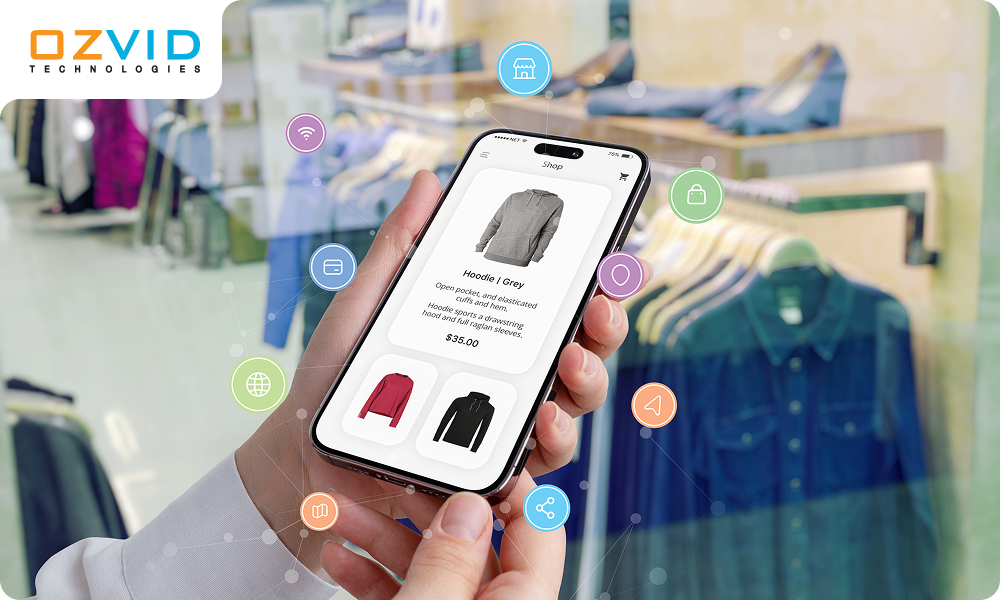
Did you know the global ecommerce market is expected to generate around US$3.87 trillion in revenue by 2026, and it’s not slowing down anytime soon? With a steady annual growth rate of 6.62% from 2026 to 2030, the market is projected to reach an impressive US$5.00 trillion by 2030, highlighting the massive growth potential in the ecommerce space.
In today’s fast-paced digital economy, businesses are rapidly shifting towards mobile-first strategies to capture a larger audience and increase revenue. With the continuous rise in smartphone usage and online shopping behavior, investing in ecommerce app development has become a necessity rather than an option. Customers now expect seamless, fast, and personalized shopping experiences directly from their mobile devices.
As we move into 2026, the competition in the digital commerce space is becoming more intense. Businesses that fail to adopt advanced ecommerce solutions risk falling behind. This is where a reliable ecommerce app development company plays a crucial role in building scalable, secure, and feature-rich applications tailored to business needs.
In this comprehensive guide, we will explore everything you need to know about ecommerce app development, including its types, benefits, development process, cost, features, and the right technology stack.
Key Highlights
- Ecommerce app development is essential for businesses to stay competitive in a mobile-first digital landscape.
- A well-designed ecommerce app improves user experience, engagement, and conversion rates.
- Choosing the right features, tech stack, and development approach is crucial for success.
- Development cost varies based on app complexity, features, and integrations.
- Partnering with an experienced ecommerce app development company ensures scalable and high-quality solutions.
What is Mobile Ecommerce?
Mobile ecommerce, also known as m-commerce, refers to the buying and selling of products or services through mobile devices such as smartphones and tablets. Unlike traditional web-based ecommerce platforms, mobile ecommerce focuses on delivering optimized and user-friendly experiences through dedicated applications.
An ecommerce app allows users to browse products, compare prices, make purchases, track orders, and interact with brands in real-time. Businesses leverage ecommerce development service solutions to create apps that provide convenience, speed, and personalized experiences.
With the help of a skilled ecommerce website developer, companies can transform their traditional websites into powerful mobile applications that drive higher engagement and conversions.
Types of Ecommerce Apps
Understanding the different types of ecommerce apps is essential before starting the ecommerce app development process. Each type serves a specific business model and target audience.
Types | Description | Key Features |
|---|---|---|
Business to Consumer (B2C) | Businesses sell products directly to customers through a mobile app with a focus on user-friendly shopping experience. | Product search, easy navigation, secure checkout, personalized recommendations |
Business to Business (B2B) | Designed for transactions between businesses, often involving bulk orders and long-term partnerships. | Bulk ordering, pricing tiers, account management, complex workflows |
Consumer to Consumer (C2C) | Allows individuals to sell products directly to other users on a shared platform. | User listings, peer-to-peer transactions, ratings and reviews, messaging system |
Subscription-Based Ecommerce Apps | Offers products or services on a recurring subscription basis for continuous delivery or access. | Subscription plans, automated billing, recurring payments, delivery scheduling |
Multi-Vendor Marketplace Apps | Multiple vendors sell their products on a single platform managed by a central admin. | Vendor management, product listings, commission system, order tracking |
Benefits of Developing an Ecommerce App in 2026
In 2026, the ecommerce landscape is highly competitive and customer-focused. Businesses need fast, personalized, and convenient solutions to meet user expectations. Investing in ecommerce app development helps companies improve engagement, boost conversions, and achieve long-term growth in a mobile-first market.
1. Superior Customer Experience and Convenience
An ecommerce app delivers a smooth and optimized shopping experience tailored for mobile users, making interactions faster and more intuitive.
- Provides fast navigation and seamless browsing across products
- Enables one-click checkout and saved user preferences
- Offers personalized dashboards and easy access to orders
- Improves overall user satisfaction and encourages repeat purchases
2. Higher Customer Engagement Through Direct Communication
Ecommerce apps allow businesses to connect directly with users through real-time communication channels like push notifications.
- Sends instant updates about offers, discounts, and new products
- Notifies users about abandoned carts to increase recovery
- Delivers personalized messages based on user behavior
- Builds stronger customer relationships and brand recall
3. Improved Conversion Rates and Sales Growth
Ecommerce apps are designed to simplify the buying journey, which directly improves conversions and sales performance.
- Reduces friction with quick and secure checkout processes
- Supports multiple payment options for user convenience
- Uses auto-fill features to speed up transactions
- Increases revenue through personalized recommendations and upselling
4. Strong Brand Visibility and Customer Loyalty
Having an ecommerce app installed on a device keeps your brand visible and accessible at all times.
- Ensures constant brand presence on user smartphones
- Builds trust through consistent interaction and usability
- Encourages repeat purchases with loyalty programs and rewards
- Strengthens long-term customer relationships and retention
5. Access to Valuable Customer Insights and Analytics
Ecommerce apps help businesses gather meaningful data to understand user behavior and improve strategies.
- Tracks customer preferences and purchasing patterns
- Provides insights into product performance and trends
- Supports data-driven marketing and decision-making
- Helps optimize product offerings and user experience
6. Faster Performance and Offline Accessibility
Apps offer better speed and reliability compared to websites, ensuring a smooth user experience.
- Loads faster due to optimized mobile performance
- Works efficiently even with low internet connectivity
- Allows browsing of previously loaded or saved content
- Enhances user experience across different network conditions
7. Personalization and AI-Driven Recommendations
Modern ecommerce app development uses AI to deliver highly personalized shopping experiences.
- Suggests products based on user behavior and history
- Improves engagement with tailored recommendations
- Enhances customer satisfaction with relevant content
- Boosts conversions by showing the right products at the right time
8. Competitive Advantage in a Mobile-First Market
Having a dedicated ecommerce app helps businesses stay ahead in an increasingly mobile-driven market.
- Offers better user experience than mobile websites
- Attracts and retains more customers than competitors
- Positions your brand as modern and technology-driven
- Strengthens market presence with advanced app features
How to Build an Ecommerce App
Building a successful ecommerce app requires a strategic approach, combining business planning, user-focused design, and the right technology. It is not just about developing an application but creating a seamless shopping experience that attracts users and drives conversions. Below is a step-by-step process to guide you through ecommerce app development in a structured and effective way.
1. Market Research and Business Planning
The first step in ecommerce app development is understanding your target market, audience behavior, and competitors. Without proper research, it becomes difficult to build a product that meets user expectations.
You need to identify your target audience, define your niche, and analyze competitors’ strengths and weaknesses. This helps you understand what features users expect and what gaps you can fill in the market. Clear business goals, revenue models, and app objectives should be defined at this stage to ensure a strong foundation for development.
2. Define Features and Functionality
Once the planning is complete, the next step is to outline the features and functionalities of your ecommerce app. The success of your app largely depends on how well it meets user needs.
Basic features include user registration, product catalog, search and filters, shopping cart, and secure payment integration. Advanced features like AI-based recommendations, real-time tracking, and chat support can enhance user experience. It is important to prioritize features based on your business goals and launch an MVP (Minimum Viable Product) first.
3. Choose the Right Ecommerce App Development Company
Selecting a reliable ecommerce app development company is one of the most critical decisions. An experienced development partner understands industry trends, user behavior, and technical requirements.
A professional ecommerce development agency will guide you in choosing the right technology stack, designing scalable architecture, and ensuring security standards. They also help in reducing development risks and delivering a high-quality product within the timeline.
4. UI/UX Design for Better User Experience
Design plays a crucial role in the success of an ecommerce app. A well-designed interface ensures that users can navigate easily and complete actions without confusion.
The UI/UX design should focus on simplicity, responsiveness, and visual appeal. Elements like product pages, navigation menus, checkout flow, and call-to-action buttons must be designed carefully. A smooth and engaging design not only improves user satisfaction but also increases conversions.
5. Development Phase (Frontend & Backend)
In this stage, developers start building the actual application. The development process is divided into frontend and backend development.
Frontend development focuses on what users see and interact with, while backend development manages servers, databases, APIs, and business logic. A robust backend ensures smooth performance, fast loading speed, and secure data handling. Choosing the right technologies is essential for building a scalable and efficient ecommerce app.
6. Integration of Third-Party Services
To enhance functionality, ecommerce apps require integration with various third-party services. These integrations improve the overall performance and usability of the app.
Common integrations include payment gateways, shipping services, analytics tools, CRM systems, and marketing automation platforms. These services help streamline operations, manage transactions, and improve customer experience.
7. Testing and Quality Assurance
Before launching the app, it is important to thoroughly test it to ensure there are no bugs or performance issues. Testing ensures that the app functions smoothly across different devices and platforms.
Quality assurance includes checking app performance, security, usability, and compatibility. Testing helps identify and fix errors early, ensuring a seamless experience for users after launch.
8. Deployment and Launch
Once the app is fully tested, it is ready for deployment. The app is launched on platforms like Google Play Store and Apple App Store.
During this stage, proper app store optimization (ASO) techniques should be applied to improve visibility and downloads. A well-planned launch strategy, including marketing and promotions, helps attract initial users and generate traction.
9. Maintenance and Continuous Updates
Ecommerce app development does not end with the launch. Regular maintenance and updates are essential to keep the app running smoothly and securely.
Businesses need to monitor performance, fix bugs, update features, and adapt to changing user needs. Continuous improvement ensures long-term success and helps the app stay competitive in the market.
10. Scaling and Future Enhancements
As your business grows, your ecommerce app should also evolve. Scaling involves adding new features, expanding to new markets, and improving performance.
You can integrate advanced technologies like AI, machine learning, AR, and voice search to enhance user experience. A scalable ecommerce development service ensures that your app can handle increased traffic and business expansion without any issues.
Cost to Develop an Ecommerce Application
The cost of ecommerce app development can vary significantly depending on multiple factors such as app complexity, features, design requirements, technology stack, and the expertise of the ecommerce app development company you choose. There is no fixed price because every business has unique requirements and goals.
A simple ecommerce app with basic features will cost much less compared to a feature-rich, enterprise-level application integrated with advanced technologies like AI, analytics, and real-time tracking. Therefore, businesses must clearly define their scope and budget before starting the development process.
Below is a detailed breakdown of the cost involved in ecommerce app development.
1. Basic Ecommerce Application
A basic ecommerce app is ideal for startups or small businesses looking to establish an online presence. These apps include essential features such as product listing, user registration, shopping cart, and payment integration.
Since the functionality is limited, the development time and cost are relatively lower. However, it still provides a solid foundation for businesses to start selling online.
2. Mid-Level Ecommerce Application
Mid-level ecommerce apps come with more advanced features and better user experience. These apps are suitable for growing businesses that want to offer enhanced functionality and improve customer engagement.
They typically include features like advanced search filters, multiple payment options, order tracking, push notifications, and basic analytics. The development cost increases due to additional features and integrations.
3. Advanced Ecommerce Application
Advanced or enterprise-level ecommerce apps are designed for large businesses with complex requirements. These apps include high-end features such as AI-based recommendations, real-time analytics, multi-vendor support, AR/VR integration, and cloud scalability.
Such applications require a larger development team, more time, and advanced technologies, which significantly increases the cost. However, they offer high performance, scalability, and long-term business value.
4. Key Factors Affecting Ecommerce App Development Cost
Several factors influence the overall cost of ecommerce development service:
- App Complexity: More features and functionalities increase development time and cost
- UI/UX Design: Custom and interactive designs require additional effort and budget
- Platform Choice: Developing for Android, iOS, or both affects pricing
- Technology Stack: Advanced technologies like AI and cloud integration increase cost
- Third-Party Integrations: Payment gateways, APIs, and external tools add to expenses
- Development Team: Hiring an experienced ecommerce development company may cost more but ensures quality
- Maintenance and Updates: Ongoing support and upgrades require additional investment
Ecommerce App Development Cost Table
App Type | Description | Estimated Cost | Development Time |
|---|---|---|---|
Basic Ecommerce App | Includes essential features like product listing, cart, and payment integration | $10,000 – $25,000 | 2 – 4 months |
Mid-Level Ecommerce App | Includes advanced features like push notifications, analytics, and better UI/UX | $25,000 – $70,000 | 3 – 6 months |
Advanced Ecommerce App | Enterprise-level app with AI, AR, multi-vendor support, and real-time analytics | $70,000 – $200,000+ | 6 – 12+ months |
5. Hidden and Ongoing Costs
Apart from development, businesses should also consider additional costs involved in running an ecommerce app:
- Hosting and cloud infrastructure costs
- Third-party service subscriptions and API charges
- App maintenance and regular updates
- Marketing and user acquisition costs
- Security and compliance requirements
Ignoring these costs can lead to budget overruns, so it is important to plan accordingly.
Tech Stack to Ecommerce app development
Category | Technologies | Description |
|---|---|---|
Frontend Development | React Native, Flutter | Used to build responsive and user-friendly mobile app interfaces with smooth performance |
Backend Development | Node.js, Django, Laravel | Handles server-side logic, APIs, and ensures secure data processing and app functionality |
Database | MongoDB, MySQL, PostgreSQL | Stores and manages product data, user information, and transaction records efficiently |
Payment Integration | Stripe, PayPal, Razorpay | Enables secure and seamless online transactions within the ecommerce app |
Cloud & Hosting | AWS, Google Cloud, Microsoft Azure | Provides scalable infrastructure, data storage, and high-performance hosting solutions |
API Integration | REST APIs, GraphQL | Connects the app with third-party services like payment gateways, shipping, and analytics |
Security | SSL, OAuth, Two-Factor Authentication | Ensures data protection, secure login, and safe transactions for users |
Analytics & Tracking | Google Analytics, Firebase | Helps track user behavior, app performance, and improve decision-making |
DevOps & Deployment | Docker, Kubernetes, CI/CD Tools | Automates deployment, improves scalability, and ensures smooth app updates |
Search & Recommendations | Elasticsearch, AI/ML Tools | Enhances product search and provides personalized recommendations |
Must Have Features of Ecommerce App
A successful ecommerce app is built on a strong set of features that ensure smooth functionality, better user experience, and efficient business operations. These features are generally divided into user-side features and admin-side features to manage both customer interactions and backend processes effectively.
User Side Features
User-side features focus on delivering a seamless and engaging shopping experience to customers. These features are essential for improving usability, increasing conversions, and building customer satisfaction.
- User Registration and Login: Easy sign-up and login options using email, phone number, or social media accounts
- Product Search and Filters: Advanced search functionality with filters for categories, price, ratings, and more
- Product Details Page: Detailed product descriptions, images, reviews, and specifications for better decision-making
- Wishlist and Cart: Allows users to save products and manage items before purchasing
- Secure Payment Options: Multiple payment gateways including cards, wallets, UPI, and COD for convenience
- Order Tracking: Real-time tracking of orders from dispatch to delivery
- Push Notifications: Alerts for offers, discounts, order updates, and new arrivals
- User Reviews and Ratings: Helps customers share feedback and build trust among buyers
- Personalized Recommendations: Suggests products based on user behavior and preferences
- Customer Support: In-app chat, helpdesk, or chatbot for instant assistance
Admin Side Features
Admin-side features help businesses manage the entire ecommerce app efficiently, from product listings to order management and analytics.
Dashboard Management: Centralized dashboard to monitor sales, orders, and overall performance
Product Management: Add, update, or remove products along with images, pricing, and descriptions
Inventory Management: Track stock levels and manage product availability in real time
Order Management: Handle order processing, shipping, returns, and cancellations
User Management: Manage customer accounts, access data, and monitor user activity
Payment Management: Track transactions, manage payments, and generate invoices
Analytics and Reports: Detailed insights into sales, user behavior, and business performance
Offer and Discount Management: Create and manage promotional campaigns and coupon codes
Content Management System (CMS): Manage banners, pages, and app content easily
Security and Access Control: Ensure secure data handling and role-based access for team members
Choose OZVID Technologies for Ecommerce App Development
Choosing the right technology partner is one of the most important decisions when building a successful ecommerce app. A reliable and experienced team not only understands your business goals but also delivers scalable, secure, and high-performing solutions tailored to your needs. At OZVID Technologies, we focus on creating result-driven ecommerce app development solutions that help businesses grow, engage customers, and stay competitive in the digital marketplace.
- Expertise in Ecommerce App Development: Strong experience in building feature-rich and scalable ecommerce apps for different business models
- Custom Solutions for Every Business: Tailored ecommerce development service based on your unique requirements and target audience
- User-Centric UI/UX Design: Focus on creating intuitive, engaging, and conversion-driven app designs
- Advanced Technology Stack: Use of modern technologies to ensure high performance, security, and scalability
- End-to-End Development Services: From planning and design to development, testing, and post-launch support
- Seamless Third-Party Integrations: Smooth integration of payment gateways, APIs, CRM, and other tools
- Agile Development Approach: Faster delivery with flexibility to adapt to changing business needs
- Ongoing Support and Maintenance: Continuous updates, performance monitoring, and technical support after launch
Conclusion
Ecommerce is rapidly evolving, and businesses that want to succeed in 2026 must adopt mobile-first strategies to stay competitive. Investing in ecommerce app development is no longer just an option but a necessity for delivering seamless shopping experiences, increasing customer engagement, and driving higher conversions. From understanding the types of ecommerce apps to exploring features, technology stack, and development costs, building a successful ecommerce app requires the right approach and planning.
Partnering with a reliable ecommerce app development company plays a crucial role in turning your vision into a scalable and high-performing solution. At OZVID Technologies, we specialize in delivering customized ecommerce development service tailored to your business needs. Whether you are a startup or an enterprise, our team ensures your ecommerce app is secure, user-friendly, and future-ready, helping you achieve long-term digital growth and success.
FAQ's
1. How long does it take to develop a fully functional ecommerce app?
The time to develop ecommerce app depends on the complexity, features, and integrations required for the ecommerce app.
- Basic apps may take around 2–4 months to develop
- Mid-level apps typically require 3–6 months
- Advanced apps can take 6–12 months or more
- Timelines vary based on team size and development approach
2. What is the role of AI in ecommerce app development?
Artificial intelligence is transforming ecommerce apps by enhancing personalization and automation.
- Provides personalized product recommendations
- Enables chatbots for instant customer support
- Improves demand forecasting and inventory management
- Enhances user experience through behavior analysis
3. How can businesses ensure security in ecommerce apps?
Security is a critical aspect of ecommerce apps as they handle sensitive user and payment data.
- Implement SSL encryption and secure APIs
- Use two-factor authentication for user accounts
- Ensure compliance with data protection regulations
- Regularly update and test the app for vulnerabilities
4. What monetization strategies can be used in ecommerce apps?
Ecommerce apps can generate revenue through various monetization models depending on the business type.
- Direct product sales and in-app purchases
- Subscription-based services and memberships
- Commission from third-party vendors in marketplaces
- Advertising and promotional listings
5. How do ecommerce development services support business growth?
Professional ecommerce development services help businesses build efficient and scalable digital solutions.
- Provide customized solutions based on business needs
- Ensure high-quality development and performance
- Offer ongoing maintenance and updates
- Help businesses stay competitive with modern technologies
6. How important is UI/UX design in ecommerce app development?
UI/UX design plays a critical role in determining how users interact with your ecommerce app and whether they complete purchases.
- Improves navigation and overall user experience
- Reduces bounce rates and cart abandonment
- Enhances visual appeal and brand perception
7. What role do APIs play in ecommerce app development?
APIs are essential for connecting different systems and enabling smooth functionality within an ecommerce app.
- Integrate payment gateways and shipping services
- Enable real-time data synchronization
- Connect third-party tools like CRM and analytics
- Improve app scalability and flexibility
8. What future trends will impact ecommerce app development in 2026?
Emerging technologies and changing user behavior are shaping the future of ecommerce apps.
- AI and machine learning for smarter recommendations
- Augmented reality for product visualization
- Voice commerce and smart assistants
- Faster checkout with advanced payment technologies