
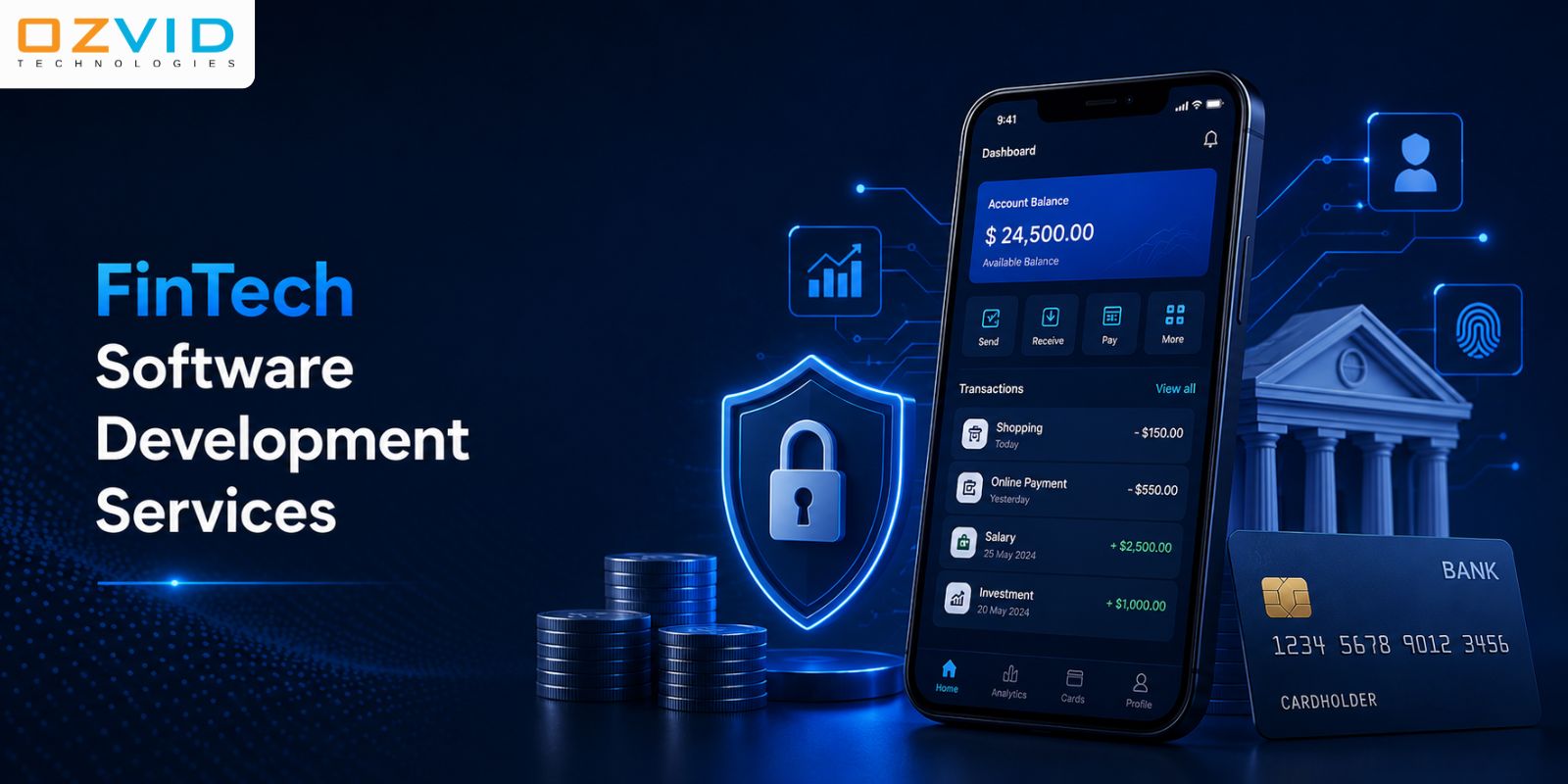
The global financial industry is undergoing a massive digital transformation, and businesses are increasingly investing in advanced financial technologies to streamline operations, improve security, and deliver seamless customer experiences. From digital wallets and mobile banking apps to AI-powered financial platforms and blockchain-based systems, FinTech software development has become essential for businesses aiming to stay competitive in the digital economy.
The fintech software development market is booming. Analysts expect this rapid expansion to continue, reaching $460.76 billion by 2026, driven by a CAGR of 16.5%. This tremendous growth is fueled by rising customer demand for digital financial services, increasing smartphone penetration, cloud computing adoption, and advancements in artificial intelligence and cybersecurity.
Modern businesses require secure, scalable, and user-friendly financial solutions that can handle real-time transactions, regulatory compliance, and customer expectations simultaneously. FinTech software development services empower banks, startups, insurance companies, and enterprises to build innovative applications that enhance operational efficiency and improve customer engagement.
In this blog, we will explore FinTech software development, its benefits, latest trends, development process, cost analysis, and the factors influencing development expenses.
Key Takeaways
- FinTech software development helps businesses improve security, operational efficiency, and customer experience.
- AI, blockchain, cloud computing, and embedded finance are transforming the fintech industry.
- FinTech applications offer secure digital payments, automated financial operations, and real-time analytics.
- Strong cybersecurity and regulatory compliance are essential for successful fintech solutions.
- The development cost depends on app complexity, features, security requirements, and technology stack.
- Partnering with an experienced fintech software development company ensures scalable and future-ready solutions.
What is FinTech Software Development?
FinTech software development refers to the process of designing, developing, and deploying digital financial solutions that simplify and automate financial services. These solutions are built for industries such as banking, insurance, lending, wealth management, investment, accounting, and digital payments.
FinTech applications combine advanced technologies like artificial intelligence, blockchain, cloud computing, machine learning, and big data analytics to provide secure, efficient, and personalized financial services. Businesses use fintech software to improve customer engagement, automate operations, reduce manual work, and ensure compliance with financial regulations.
Today, fintech solutions include:
- Mobile banking applications
- Digital wallets
- Payment gateways
- Cryptocurrency platforms
- Lending and loan management systems
- Investment and trading applications
- InsurTech platforms
- Personal finance management apps
As customer expectations evolve, businesses are increasingly investing in custom fintech software development services to deliver seamless digital experiences.
Key Benefits of FinTech Software Development for Modern Businesses
FinTech software development is transforming the financial industry by helping businesses deliver faster, safer, and more customer-centric services. From automating financial operations to enhancing data security and improving digital payment experiences, fintech solutions empower organizations to streamline workflows and increase operational efficiency.
1. Enhanced Security
Security is one of the most critical advantages of fintech software development. Modern fintech applications use advanced encryption technologies, biometric authentication, multi-factor authentication, and AI-driven fraud detection systems to protect sensitive customer and financial information.
Key Advantages:
- Advanced encryption for secure transactions
- AI-powered fraud detection systems
- Biometric and multi-factor authentication
- Improved customer trust and data protection
2. Improved Customer Experience
FinTech applications deliver seamless and personalized financial experiences that enhance customer satisfaction and engagement. Businesses can offer instant payments, real-time account access, personalized financial recommendations, and easy-to-use mobile banking interfaces. These user-friendly features improve customer convenience and accessibility while increasing retention rates.
Key Advantages:
- Personalized financial services
- Faster and smoother transactions
- 24/7 customer accessibility
- Better customer engagement and retention
3. Faster Financial Operations
FinTech software automates repetitive financial tasks and significantly improves operational efficiency for businesses. Automated payment processing, invoicing, reporting, and account management reduce manual workload and minimize human errors. Businesses can process transactions more quickly, improve workflow accuracy, and save valuable time through digital automation.
Key Advantages:
- Reduced manual financial tasks
- Faster transaction processing
- Improved workflow accuracy
- Increased operational efficiency
4. Better Financial Data Analytics
FinTech software solutions provide businesses with advanced analytics tools that collect, process, and analyze large volumes of financial data in real time. These insights help organizations make informed business decisions, monitor customer behavior, identify financial risks, and improve investment strategies. Real-time reporting dashboards also enhance financial transparency and operational visibility.
Key Advantages:
- Real-time financial reporting
- Predictive business analytics
- Improved financial planning
- Better risk management strategies
5. Regulatory Compliance
Compliance with financial regulations is essential for businesses operating in the fintech sector. FinTech software development helps organizations comply with industry standards such as KYC, AML, PCI DSS, and GDPR regulations. Automated compliance monitoring systems reduce legal risks and ensure accurate financial documentation.
Key Advantages:
- Simplified KYC and AML processes
- Automated compliance monitoring
- Reduced legal and financial risks
- Secure audit and reporting systems
6. Scalability and Business Flexibility
Custom fintech software solutions are highly scalable and can easily adapt to changing business requirements and growing customer demands. Businesses can integrate new features, third-party APIs, and advanced technologies without disrupting operations. Cloud-based fintech platforms further improve flexibility by enabling remote accessibility and seamless infrastructure expansion.
Key Advantages:
- Easy scalability for growing businesses
- Flexible feature integration
- Cloud-based accessibility and expansion
- Future-ready technology infrastructure
Latest Trends Shaping FinTech Software Development
The fintech industry is evolving rapidly as businesses adopt advanced technologies to improve financial services, strengthen security, and deliver seamless customer experiences. Emerging trends such as artificial intelligence, blockchain, cloud computing, and embedded finance are transforming how financial transactions are managed and delivered.
1. Artificial Intelligence and Machine Learning
Artificial intelligence and machine learning are revolutionizing fintech applications by enabling intelligent automation, predictive analytics, and personalized financial experiences. These technologies help businesses analyze customer behavior, detect fraudulent activities, and improve decision-making processes in real time.
Key Highlights:
- AI-powered fraud detection
- Smart financial recommendations
- Automated customer support chatbots
- Predictive analytics and reporting
2. Blockchain Technology Integration
Blockchain technology is becoming a major trend in fintech software development due to its transparency, security, and decentralized structure. Businesses use blockchain to improve transaction security, automate processes through smart contracts, and reduce operational costs in digital payments.
Key Highlights:
- Secure and transparent transactions
- Smart contract automation
- Faster cross-border payments
- Reduced transaction processing costs
3. Embedded Finance Solutions
Embedded finance allows businesses to integrate financial services directly into non-financial platforms and applications. This trend simplifies customer transactions and creates seamless payment experiences within eCommerce, healthcare, travel, and retail applications.
Key Highlights:
- In-app digital payment systems
- Buy-now-pay-later services
- Integrated insurance solutions
- Simplified financial accessibility
4. Cloud-Based FinTech Platforms
Cloud computing is enabling fintech companies to develop scalable, flexible, and cost-efficient financial applications. Cloud-based platforms support faster deployment, improved data accessibility, and enhanced collaboration while reducing infrastructure and maintenance costs.
Key Highlights:
- Scalable cloud infrastructure
- Faster software deployment
- Improved remote accessibility
- Reduced operational expenses
5. Biometric Authentication Systems
Biometric authentication is improving fintech application security by replacing traditional passwords with advanced identity verification methods. Facial recognition, fingerprint scanning, and voice authentication enhance user convenience while protecting financial data from cyber threats.
Key Highlights:
- Fingerprint authentication systems
- Facial recognition security
- Voice-based user verification
- Enhanced fraud prevention measures
Step-by-Step FinTech Software Development Process
Developing a successful fintech application requires a strategic and well-structured development process that focuses on security, scalability, compliance, and user experience. From identifying business goals to deployment and ongoing maintenance, every stage plays a critical role in ensuring the application performs efficiently and securely. FinTech software development involves integrating advanced technologies such as AI, blockchain, cloud computing, and secure payment gateways while complying with financial regulations like KYC, AML, and GDPR. A streamlined development process helps businesses create reliable, customer-centric fintech solutions that improve operational efficiency and support long-term digital growth.
1. Requirement Analysis
The development process begins with understanding business objectives, target audience, and market demands. This stage helps identify the required features, compliance standards, and technology stack needed for building a successful fintech application tailored to business needs.
Key Activities:
- Business requirement gathering
- Market and competitor analysis
- Defining project goals
- Selecting technologies and features
2. Planning and Strategy Development
Proper planning helps businesses create a clear development roadmap, timeline, and resource allocation strategy. This phase focuses on defining workflows, security architecture, development methodologies, and project milestones for smooth execution.
Key Activities:
- Project scope planning
- Resource allocation strategy
- Risk and compliance assessment
- Timeline and milestone creation
3. UI/UX Design and Prototyping
An intuitive and visually appealing interface is essential for improving customer engagement in fintech applications. Designers create wireframes, prototypes, and responsive layouts to ensure smooth navigation and a seamless user experience across all devices.
Key Activities:
- Wireframe and prototype creation
- Responsive interface design
- User journey optimization
- UI/UX testing and improvements
4. FinTech Application Development
During this phase, developers build the frontend, backend, APIs, and core functionalities of the fintech application. Advanced technologies like AI, blockchain, and cloud computing are integrated to enhance security, scalability, and overall performance.
Key Activities:
- Frontend and backend development
- API and payment gateway integration
- Database and cloud setup
- Security feature implementation
5. Compliance Implementation
Security and compliance are critical in fintech software development. Developers implement advanced security protocols and ensure the application complies with financial regulations to protect sensitive customer and transaction data from cyber threats and fraud.
Key Activities:
- Data encryption integration
- Multi-factor authentication setup
- KYC and AML compliance implementation
- Secure transaction processing
6. Quality Assurance
Comprehensive testing ensures the fintech application functions smoothly, securely, and efficiently across different devices and platforms. Testing also helps identify bugs, performance issues, and security vulnerabilities before deployment.
Key Activities:
- Functional and performance testing
- Security and penetration testing
- Bug fixing and optimization
- Cross-platform compatibility checks
7. Deployment and Launch
Once testing is completed, the fintech application is deployed to live servers or cloud platforms. Developers monitor the launch process to ensure stable performance, secure deployment, and smooth user onboarding.
Key Activities:
- Cloud or server deployment
- Performance monitoring
- User onboarding setup
- Final deployment verification
8. Maintenance and Continuous Updates
After deployment, continuous maintenance is required to keep the fintech application secure, updated, and optimized. Regular updates improve functionality, fix bugs, and ensure compliance with changing financial regulations and market trends.
Key Activities:
- Regular software updates
- Bug fixing and troubleshooting
- Security patch management
- Performance and feature enhancements
FinTech Software Development: Cost Analysis
The cost of fintech software development depends on several factors, including application complexity, features, security requirements, platform selection, third-party integrations, and the technology stack used. FinTech applications require advanced security measures, regulatory compliance implementation, and scalable architecture, which can significantly impact the overall development budget. Simple fintech applications with basic payment or banking features generally cost less, while enterprise-grade fintech platforms with AI, blockchain, cloud infrastructure, and real-time analytics require higher investments.
FinTech Solution Type | Estimated Development Cost | Estimated Timeline | Key Features Included |
|---|---|---|---|
Basic FinTech App | $10,000 – 20,000 | 2 – 4 Months | User login, payment integration, basic dashboard, transaction history |
Digital Wallet App | $20,000 – $50,000 | 3 – 6 Months | Wallet management, QR payments, fund transfers, notifications |
Lending and Loan App | $25,000 – $40,000 | 4 – 7 Months | Loan processing, EMI calculator, credit scoring, payment tracking |
Investment and Trading Platform | $40,000 – $60,000 | 6 – 10 Months | Real-time analytics, portfolio management, trading dashboards |
AI-Powered FinTech Solution | $60,000 – $100,000+ | 6 – 12 Months | AI chatbots, predictive analytics, fraud detection, automation |
Enterprise FinTech Software | $100,000 – $150,000+ | 10 – 18 Months | Advanced security, scalability, cloud infrastructure, API integrations |
InsurTech Application | $30,000 – $70,000 | 5 – 8 Months | Policy management, claims processing, AI-based risk assessment |
Payment Gateway Solution | $35,000 – $90,000 | 4 – 6 Months | Secure payment processing, fraud prevention, multi-currency support |
Factors Affecting the FinTech Software Development Cost
The cost of fintech software development varies depending on multiple technical, operational, and business-related factors. FinTech applications require advanced security frameworks, regulatory compliance, scalable infrastructure, and seamless integrations, all of which directly impact development expenses. The complexity of features, platform selection, UI/UX design quality, and the use of technologies such as AI, blockchain, and cloud computing also influence the overall budget. Additionally, ongoing maintenance, testing, and security updates contribute to long-term development costs.
Factor | Impact on FinTech Development Cost |
|---|---|
Application Complexity | Basic fintech apps cost less, while enterprise-grade platforms with advanced features require higher investment and longer development timelines. |
Features and Functionalities | Features such as real-time analytics, AI chatbots, digital wallets, payment gateways, and blockchain integration significantly increase development costs. |
Security Requirements | Advanced security measures like data encryption, biometric authentication, fraud detection, and multi-factor authentication add to development expenses. |
Regulatory Compliance | Compliance with KYC, AML, PCI DSS, and GDPR regulations requires additional development, legal verification, and testing efforts. |
Platform Selection | Developing apps for Android, iOS, web, or cross-platform environments affects overall project costs and maintenance requirements. |
UI/UX Design Complexity | Highly interactive and custom-designed interfaces require more design effort, increasing both development time and budget. |
Technology Stack | Advanced technologies like AI, blockchain, cloud computing, and machine learning increase infrastructure and implementation costs. |
Third-Party API Integrations | Integration with banking systems, payment gateways, analytics tools, and external APIs adds complexity and additional development costs. |
Development Team Expertise | Experienced fintech developers, UI/UX designers, and cybersecurity specialists generally charge higher rates but deliver better-quality solutions. |
Cloud Infrastructure and Hosting | Cloud hosting services, server management, storage, and scalability requirements impact long-term operational expenses. |
Testing and Quality Assurance | Comprehensive testing, including security, performance, and penetration testing, is essential and increases development costs. |
Maintenance and Support | Regular updates, bug fixing, feature enhancements, and security patches require ongoing investment after deployment. |
Scalability Requirements | Applications designed to support high user traffic and future business expansion require robust infrastructure and additional development effort. |
Conclusion
The fintech industry is rapidly transforming the global financial landscape by introducing secure, scalable, and customer-focused digital solutions. From mobile banking and digital wallets to AI-powered analytics and blockchain-based platforms, fintech software development is helping businesses improve operational efficiency, strengthen cybersecurity, and deliver seamless customer experiences. As customer expectations continue to evolve, businesses must adopt innovative fintech technologies to remain competitive and future-ready in the digital economy.
Partnering with the right fintech software development company plays a crucial role in building reliable, compliant, and high-performing financial applications. At OZVID Technologies, we specialize in delivering custom fintech software solutions tailored to modern business requirements. Contact us to know more.
Frequently Asked Questions
1. What is FinTech software development?
FinTech software development refers to the process of creating digital financial applications and platforms that automate and improve financial services such as banking, payments, lending, insurance, and investments. The common FinTech solutions include:
- Mobile banking applications
- Digital wallets and payment apps
- Investment and trading platforms
- Loan and insurance management systems
2. Why is security important in fintech applications?
FinTech applications handle sensitive customer and financial data, making cybersecurity essential for protecting users from fraud, hacking attempts, and data breaches. Strong security measures also help businesses maintain customer trust and comply with financial regulations. The important security features:
- Data encryption technologies
- Multi-factor authentication
- AI-powered fraud detection
- Biometric verification systems
3. How much does fintech software development cost?
The cost of fintech software development depends on the complexity of the application, required features, security standards, integrations, and technology stack. Basic fintech applications cost less, while enterprise-grade platforms require higher investments. The estimated cost range:
- Basic fintech app: $10,000 – $20,000
- Mid-level platform: $20,000 – $50,000
- Enterprise fintech solution: $100,000+
4. Which technologies are used in fintech software development?
Modern fintech solutions use advanced technologies to improve performance, security, automation, and scalability. These technologies help businesses deliver secure and personalized financial experiences to customers. Common Technologies Used:
- Artificial Intelligence and Machine Learning
- Cloud Computing
- Big Data Analytics
- API and Payment Gateway Integrations
5. How long does it take to develop a fintech application?
The development timeline depends on the project size, features, integrations, and security requirements. Basic fintech applications can be developed quickly, while enterprise-grade platforms require more time for testing and compliance implementation. Average Development Timelines:
- Basic fintech app: 2–4 months
- Mid-level fintech platform: 4–8 months
- Enterprise fintech software: 8–15 month